For decades, the Flathead Drainage has been among Montana’s crown jewels. The vast network of rivers and lakes support world-class fisheries, as well as some of the remaining populations of native Westslope cutthroat trout and threatened bull trout in the West.
Now, Montana Fish, Wildlife & Parks (FWP) says that fishery faces a new threat. Agency biologists have confirmed the presence of non-native brown trout in Ashley Lake after an angler’s catch was verified. Recent reports identify a second brown trout from Church Slough, prompting concerns that the species could spread into the greater Flathead watershed.
While brown trout are one of the most popular sport fish in North America, fisheries managers say they don’t belong in this portion of northwest Montana. If they establish reproducing populations, the consequences could be severe for not only native fish but also the region’s highly valued recreational fisheries.
“The detection of a brown trout anywhere in the Flathead Drainage is something we take very seriously,” FWP fisheries biologist Kenny Breidinger said in a release. “In Ashley Lake and Church Slough, brown trout will compete for resources with and prey upon other sportfish. More concerning, both waterbodies provide a source for brown trout to spread throughout the Flathead Drainage. This would have substantial negative impacts on the Flathead fisheries. Our goal is to prevent them from becoming established before they have a lasting impact. Anglers are our best partners in that effort, and reporting any brown trout they catch will help us respond quickly and effectively.”
Anglers Asked to Kill and Report Brown Trout
FWP is asking anyone who catches a brown trout anywhere in the Flathead Drainage upstream of the SKQ Dam to kill the fish immediately and report the catch to the FWP Region 1 office at 406-752-5501. Biologists are requesting that anglers provide the fish whenever possible, along with the exact location and date of capture, to aid ongoing monitoring efforts.
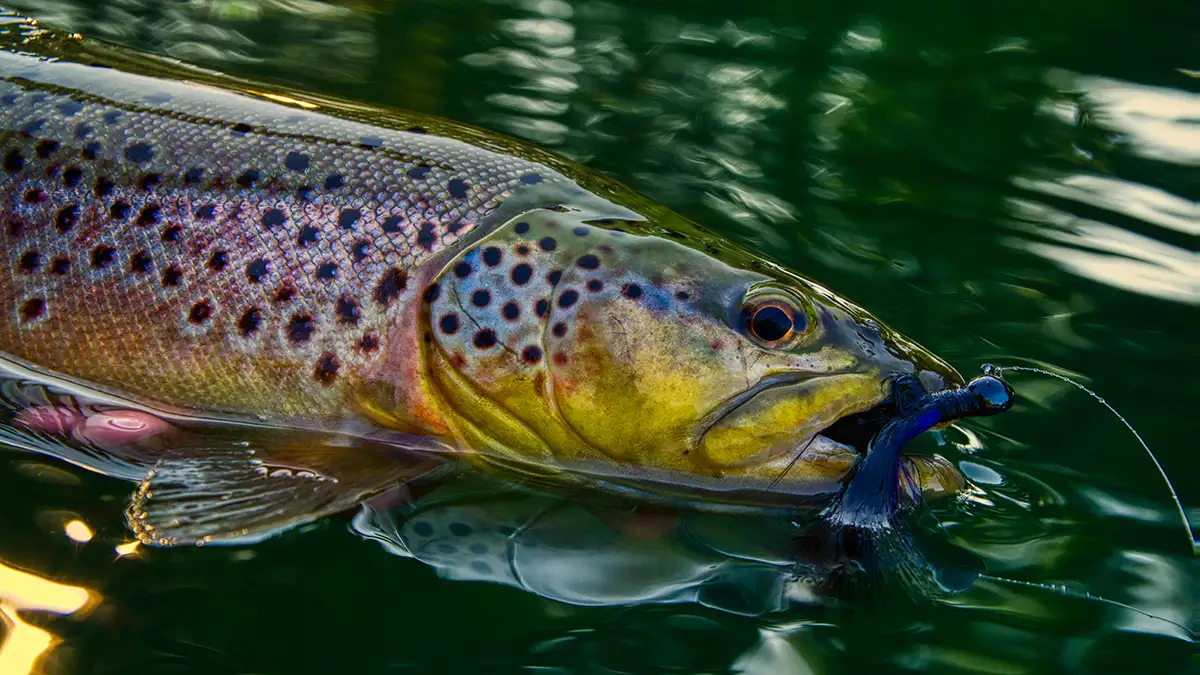
Typical hallmarks of brown trout are their golden- to yellow-brown coloration covered with dark spots, many surrounded by lighter halos, along with occasional red or orange spots. However, fish living in lakes such as Ashley Lake often lose much of that classic coloration. Instead, they may appear bright silver with dark green backs and large black spots, making identification more challenging.
Early detection offers fisheries managers the best opportunity to eliminate isolated fish before they establish breeding populations capable of spreading throughout the watershed.
Why Brown Trout Are a Serious Concern
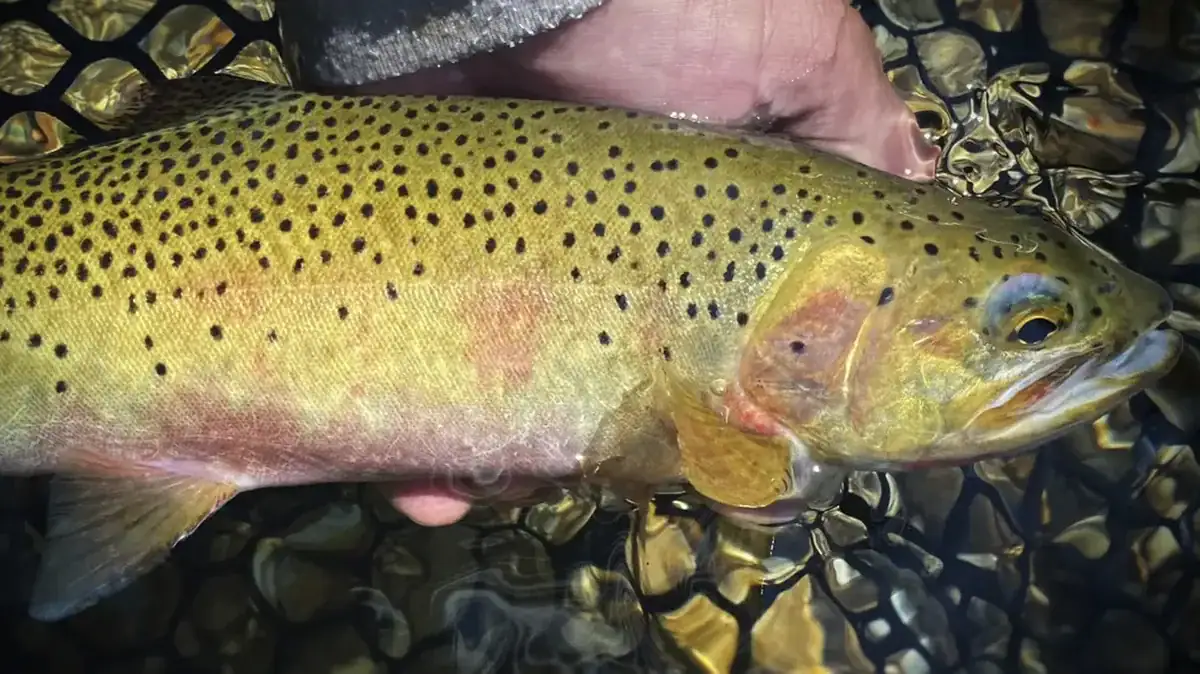
Unlike many Montana rivers where brown trout have become established and support popular fisheries, the upper Flathead Drainage has remained largely free of the species. That’s good for the native Westslope cutthroat and federally threatened bull trout in the system, as browns are aggressive feeders that can provide serious competition for the natives.
Brown trout could place a significant burden on the native populations, which have already faced decades of habitat loss and invasive species pressure. Once a population of invasive species such as brown trout becomes established, complete removal is rarely possible. That’s why FWP is treating even a handful of fish as a potentially significant conservation issue.
Montana’s Invasive Fish Problem Continues to Grow
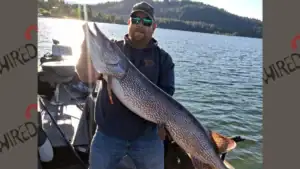
The Flathead discovery comes amid another troubling summer for Montana fisheries. FWP recently confirmed northern pike in the Three Forks Ponds, located less than a mile from the Madison River, as well as both largemouth bass and smallmouth bass in Livingston’s Sacajawea Lagoon, a pond connected to Fleshman Creek near the Yellowstone River.
After anglers reported suspicious catches in late May, fisheries crews confirmed the discoveries by capturing two northern pike near Three Forks and nine bass in Livingston. Although all three species exist elsewhere in Montana, they are not native to either the upper Missouri or upper Yellowstone River basins. FWP believes the newly discovered fish were likely illegal introductions, noting that Montana law prohibits transporting live fish between waterbodies without approved permits.
FWP also confirmed an illegal northern pike introduction in Pine Grove Pond near Kalispell after a social media photo raised suspicions among fisheries staff. Biologists later captured a northern pike matching the markings of the fish shown in the image. The pond is managed specifically as a family trout fishery, and is regularly stocked with rainbow trout and Westslope cutthroat trout.
“This is an extremely disappointing and damaging act,” FWP Regional Fisheries Manager Mike Hensler said after the discovery.
“Pine Grove Pond was built and managed as a place for kids and families to learn to fish and enjoy catching trout. Introducing pike could ruin that experience for everyone.”
Because Pine Grove Pond is isolated from other waterways, officials concluded the fish could only have arrived through illegal human introduction.
FWP has since offered a reward of up to $3,500 for information leading to those responsible while continuing environmental DNA (eDNA) testing to determine whether additional pike remain.
How Anglers Can Help Protect the Flathead
The recent discoveries of brown trout in the Flathead Drainage are another reminder that illegal fish introductions can have lasting consequences for Montana’s fisheries. While a single fish may not seem significant, history has shown that invasive populations can spread quickly once they become established, often at the expense of native species that cannot easily recover.
Anglers remain its most important line of defense against invasive fish. Anglers who report and remove the brown trout they catch have an opportunity to help protect one of Montana’s most important coldwater fisheries before the problem grows beyond control.
As FWP continues monitoring Ashley Lake, Church Slough, and other nearby waters, officials say public cooperation will be critical to preserving the Flathead’s unique fishery for future generations.