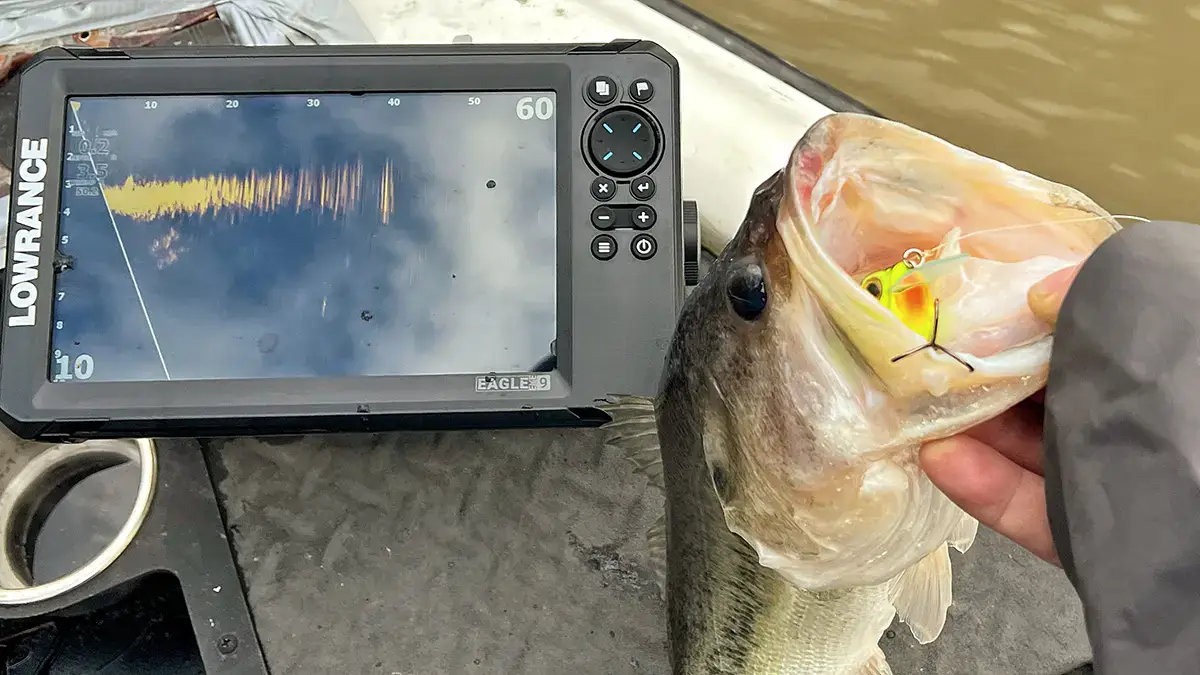
Forward-facing sonar has completely changed the way many anglers fish. First introduced more than a decade ago, this technology gave anglers something they had never truly had before: a live, real-time view of what’s happening beneath the surface.
Garmin was the first company to successfully bring this technology to market in 2015 with its Panoptix lineup. Since then, forward-facing sonar — often called LIVE sonar — has been refined and reimagined by the three major players in freshwater electronics: Garmin, Lowrance, and Humminbird. With each generation, the picture has become clearer, more detailed, and more useful.
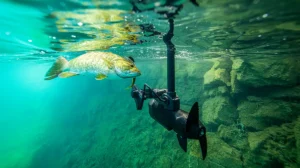
While it originally earned the name forward-facing because it was typically mounted on the trolling motor and pointed ahead of the boat, that term doesn’t tell the whole story anymore. Modern “forward-facing” sonar transducers can be mounted in multiple positions and orientations. They can face forward, down, or even to the side, giving anglers a real-time view of fish and structure anywhere around the boat—including from the console at the back of a bass boat.
What Is Forward-Facing (LIVE) Sonar?
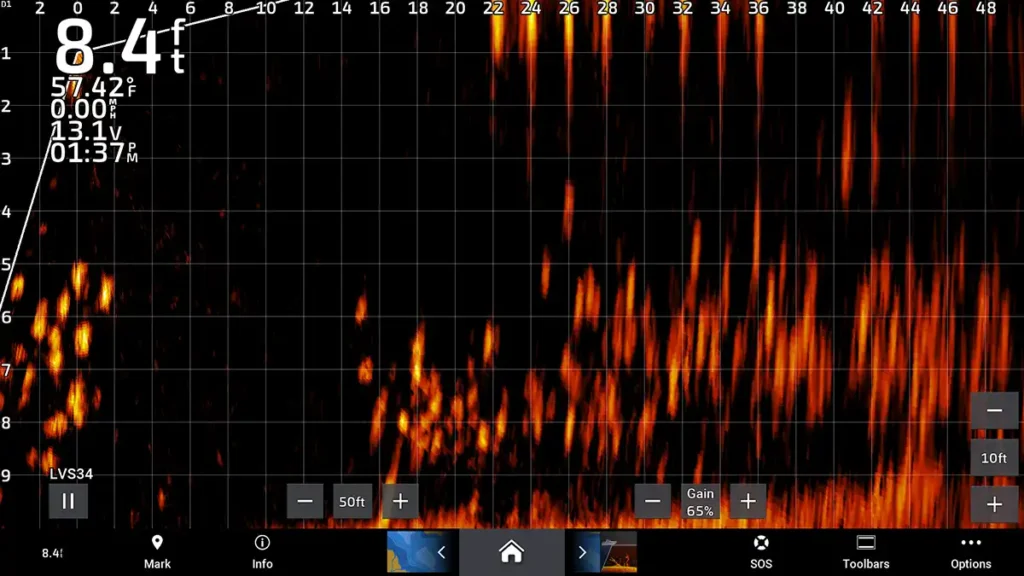
At its core, forward-facing sonar is a live imaging system. Unlike traditional sonar, which shows you what the boat has already passed over, LIVE sonar shows what is happening right now: fish swimming, bait moving, and lures traveling through the water column.
This real-time feedback allows anglers to:
- Watch fish react to their bait
- See how fish are positioned around cover
- Adjust presentations instantly based on fish behavior
That immediate visual feedback is what makes LIVE sonar such a game-changer.
How Does Forward-Facing Sonar Work?
One of the simplest and most accurate ways to understand LIVE sonar is to think of it like a flashlight.
The transducer sends out a focused beam, similar to a flashlight beam in the dark. Wherever that beam points, it “lights up” objects in the water. When you slowly pan the transducer back and forth, the sonar reveals everything the beam touches—from rocks on the bottom to baitfish near the surface.
As fish move through that beam, you see them move in real time on your screen. You can literally watch a fish swim, turn, or follow your lure, much like watching a dog walk past as you shine a flashlight across a yard. That live movement is what separates this technology from anything anglers had access to in the past.
The Current LIVE Sonar Landscape
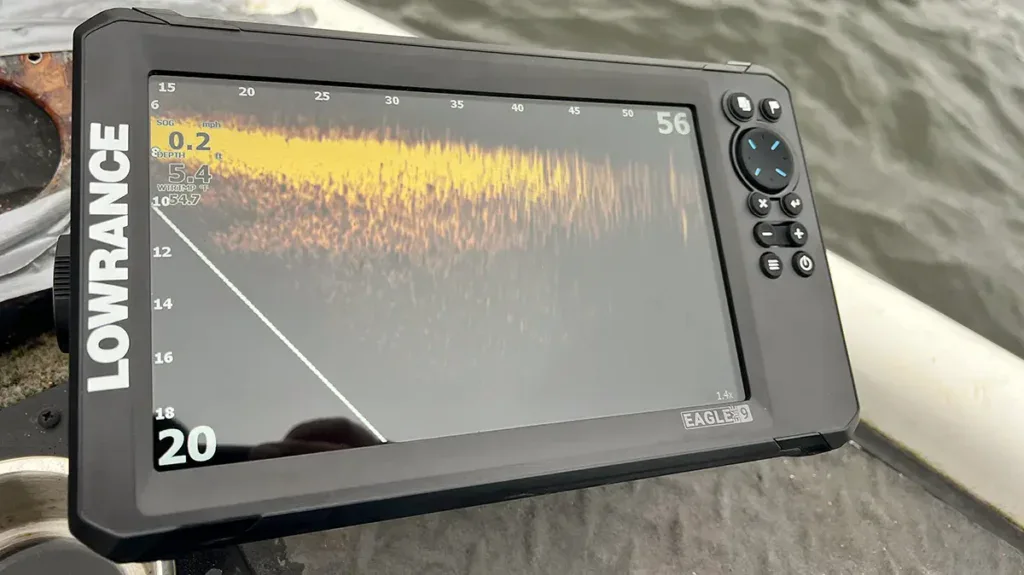
Garmin is still widely considered the benchmark in forward-facing sonar, but Humminbird and Lowrance have made major strides in recent years. Competition between these brands has driven rapid innovation, giving anglers more choices than ever before.
For anglers interested in trying LIVE sonar without committing to a high-end setup, there are now more affordable options available. One of the most budget-friendly entry points into LIVE sonar is the Lowrance Eagle Eye 9, which offers LIVE sonar capability at a significantly lower price than most flagship systems. While it has limitations, it provides a legitimate way to experience the technology without a massive investment.
Basic Setup and Settings
Getting good results from forward-facing sonar starts with proper settings.
Distance and Depth
The farther out you set your forward distance—and the deeper you set your depth—the smaller everything will appear on the screen. For example, a bass at 80 feet will be much harder to see than one at 40 feet, especially on smaller screens.
A good general starting point is around 80 feet forward, which is slightly beyond most anglers’ accurate casting range. This allows you to scan for targets, then narrow the range when something catches your eye.
Depth should typically be set so the bottom of the lake appears at the bottom of the screen. If you’re targeting suspended fish near the surface, adjust accordingly.
Learn Around Known Cover
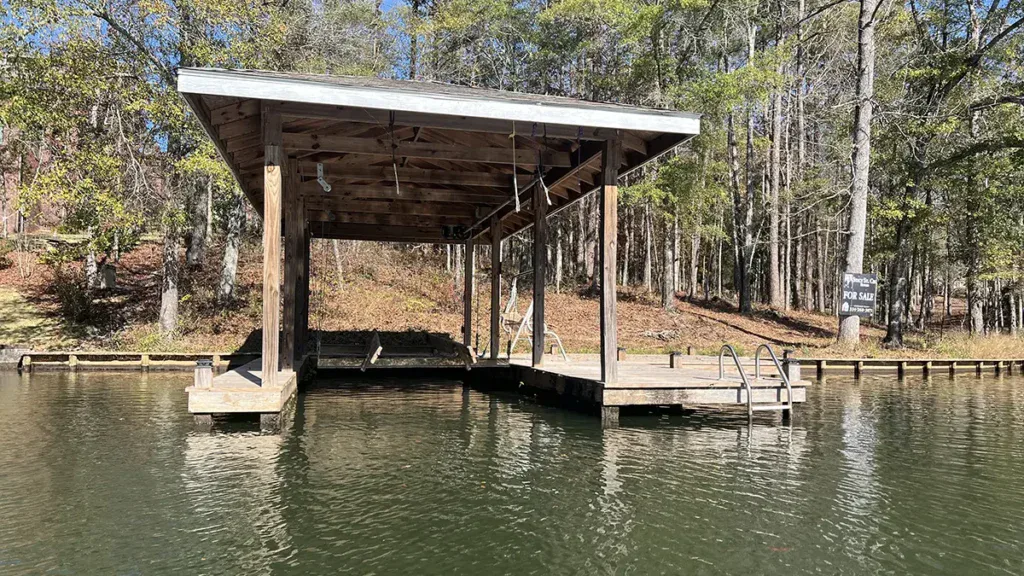
When first learning LIVE sonar, it’s best to practice around cover you already know is there. Visible targets like docks, grass lines, bridge pilings, and laydowns are excellent training tools. These features help you learn how the transducer responds and how objects appear on the screen, making it easier to interpret what you’re seeing.
Start With Bigger Baits
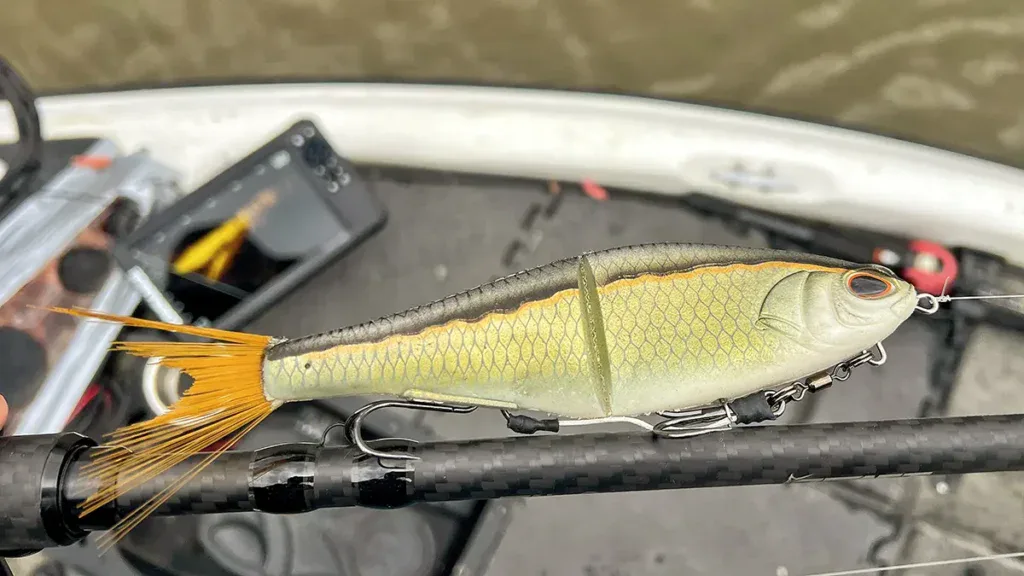
Larger, harder baits are easier to see on LIVE sonar, which makes them ideal for learning.
Glidebaits and spinnerbaits are especially helpful because they show up clearly and move in predictable ways. Even if you’re not expecting a bite, practicing with these baits helps you:
- Track your lure on the screen
- Learn how to aim casts accurately
- Understand how lure movement looks in real time
If you don’t immediately see your bait, pan the transducer left and right until it appears. Over time, you’ll naturally learn how to align your casts with the direction your transducer is pointing.
Using an Indicator for Accuracy
A simple but effective trick is adding a physical indicator to your trolling motor shaft. This shows you exactly which direction your transducer is pointed, making it much easier to line up casts.
There are several purpose-built products available, such as directional pointers designed specifically for LIVE sonar. Some anglers also make their own using zip ties or other simple materials. Either option can significantly improve accuracy and reduce frustration.
Final Thoughts
Forward-facing sonar isn’t for everyone — and that’s okay. But many anglers avoid it not because they dislike the idea, but because they believe it’s too expensive or too complicated to learn.
The truth is that you don’t need the most expensive setup to benefit from LIVE sonar, and you don’t need to master it overnight. With a reasonably priced unit and some time on the water, most anglers can get comfortable with the technology fairly quickly.
You may not be ready to compete at the highest professional levels, but you will gain access to an interactive, visual style of fishing that simply didn’t exist a few years ago. And for many anglers, that alone makes it worth exploring.

![[VIDEO] How Brandon Palaniuk Uses the One-Boat Network App](https://www.wired2fish.com/wp-content/uploads/2025/06/one-boat-network-300x169.webp)
![[VIDEO] How to Install the Garmin Force Pro Trolling Motor](https://www.wired2fish.com/wp-content/uploads/2025/06/trolling-motor-install-300x169.webp)
![[VIDEO] Multi-Species Mission with the Garmin Force Pro](https://www.wired2fish.com/wp-content/uploads/2025/06/stanley-force-pro-300x169.webp)