When you look at the whole picture, June is a wild month for bass fishing.
In the northernmost stretches of the States and into Canada, some bass are just now hitting the beds. Meanwhile, in the extreme south, bass have been done spawning for months and have already moved past the post-spawn funk. And in the middle, some bass are out on ledges, some are in the shallows, and some are still in that funky in-between stage.
With lots to cover, we connected with anglers from the West Coast, up North, and in the South to paint as broad of a picture as possible, while still looking at the specifics of each region. Here are the lures we’re all throwing in June.
In the South
Reeling Topwater
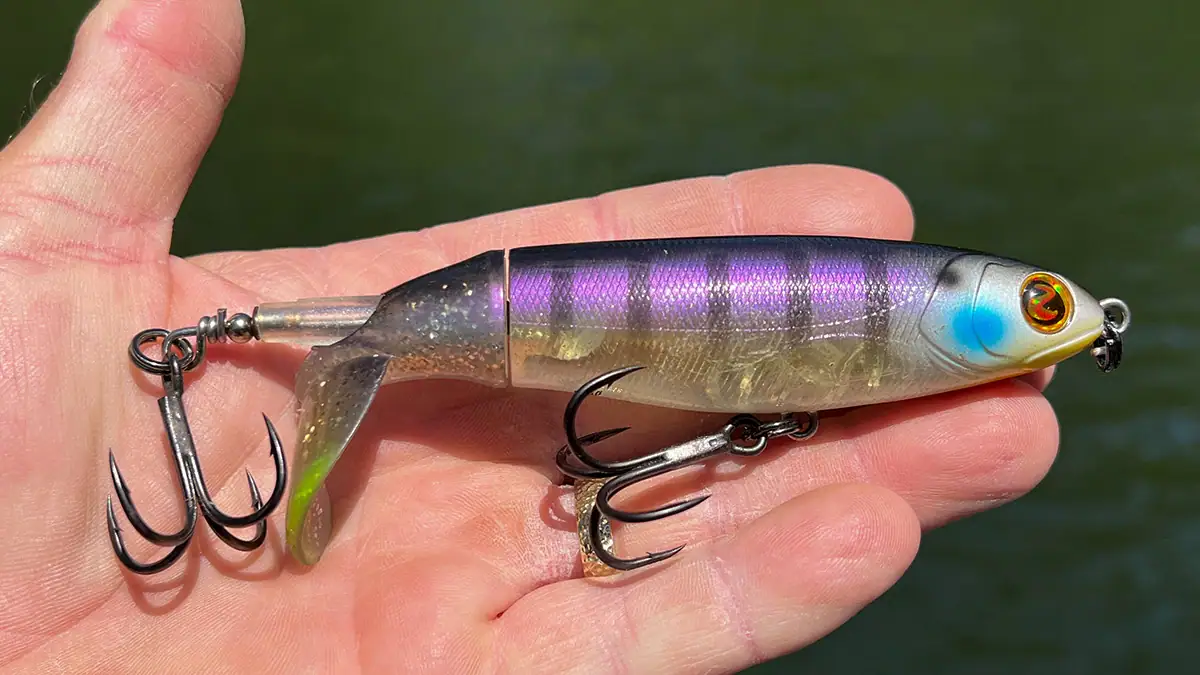
Modern single-prop baits like Whopper Ploppers and Choppos work really well in June in the South. While many anglers shift their focus offshore, a select few stay shallow to target a segment of bass that reside in less than five feet of water year-round. These fish are often few and far between, but they can be big. Taking a reeling topwater and locking it in your hand is a great way to catch a big summertime bass.
These fish are often lingering around bream beds or they’re grouped up in small schools cruising the banks in search of bream. In either case, the Whopper Plopper allows you to cover water quickly and efficiently. With your trolling motor on 40 to 60%, you can keep the boat on the move and parallel the bank with your casts to find fish. If you do come across an active bluegill bed, make a mental note of it and return later. Look for these beds and bass along shallow mainlake banks that are protected from heavy wind or current, or look in the backs of pockets.
Using braided line will also help you cast farther, giving you a better chance to cross paths with bass before these oftentimes wary shallow fish can spot you.
Texas Rig
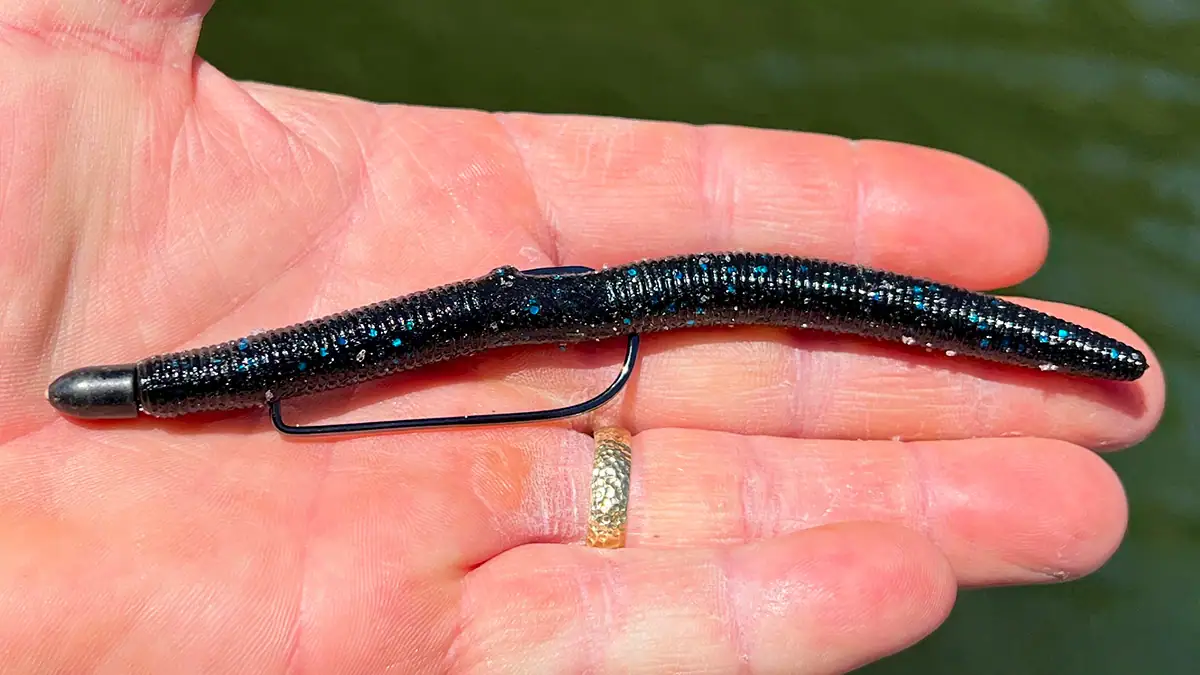
A Texas rig works really well in June, from just a couple feet of water out to 20 feet or more. You can use a wide range of soft plastics on a Texas rig, from lizards to creature baits and anywhere in between. But a slow moving, subtle bait tends to work best. Long, ribbon-tail worms like Zoom Ol’ Monsters are classic fish catchers for the summer. And Senkos work really well too.
You don’t want a ton of action — and you certainly don’t want an aggressive action — because you’ll be using these Texas rigs to cover high percentage areas. Look for brushpiles, shell bars, or insect hatches. While you may be able to catch the fish in these areas on more aggressive topwaters and crankbaits, you can almost always pick off a few more by working the area slowly with a Texas rig. The beauty of this classic rig is that you can fish it in any water clarity and throughout a wide depth range. And, when they bite, you get a great hook-up ratio.
Drop Shot
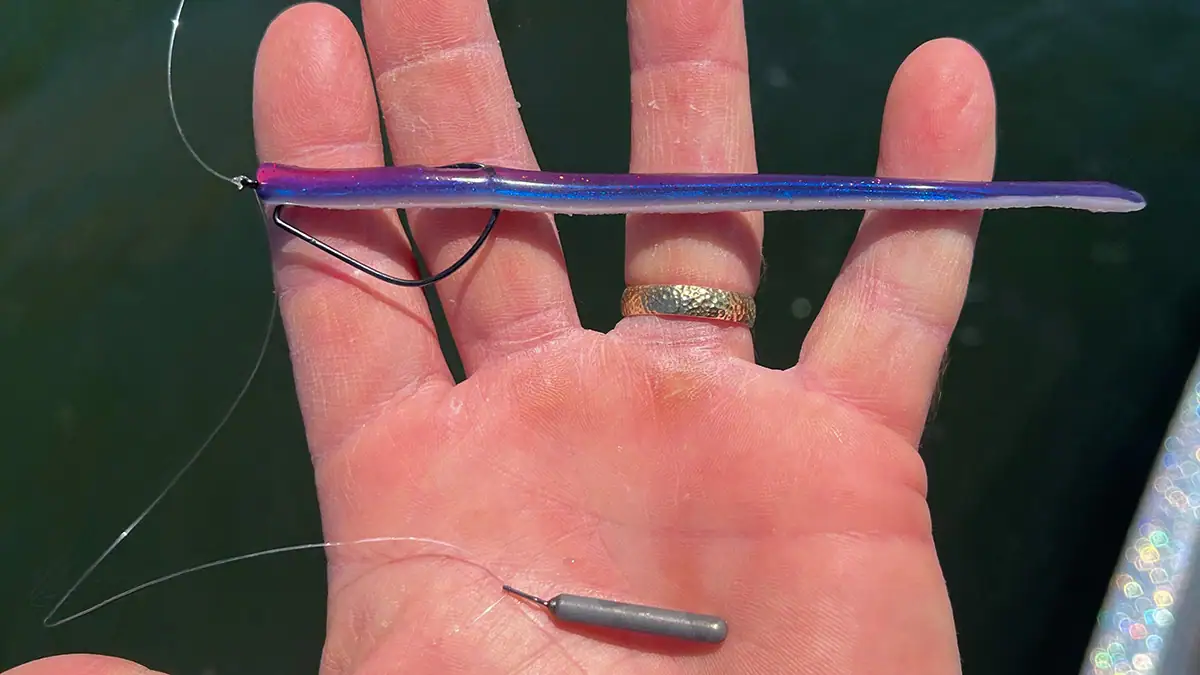
The drop shot can be used in a lot of the same areas that a Texas rig can, but it also opens up a whole other realm of fishing. While you can pitch these baits to shallow brush and bream beds, the real game-changer is how effectively the drop shot can be used vertically.
It’s hard to get a bait straight beneath the boat efficiently in deep water, especially a soft plastic. But with a drop shot, you can do just that. A finesse worm, like the new Berkley Labs Series Finesse Worm, is likely the most versatile soft plastic that you can pair with a dropshot. With this one bait, you can target largemouth and spotted bass from five feet deep to 50. You’ll just need to adjust your weight accordingly.
If you have forward-facing sonar, you can stay back off the fish some, which will typically help the bite. If you don’t have LIVE sonar, still try to not get right over top of the fish. You can find brush and triangulate by looking for reference points on shore. Lining these up, you can back off the cover or come back to it later and be able to hit it without getting directly overtop.
Deep-Diving Crankbaits
The crankbait bite is fullbore across much of the South this month. Look for fish along ledges and deeper brush, then pair your crankbait with the cover accordingly. You can get away with a bigger crankbait than you actually need to reach the bottom. This can help set your bait apart from the rest as anglers really start to lean on the crankbait bite.
If a 15-foot diving bait, like a Strike King 5XD, will reach the bottom, step up to a 6XD or even an 8XD and you can really dredge the bottom up while also presenting the bass with a bigger profile bait.
Think about it like fishing a glidebait out deeper. Bass react differently to larger baits shallow, so it makes sense that they do so deeper as well. Just be careful doing this around cover. You are better off colliding with a brushpile head-on or ticking the top of it than you are plowing into the bottom of it and reeling the bait all the way overtop the over.
What Ben Nowak is Throwing in Michigan
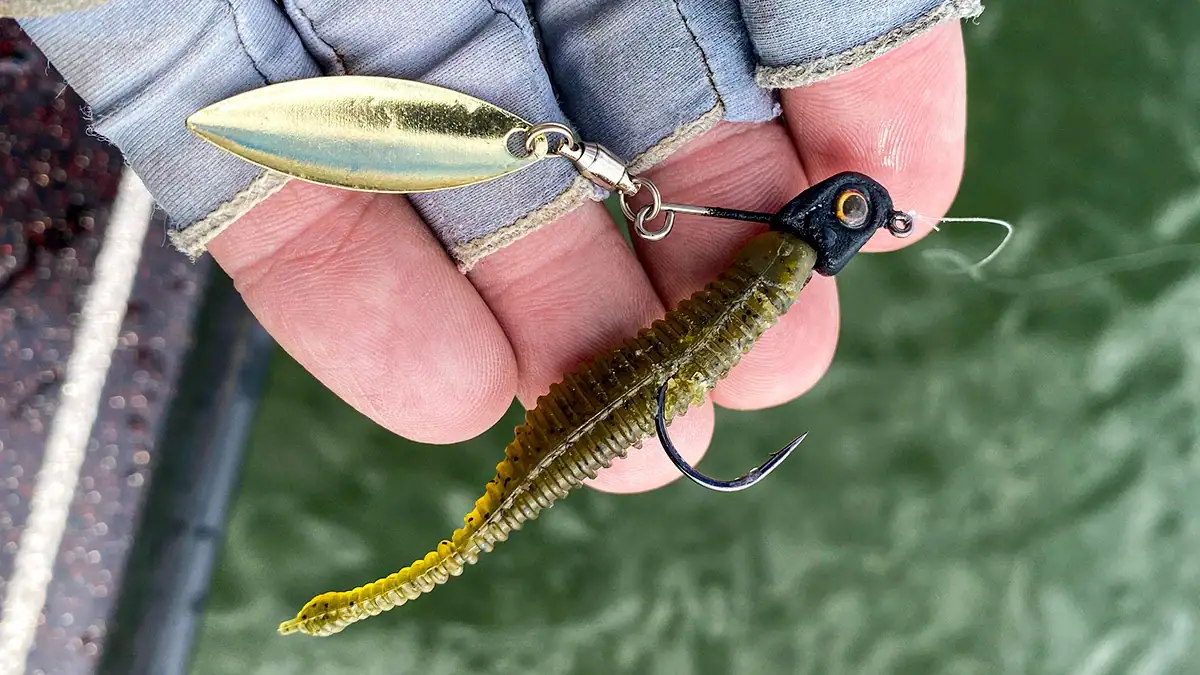
For largemouth, it’s going to be full-blown spawn or post-spawn. Our post-spawn fish, a lot of times, are just going to hang out at those grass edges. So this is the time you’re going to want a Neko rig, a popper, and maybe a frog to get up real shallow, and then just something you can bedfish with. A drop shot’s also a really good post-spawn bait up here, like a Roboworm. And then anything with some purple in it to imitate bluegill.
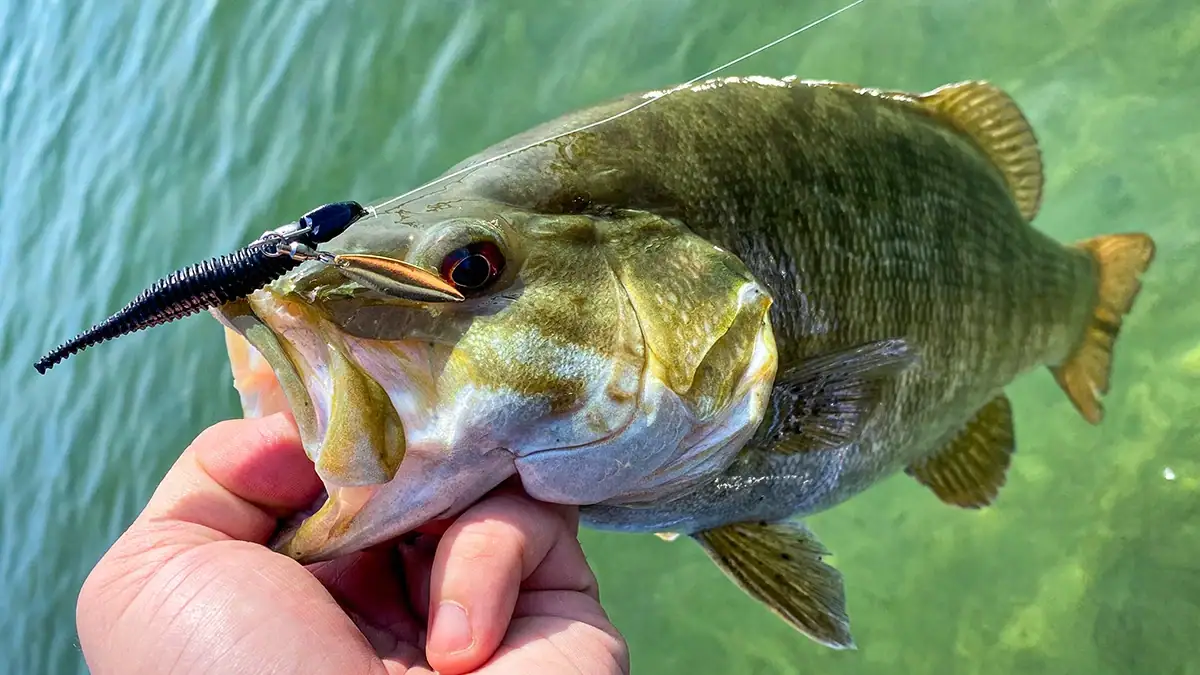
Smallmouth are going to be pre-spawn, spawn, and post-spawn. The other big factor in June: You might see a Mayfly hatch. And so you’re going to have fish on bed, have fish still pre-spawn, and then you’re going to have some fish starting to move out post-pawn. This is a time where you can kind of be wide open. You can catch them bed fishing, you can catch them throwing a little swimbait, you can catch them on a jerkbait. Like, it’s just really wide open. But if you get around that Mayfly hatch, then you’re going to want like a popper or walking bait tied on, especially early morning when you can capitalize on that Mayfly hatch bite.
The other big trick I like to do is go up shallow with a Maribou jig. Or, what I’ve been doing over the past couple of years, has been taking a Great Lakes Finesse Drop Minnow, which is a straight-tail, 2.75-inch minnow bait, and just winding it around on a ballhead. That seems to catch a lot of those post-spawners that are still hanging around beds or even pre- and spawning fish. So that’s one of my favorite ways to catch them if I was just going up shallow, using my eyes, targeting isolated pieces of cover.
What Brent Ehrler is Throwing in California
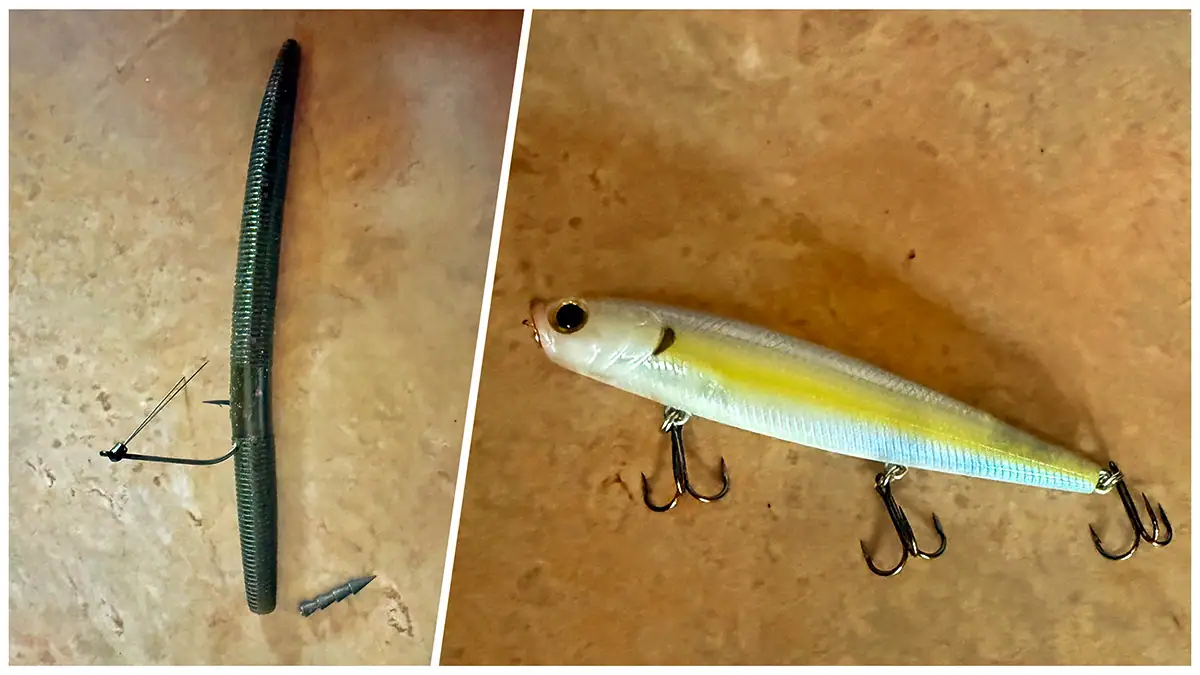
We’re post-spawn, possibly summer, depending on what lake we’re on. Fish are going to be moving out to the main lake, or main current, if it’s a river system. Bottom line, the one bait that I will always have on as far as a reaction bait is gonna be a Lucky Craft Gunfish, either 115 or 95, just depends on bait size and what I’m going to do with it. If the fish are schooling then I actually like the Gunfish 90 better. But it’s something that you need to have on the deck. You’ll be fishing, and then all of a sudden they come up, start pushing bait, and you throw that topwater over there and you catch a key fish.
A drop shot is a great thing to have on hand, and I’ll run a few baits on it, depending on what I want. If I want a bright color, then I’m going to go with a Morning Dawn Roboworm. If I want something that’s more neutral green pumpkin, then I’m going with the Yamamoto Sensei Worm.
And then a Senko either on a shakyhead or Neko rig. That works everywhere you go. Mainlake, and I’m going to be looking for points, or mainlake humps or island tops. You’re looking for a little bit deeper water and if there’s structure down there. If the lake goes down, like my home lake Paris was down like 30 feet, brush grew from the old water line all the way up to 30 feet. Well, now the water’s up 30 feet, so you have this hard line of bushes that you can get on.