Kayle Ward has been a full-time crappie guide in south Oklahoma and North Texas for eight years. His “Reelin’ Them In Guide Service” has a stellar reputation, and Ward is in the upper ranks of tournament crappie fishing.
He won the 2025 Crappie Masters National Championship last September on Lake Eufaula, Oklahoma. But he got the itch for something larger.
“I started seeing huge alligator gar with sonar while crappie fishing on Lake Texoma,” Ward tells Wired2fish. “I discovered some areas of the lake that had a lot of big gator gar and began trying to catch them.”
Fishermen snag the gar, and Ward releases all the big ones he catches and measures with clients.
“At first I was just sort of playing around with it,” said the 38-year-old guide from Mead, Oklahoma. “I mentioned alligator gar fishing and how big they were to some crappie clients and other anglers, and people really got into it wanting to catch ‘em.
“Over the last couple months it’s been incredible, and the gar we’re catching are huge.”
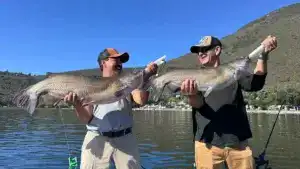
In recent weeks Ward has boated and released many gar measuring over 6 feet long.
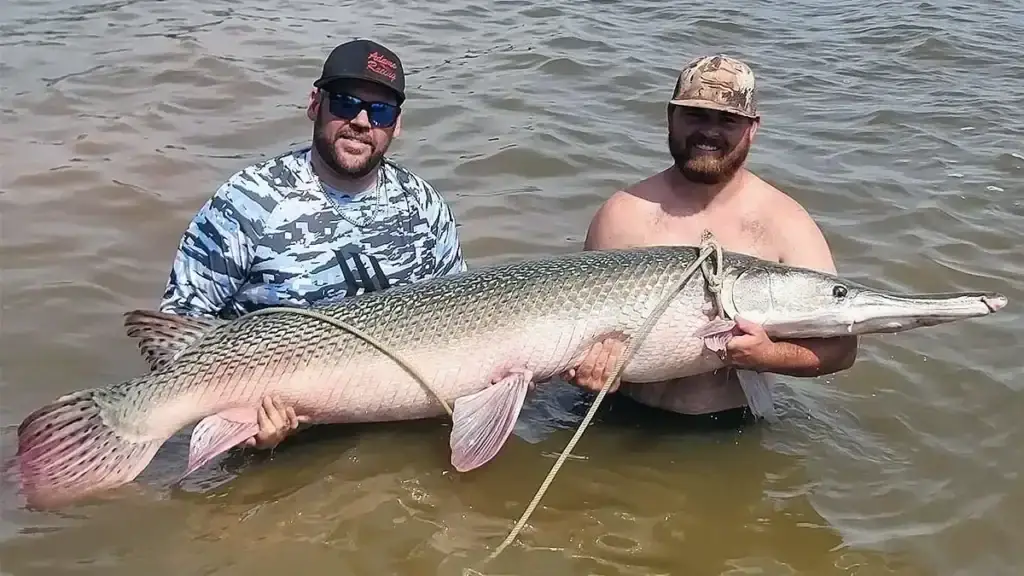
“We’ve been blessed to land multiple fish every time with clients and had numbers of gar measuring 7 feet long or better,” he said. “One giant fish measured 7-feet, 11-inches, with a 43-inch girth that we estimated weighed about 230 pounds.
“The state record fish was 8-feet, 1-inches long and with a slightly larger girth and that record fish weighed 256 pounds.”
Ward emphasizes that he has lots of hours using forward-facing sonar (FFS) out of his bass boat and believes that sonar savvy has made for his successful alligator gar fishing.
“Boat control is everything in crappie fishing, and that’s helped a lot in finding gar and successfully catching them,” he explained. “Sometimes I’ve got to chase a big gar hundreds of yards before we can get a snag hook in the fish and eventually land it.”
He uses heavy-duty tackle, consisting of 10/0 to 12/0 barbless hooks, 130-pound test braided line, no leader, and 4-ounce bank sinkers positioned below hooks. His heavy bait-casting rods are 7-feet, 8-inches long, coupled with Garcia 4000 Ambassadeur reels.
“Every fish we hook is different, and some will rip off 200 to 300 yards of line and we have to chase them in our boat,” Ward stated. “They’re not aggressive when landing them. Once we get a rope around one just behind their pectoral fins we take a few photos, sometimes in shallow water, then release them unharmed.”
In a typical 5-hour fishing trip Ward and his anglers will “see” 3 to 10 fish and they eventually hook most of the big ones they locate. However, up to 40 percent initially throw a hook before finally being caught.
Alligator gar are easy for Ward to pattern. He says once he’s found an area where big gar are located, others usually can be found nearby. Areas where there’s bait are choice, and Ward says gar feed on big carp and buffalo.
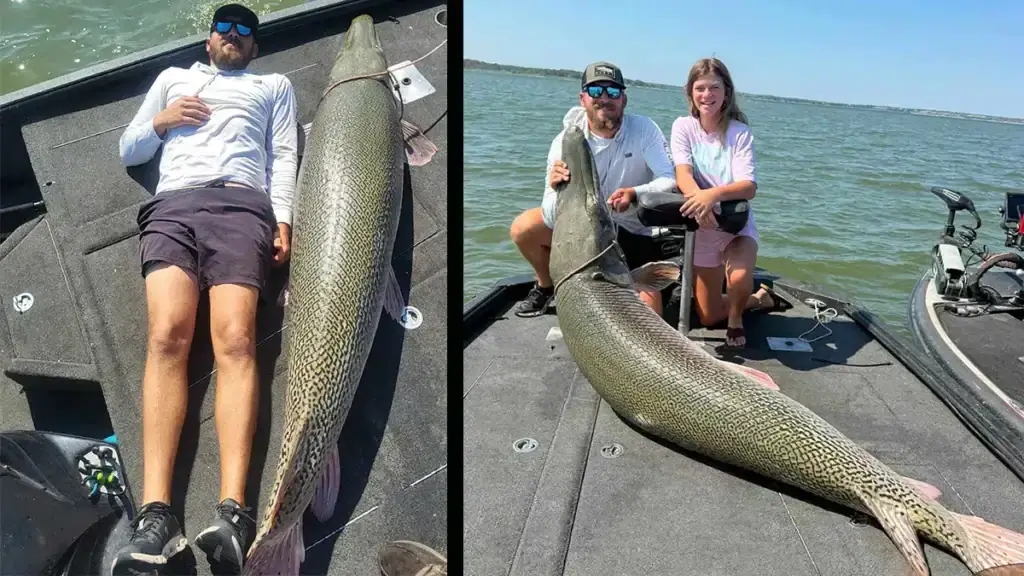
“We try to get two snag hooks in a gar with a couple angler clients, because the fish are so strong and we can land them pretty quickly with two guys on two rods,” Ward continues. “You can’t overpower these fish. I think the longest anyone has fought one was 1 hour and 40 minutes.”
Another guy broke 130-pound test braided line twice on fish in one trip, says Ward. He’s had 8/0 treble hooks straightened when fighting a big gar.
The most gator gar anyone has landed with Ward is seven in one day.
“Usually, a guy catches one or two big ones, and he’s had enough because he’s exhausted,” Ward said. “I’ve never caught a big sturgeon, but in my experience, alligator gar are the strongest fish in freshwater.”