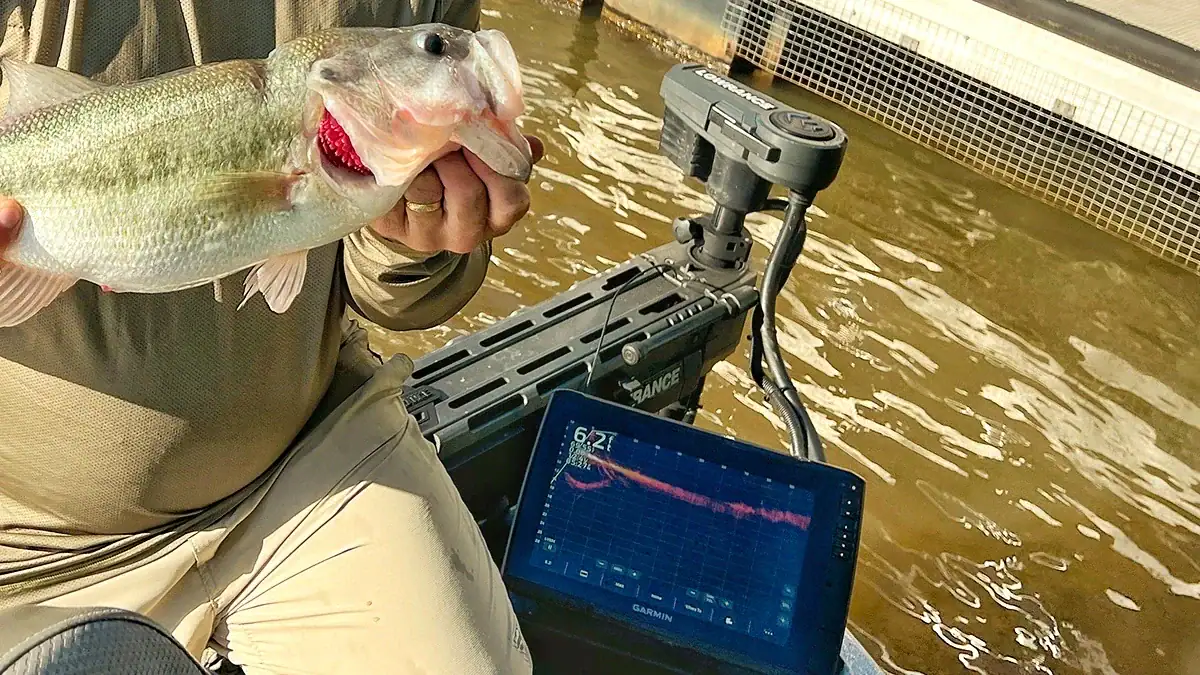
Forward-facing sonar (FFS), or LIVE sonar, has impacted every area of bass fishing. From playing Battleship with suspended bass in 80 feet of water to watching an otherwise-invisible bedding bass turn on a bait in real time, there are very few places for these bass to hide now.
However, one area where it remains a little tricky to pin them down with FFS is around docks. With all the cables, nooks, crannies, and oftentimes brush hidden underneath those structures, it can be hard to spot bass. Anglers who have been using FFS for a while have figured out how to dial them in on docks, though. We caught up with Bassmaster Elite Series rookie sensation Fisher Anaya to learn how to fish docks with FFS.
Figure Out Where to Fish
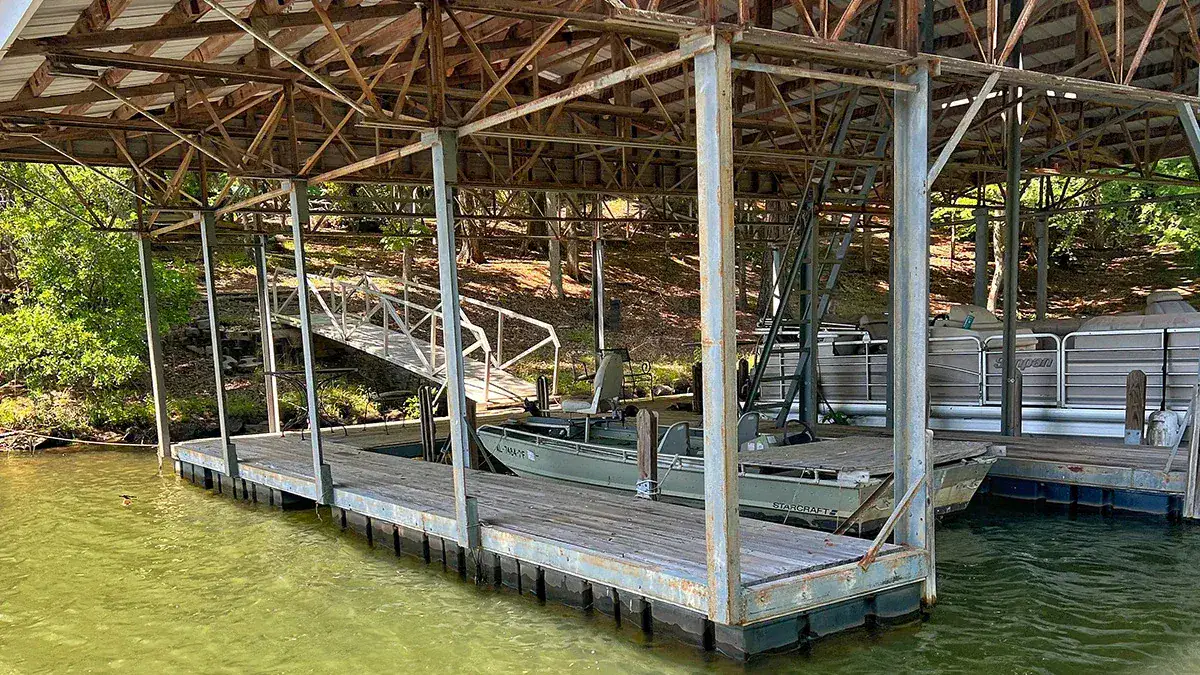
If there are docks on a lake, they are typically diverse. You’ll have docks on the main lake, in the backs of creeks, on channel swings, on flats — the list goes on. If you talk to anyone who regularly uses FFS, they’ll tell you quickly that it’s not a magic bullet. It’s a great tool for narrowing the strike zone once you find the fish. But you still have to find them first, so where do you start?
“Most of the time, I’ll just kind of get a feel for what stage the fish are in,” Anaya said. “Are they pre-spawn or post spawn? Are they in the pockets or the main lake? All that kind of plays in. Some docks you can pull up on, and they’ll be pre-spawners in the front of the dock, and they’ll be spawning in the back of the dock.”
Anaya often gravitates toward docks when he first hits a fishery. It’s partly because water levels often change dramatically between the front and back of the dock, relative to the fishery. This allows him to quickly assess what stage the fish are in.
“I usually start off fishing deeper docks. That’s anywhere from five to 10 feet on the back of the docks, and 20 on the front,” he added. “Then I’ll rotate and go to shallower docks where it might be a foot on the back and five feet on the front. The time of year and stage the fish are in are going to determine what docks I choose to fish.”
To Fish a Dock or Not?
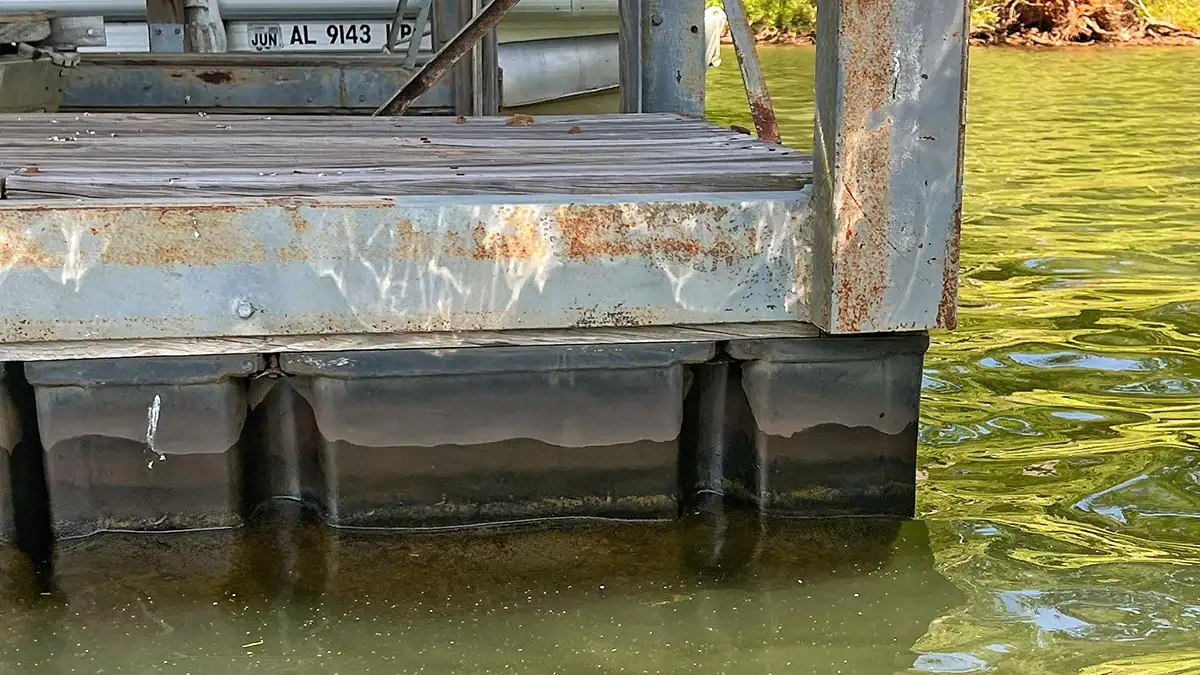
Any time specialists start to emerge in any technique, far-fetched rumors of their approach will circulate. Many claim the greatest flippers will patiently yo-yo their baits 20 times after a cold front, for example. These are almost always exaggerations, usually supporting the claim that a technique is beyond mere mortal anglers. One such rumor surrounding FFS and docks is that the best anglers don’t even cast to a dock if they don’t see a fish under it.
“Sometimes you can. Sometimes you can’t. I usually tie on something like a weightless swimbait or a Magdraft or a glide bait, anything like that, and in practice, I’ll just go skip it around and just swim it out,” Anaya explained. “They’ll get right under these black floats and sit there, either pre-spawn waiting to warm their eggs or post spawn getting on a shad spawn, and I’ll catch them skipping like a Skinny Dipper or a Mayor, anything like that weightless under these docks just reeling it around. And, most of the time you can’t see them because they’re so tight to a float.”
Standardize Your Settings
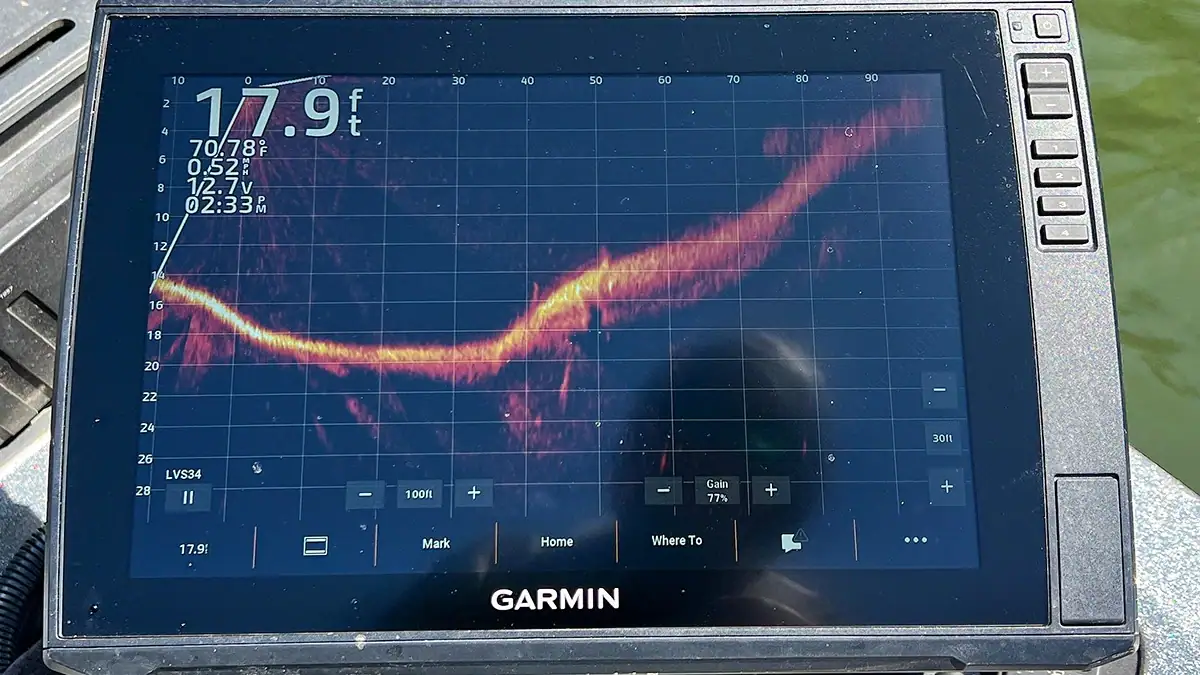
One common misconception is that the best FFS anglers are constantly adjusting their settings based on the scenario. This makes sense, in theory, for FFS around docks. If you know fish are suspended just beneath the docks, wouldn’t it make sense to adjust the window to show just the first five feet or so below the surface? Anaya says no.
“I keep my settings pretty plain and simple: 100 feet out, 30 feet down. Thirty foot or 25 foot is about as shallow as I’ll run mine,” he said. “Once you get it shallower than that, it stretches your image out. You can’t really tell what you’re looking at.”
Anaya is responsible for one of the most epic fish catches we’ve seen on FFS to date, when he shook the bait out of the mouth of a smaller bass so a bigger one nearby could have a chance to eat it — and eat it she did. It transpired on Bassmaster LIVE during Anaya’s Elite Series win this spring, all without physically seeing the fish. He used his graph to gauge the size of the bass, which is another big reason he runs his graphs with standard settings across the board.
Think about it like this: If your settings are set on 50 feet out and 15 feet down for one area and then you change them to 100 feet out and 30 feet down for another, the same size bass will show up as a blip twice as big on one screen as the other. It’s very hard to accurately gauge the size of a bass if you’re constantly adjusting your settings. But if you keep the settings consistent, you can judge not only the size of the fish but also how far out they are and how deep they are almost instinctively. That allows you to make more accurate casts without having to recall what one little square on the screen actually represents at the moment.
Final Thoughts
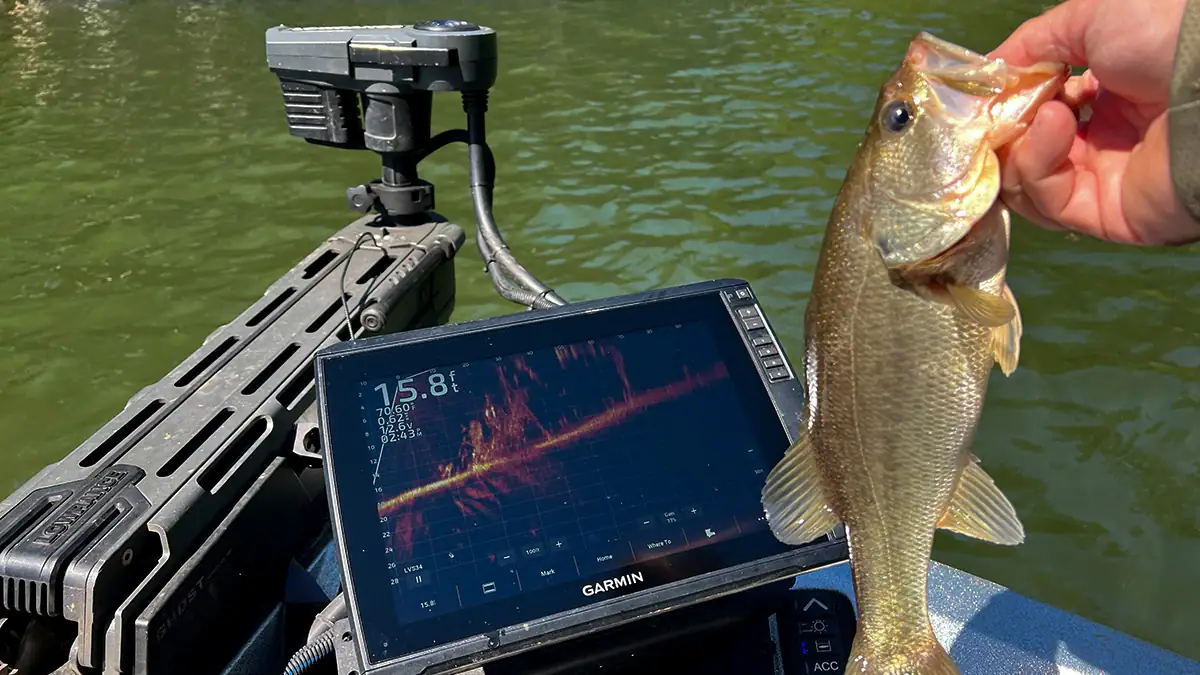
As parting wisdom, Anaya emphasizes the importance of taking your time. It’s easy to miss fish if you just quickly scan under a dock. Move around the structure, shooting your sonar under it from different angles.
If you take your time, pick docks based on what stage the fish are in, fish them even if you don’t see a fish right away, and keep your settings consistent. It will all help you build confidence fishing for bass with forward-facing sonar around docks.

![[VIDEO] How Brandon Palaniuk Uses the One-Boat Network App](https://www.wired2fish.com/wp-content/uploads/2025/06/one-boat-network-300x169.webp)
![[VIDEO] How to Install the Garmin Force Pro Trolling Motor](https://www.wired2fish.com/wp-content/uploads/2025/06/trolling-motor-install-300x169.webp)
![[VIDEO] Multi-Species Mission with the Garmin Force Pro](https://www.wired2fish.com/wp-content/uploads/2025/06/stanley-force-pro-300x169.webp)