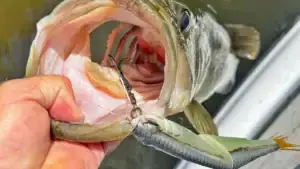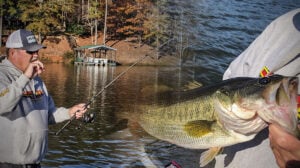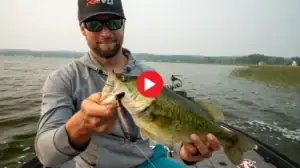
“There’s one! Wait — oh wow, another double! Two bass again, on the sink!”
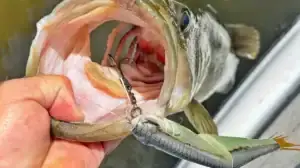
That’s the kind of action that comes with fishing the Hookup Bait. The revolutionary lure first made its mark in saltwater, and is now catching on big time as freshwater bait.
And it has certainly earned its tagline, “Don’t blink on the sink.”
What Makes It Different
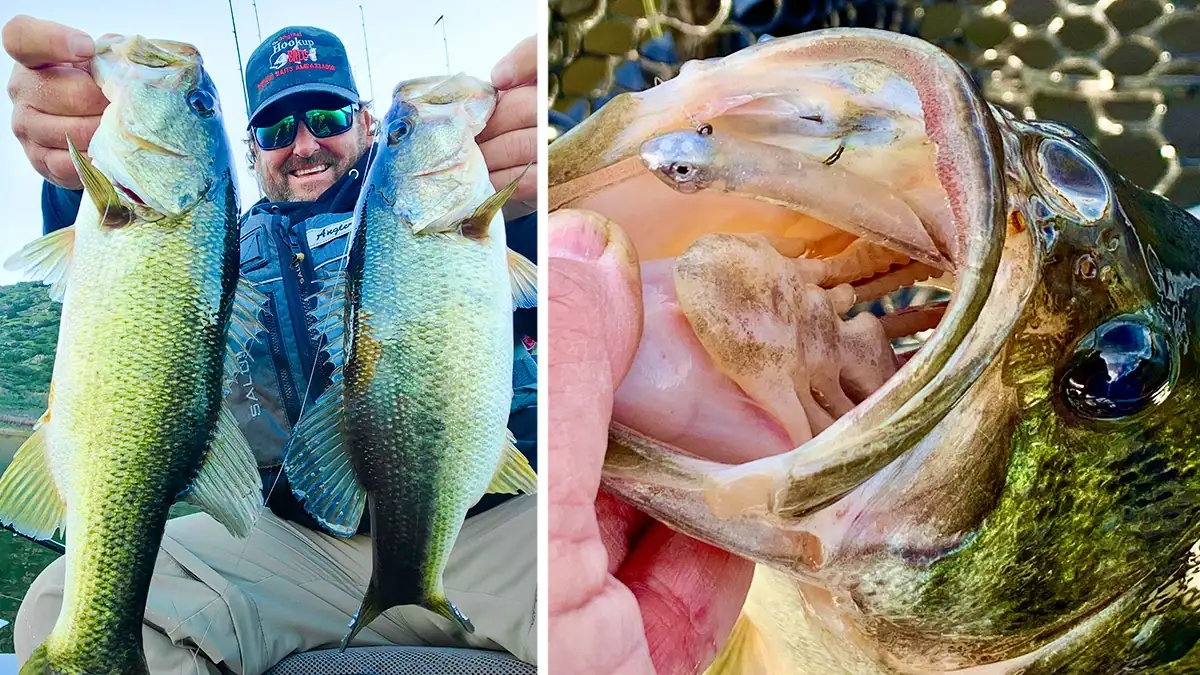
Chad Gierlich spent years developing this tube-like bait. It glides on the sink due to its finely tuned design, and it catches almost anything with fins. Gierlich fishes it exclusively, and has used different sizes and colors to win numerous saltwater and freshwater bass tournaments. He particularly likes fishing from his kayak, due to its stealthiness.
“There are differences between freshwater and saltwater bass, but at times the freshwater bass act just like the salty ones — and that’s when the Hookup Baits shine,” explained Gierlich, a San Diego resident. “The main thing I look for when I get on a lake are bait schools and then bass chasing that bait, since that’s where the Hookup Baits (HUBs) work best. They also work very well on forward-facing sonar fish suspended out deep, and are a good alternative to the common minnow-like swimbait.”
“The HUB double rig — or donkey rig — fishing two HUBs separated by different length leaders attached to a three-way swivel is very productive on aggressively feeding bass. It’s surprising how often you’ll catch two at a time. But when the fish are being picky, the single is better for a more finesse-like presentation,” he added.
Fishing the Hookup Bait for Bass
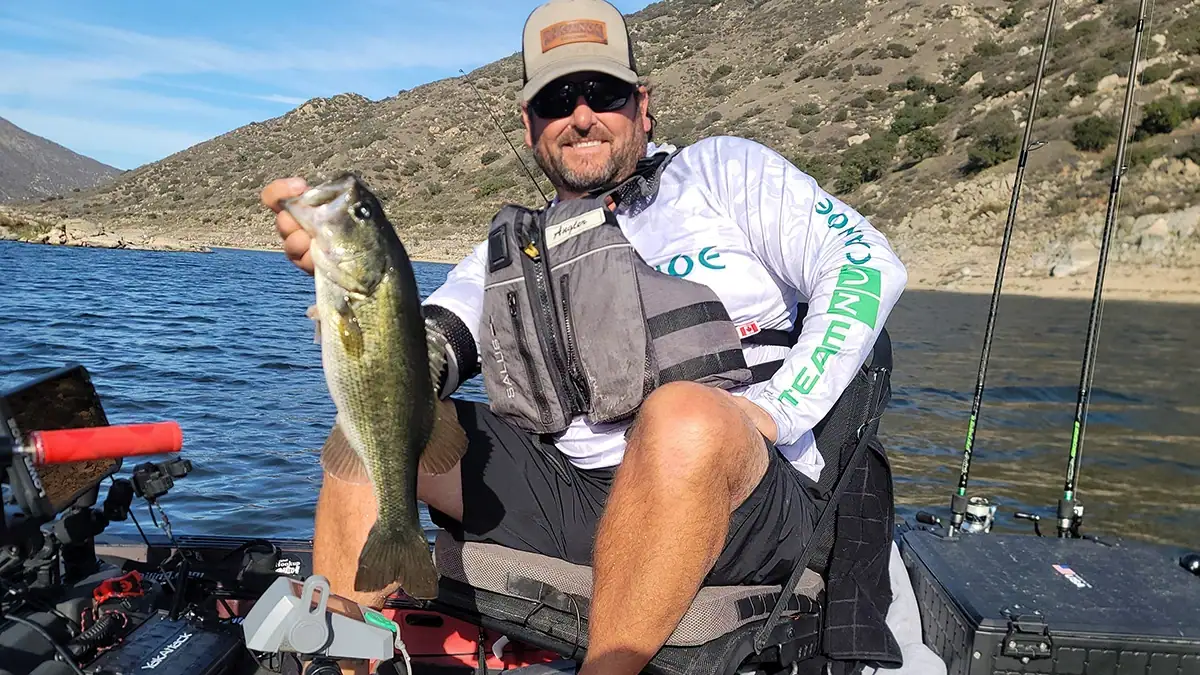
One of the great things about HUBs is that there’s really no wrong way to work them. That also makes it a great bait for beginning anglers. I’ve found that most bites either come on the sink because it covers the entire water column, or by twitching it after hitting the bottom. That goes for fresh or saltwater. Experiment to see what works. Every day is different.
“Typical retrieve is a start-and-stop action with light rod movements on the crank. But I sometimes work it along the bottom barley moving it. Or, I’ll try a fast erratic retrieve as soon as it hits the water. Because of the way they’re balanced, they can also get hit just sitting vertically and on the bottom. It’s very versatile,” Gierlich said.
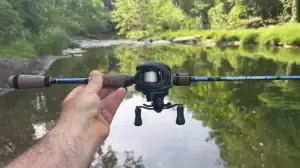
He went on to note: “Fishing the HUBs on a spinning setup works best because it gives the baits a chance to fall more freely, giving them more action. I like a seven- to eight-foot medium light rod, with a 1000- to 3000-size reel. I use eight-pound test braid tied to an eight-foot, eight-pound fluorocarbon leader. A 1/8-ounce HUB, with color matched to the hatch, is a good place to start. A spinning setup also makes it much easier to cast the smaller baits used for bass.”
Tons of Options and Approaches
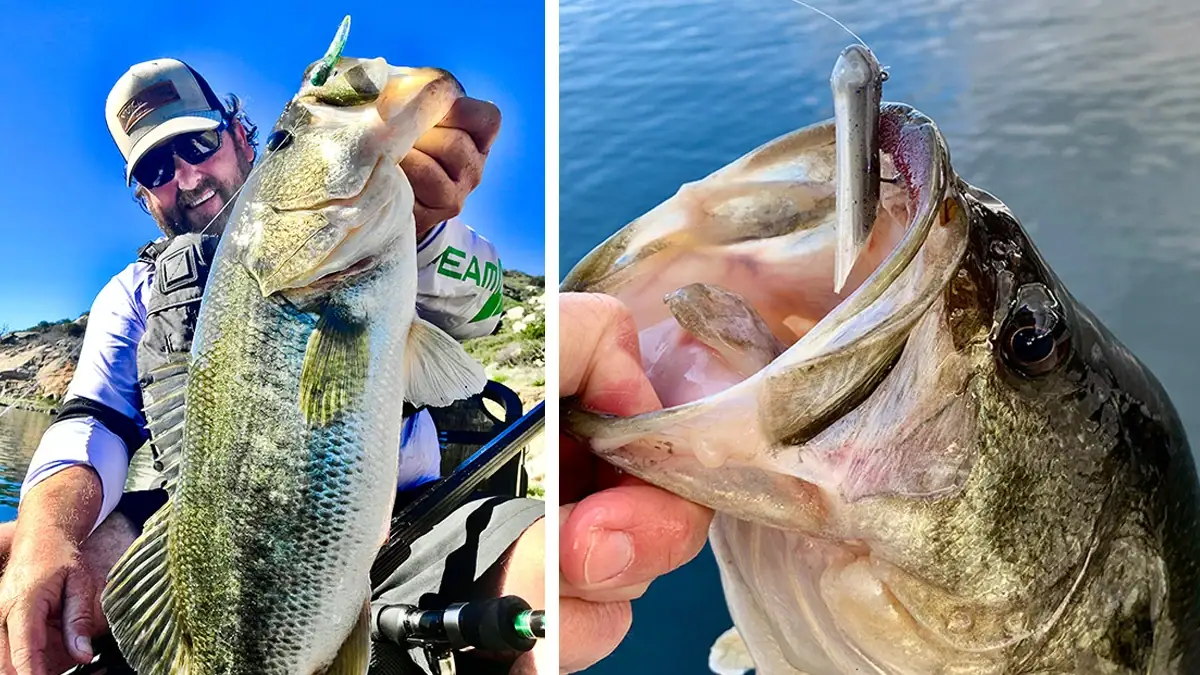
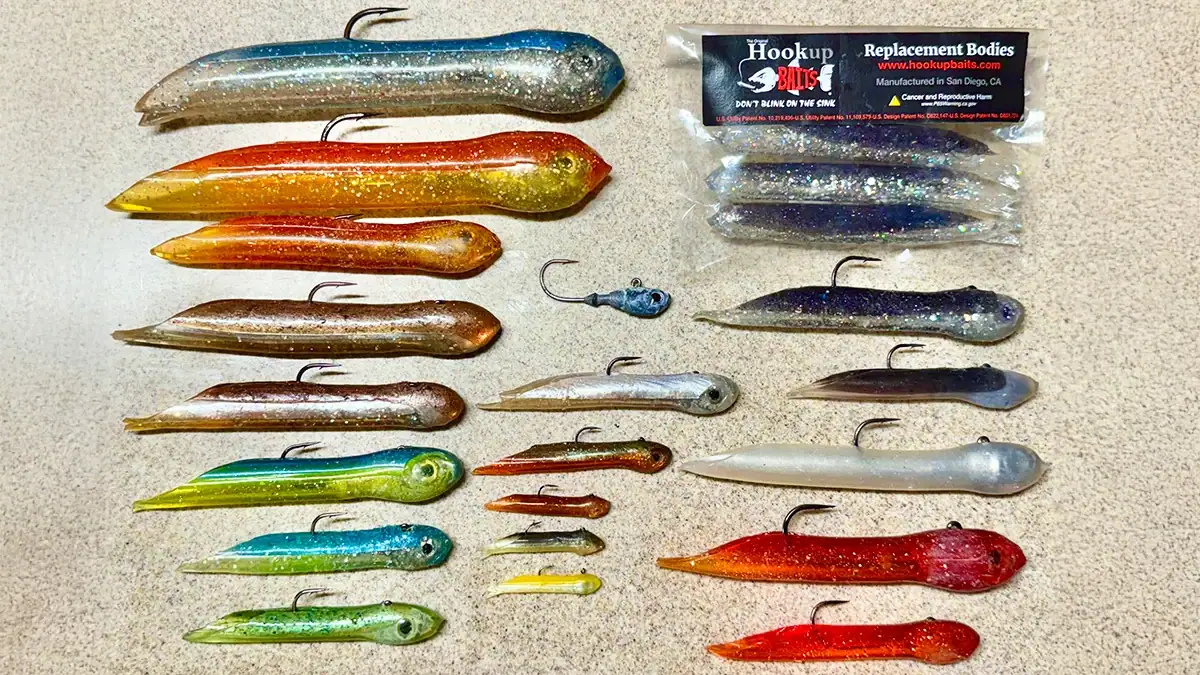
As for color, there are lots to choose from. Gierlich likes the new Tom Slayer and watermelon jack. He’s also a fan of the chovy, green pumpkin, ice, sardine green, and shad white. Hookup Baits also work amazingly well on Alabama rigs, a secret not many know about.
Fishing docks, wood, or anywhere there’s visual structure is where the natural glide of the baits generates bites from reluctant fish. And one of the more productive areas I’ve found is where bubblers help oxygenate the water. Bait tends to school up around the bubblers and the bass sit below and then skyrocket through them, crashing and splashing on the surface, or lie in wait below to grab injured baits falling through the water column. On my home lake, it can be exciting but frustrating fishing because the bass key in on tiny silverside minnows.
The best approach I’ve found is using the 1/16-ounce HUB. I’ve caught bass up to seven pounds this way. And one of the cool things is the by-catch when using HUBs. While fishing a bubbler with a HUB, I hooked something that literally pulled my boat around. Turned out, a 19-pound catfish inhaled my little HUB. They’re also a great trout bait for pan-sized up to 20-pound cutthroats. And in saltwater, using 5/8- to 6-ounce HUBs, I’ve caught everything from calico bass, to yellowtail, barracuda, bonito, and my personal best: a 42-pound lingcod.
Some Closing Thoughts
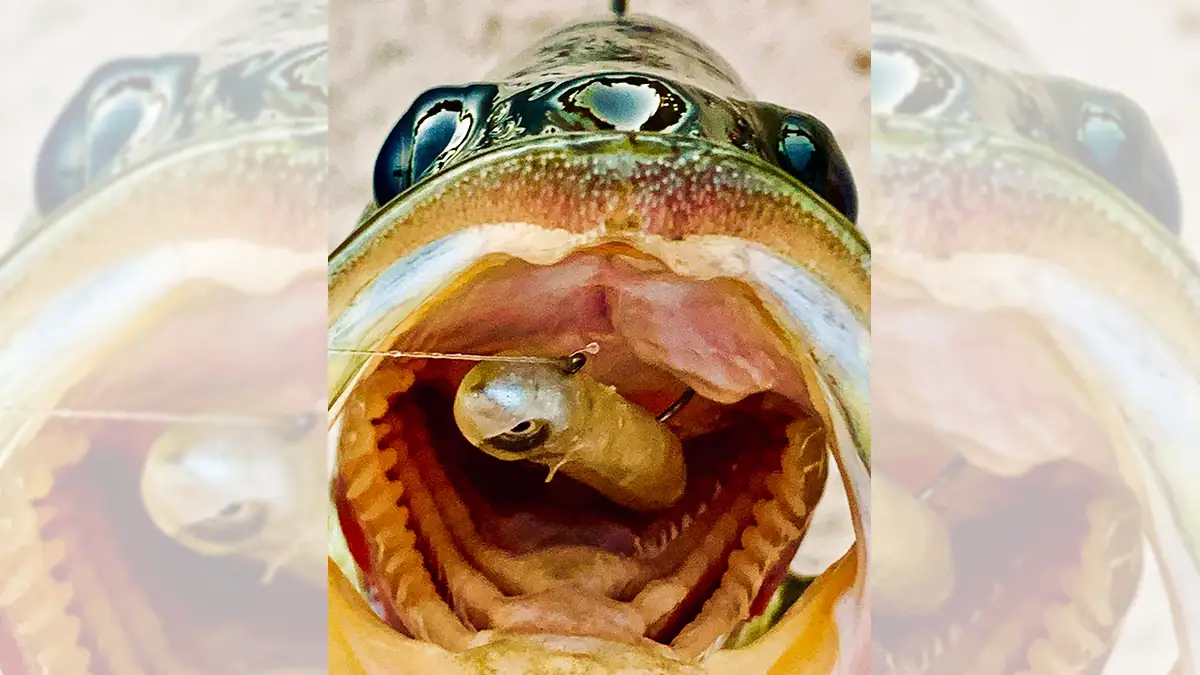
As a bonus, the Hookup Baits organization is also very fishing-community-oriented.
“The Hookup Baits Grom Academy is a program we developed to help support kids getting out on the water,” says Gierlich. “We mentor them on how to be good stewards of their environment, both on and off the water, and have encouraged hundreds of kids to get out and fish in an ethical way. We also sponsor many veterans programs, and we support ‘Made in the USA.’ Hookup Baits are made 100% in San Diego, California, using all local employees. We’re very proud of that.”
Give Hookup Baits a try the next time you’re on the water. If you don’t blink on the sink, they might just hook you.