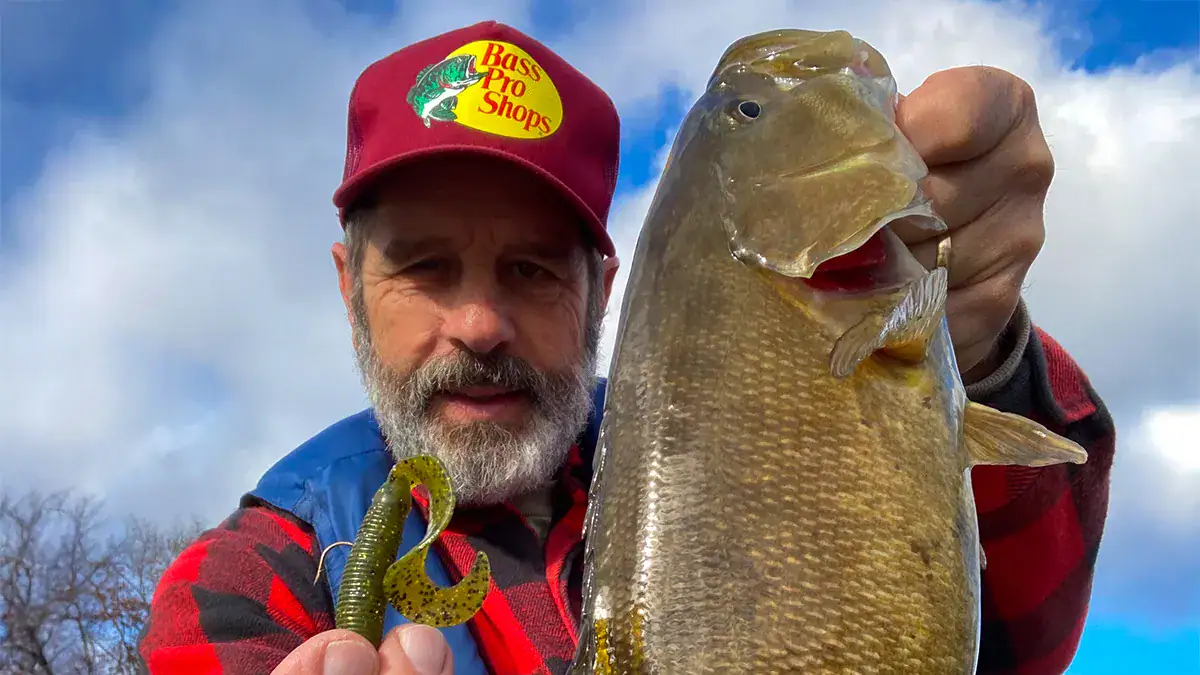
At the first Bassmaster Elite Series event of the 2026 season on Lake Guntersville, elite angler Hank Cherry weighed in a total of 88 pounds, 11 ounces, of largemouth to take home the coveted blue trophy and $100,000 prize. That’s an impressive four-day total anywhere you go in the country, but how he caught them was the shock that broke the internet on Day Four of Bassmaster Live.
Cherry weighed in 27 pounds, 11 ounces, on the tournament’s final day throwing a bait that has been around for years. “I felt like I was 10 years old again; it was incredible fishing. I was throwing a bait that’s older than (much) of the field. I’ve been waiting my whole life to be able to fish a major tournament and do that,” he said.
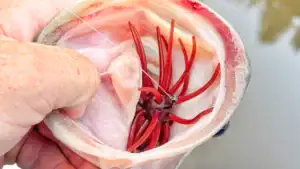
That bait was a three-inch hand-poured chartreuse single-tail grub rigged on a 1/8-ounce ball-head jig. Yes, you read that right. A single-tail grub on a round ball jighead won the highest level of fishing competition.
Some folks think bass fishing has become a high-tech game where certain bait feel like they were engineered by NASA. And don’t get me wrong: Those baits have their place. But when the water’s right and the fish are in a funky mood, few lures get reaction strikes like a simple grub. It has been the “comeback kid” that saved many days of fishing for both largemouth and smallmouth bass. It did it for Cherry, and it can do it for you too. Let me tell you why.
The Irresistible Action of a Single Tail

The whole magic of a grub is in the tail itself. Slide one on a jig head and cast it out; you don’t even have to yank it through the water to get it to wiggle. The current, the slow fall, even the slack in your line will make that tail dance like baitfish fry or a fleeing minnow. Effortless movement is what drives the action on this bait.
It’s that subtle but erratic movement that triggers strikes from bass that won’t touch anything else. I’ve watched fish literally follow a grub right on the bait before inhaling it on the pause. That’s because the tail doesn’t just wobble, it pulsates like something alive. If you’ve ever watched a leech in the water, you know what I mean.
Whether I’m crawling it across a shallow flat at dawn or letting it sink into the shadows of a rocky ledge, that single tail gives off just enough action to make bass make up their minds fast.
Larger Profiles That Bass Can’t Resist
There’s finesse in a grub, sure, but it also packs a big silhouette — and bass love attacking big dinners, especially largemouth. “Bass are opportunistic creatures, and baits that have a lot of action and have a large profile draw fish in and will trigger them to strike more times than not,” says Roy Bilby. Bilby is the head pro-staff for all of the New York and New England Bass Pro Shops and Cabela’s stores, as well as the host of The Angler Within Podcast. If there’s one person I know who knows a thing or two about fishing a grub, it’s him. Bilby’s the one who got me back into throwing it over 10 years ago.
“Single-tail grubs like the Zoom Fat Albert or the Bass Pro Shops XPS Grub have a fat, juicy body that creates plenty of water displacement and flash” Bilby sas. That’s especially important in stained or murky water when bass find meals with their lateral line before they see them with their eyes. The more water displacement, the more vibrations in the water to attract hungry bass.
Another big-bodied favorite is the Jenko Big T Curly Fry. Its long curly tail provides an exaggerated swimming action that bass simply cannot resist once they lock onto it. I like tossing this one around deeper cover where fish can’t see but they sure can feel the vibration, like large laydowns and fixed docks over deeper water.
When you pair a bulkier grub profile with a slow, dragging retrieve around cover or drop-offs, you’re playing to a bass’s instinctive need to feast, not just nibble, and they will engulf it every single time.
A Perfect Canvas for Versatility
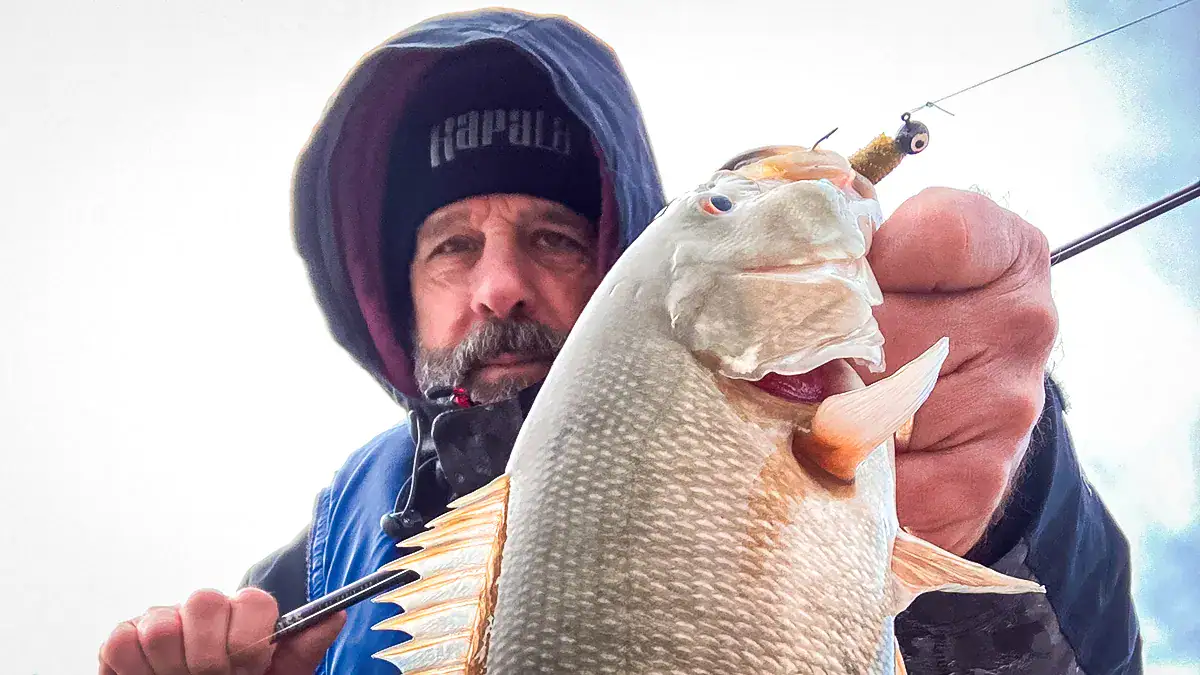
One of the things I appreciate most about single-tail grubs is their adaptability. You can pitch them on light jig heads for a subtle presentation or go heavier and make them get aggressive. You can fish them ultra slow or rip them fast and let the tail do the work.
Take the Berkley Power Grub, a classic that’s been around forever because it puts up with everything. Want a shaky, lift-and-drop style? It handles that. Want to burn it back fast through a school of bait? It’ll stay intact and keep swimming.
And then there’s the Yamamoto Grub, known for its remarkable lifelike feel with soft plastic and packed with salt. When bass grab a Yamamoto, they hold on — that soft texture makes them less likely to spit it out. That means more hookups when fish follow and bump before they commit.
I use a light jig head and slow roll a Yamamoto when the bite’s tough. When fish are aggressive, I’ll upgrade to a heavier head and rip it back through the strike zone. The same basic bait does both jobs.
Bait That Works When Nothing Else Does
Every angler has that one day. You know the one: Fish aren’t cooperating; nothing’s happening. On those days, I reach for a single-tail grub. When you have confidence in a bait, that’s what you pick up in tough conditions.
There’s something about that tail’s wobble and flutter that triggers aggression even when fish seem locked down. You can see it in front of you when you make a cast, let it sink, then start a slow crawl across a flat — and wham, a fish follows, twitches, commits. I’ve had complete blanks turn into action just by switching to a grub. It’s not rocket science: It’s just a presentation acting so lifelike that bass can’t resist.
Works in Every Season
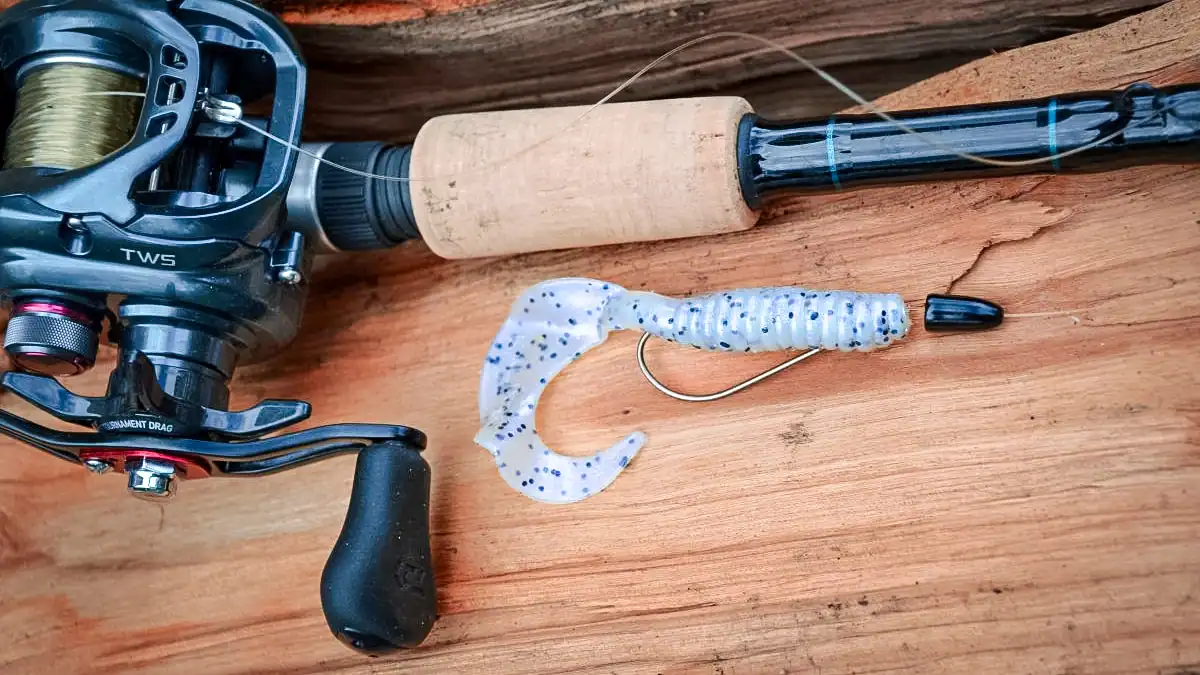
Spring? Grubs mimic newly hatched forage. Summer? They resemble minnows and fry that bass key in on. Fall? They match baitfish in transition and leeches on the bottom. Even in winter, when fish are lethargic and just want something easy to eat, a slow-fished grub will get bites.
In early spring, I’ll stick with more natural colors, like smoke and watermelon, and let the grub’s tail seduce fish cruising the shallows looking for an easy meal. During the heat of summer, I’ll pick darker colors like green pumpkin, pumpkinseed, or black-blue and fish them around deep, hard structures.
And when water cools in the fall, bounce a grub pretty aggressively around weed edges or offshore structure. It regularly produces anger and reaction strikes that other baits simply don’t.
Great for New and Experienced Anglers
Finally, let’s be honest: Single-tail grubs are pretty simple and easy to fish. A beginner doesn’t need a PhD in lure control to get bites when they have a grub tied on — cast, let it sink, hop along the bottom, repeat. It isn’t rocket science, but it is a super simple and effective way to catch fish.
But just because it’s easy doesn’t mean it’s basic. Experienced anglers know how to tease every ounce of action out of a grub, with varying retrieves, targeting specific depths, using different weights, adjusting color based on water clarity.
That’s the beauty of it: a simple bait with complex potential.
A Reliable Classic
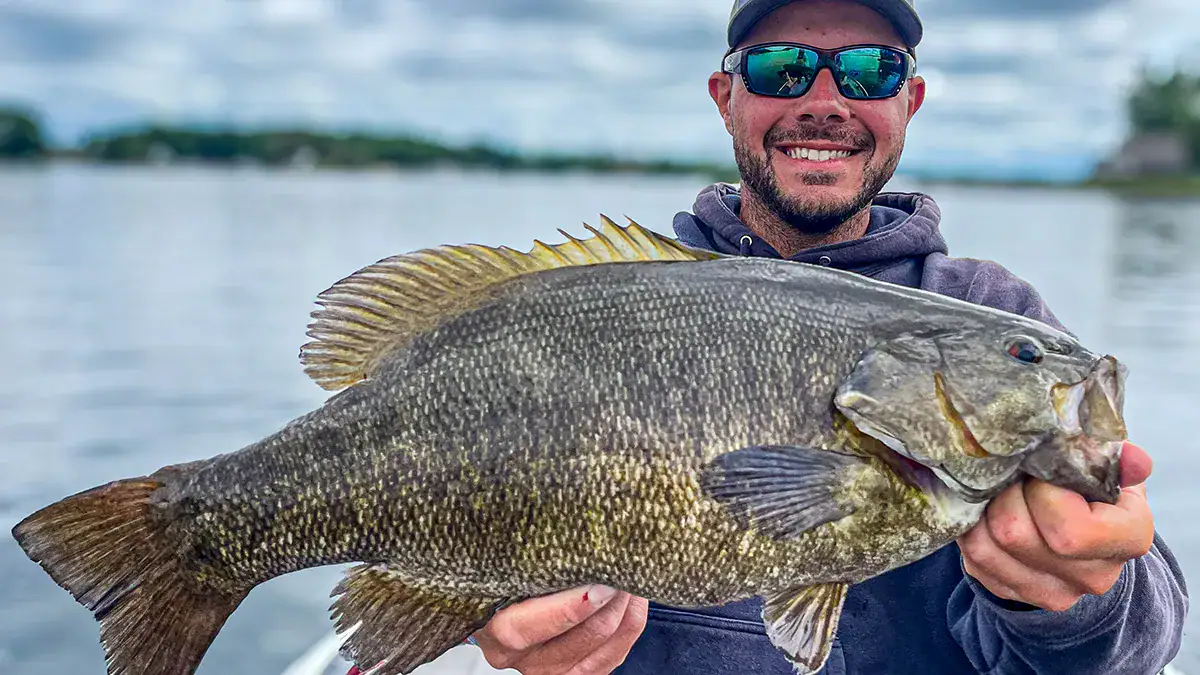
You can spend a lifetime chasing bass with every lure under the sun, and I guarantee you’ll come back to a single-tail grub after some time. It’s a bait that most anglers often forget about. The action of that tail, the versatility of the bait, the confidence it inspires on tough days — that’s why grubs belong in everyone’s bag of tricks. The options are truly endless on how this bait can be worked
So next time you hit the water and in a little bit of pickle on getting bass to commit, try slowing down and breaking out a grub. Once you get a few fish in the boat on one, you’ll have a hard time putting it down.