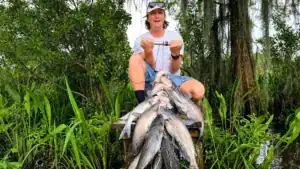
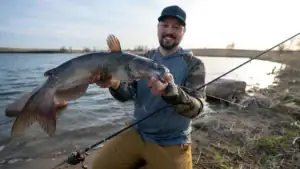
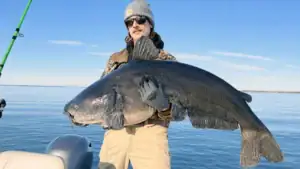
Austin McClure is no fair-weather fisherman. He looks forward to the winter weather many fishermen dread. The bone-chilling cold, bitter wind chills and even a little snow and ice simply mean that some of the year’s best fishing for blue catfish at Truman Lake has arrived. As long as there is open water, McClure will be out there fishing for the big blues other anglers dream about as they sit inside.
“A lot of people think it’s just too cold to go fishing in the winter; that nothing will bite,” said McClure, who runs a guide service on Truman, a sprawling reservoir in west-central Missouri. “But actually, it’s a great time to fish for these blue cats.
“Their metabolism slows down a bit, but they’ll still eat. If it gets cold and it stays cold, they’ll bunch up and you can have some great days.”
Cold Temps = Hot Bite
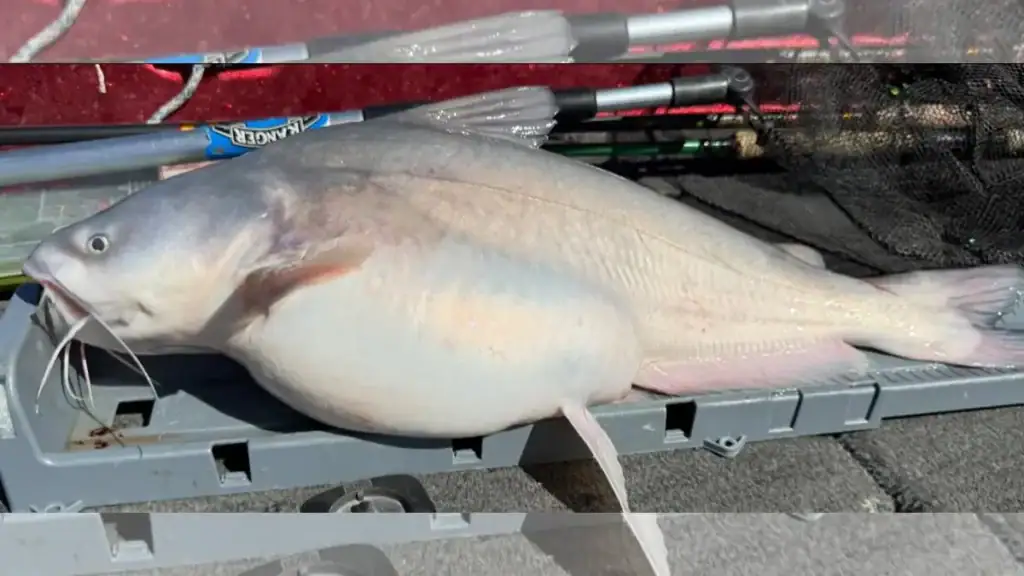
The winter bite often begins when the water temperature drops into the 40s. It can continue into March when the water warms and the large schools of blue catfish begin to break up.
McClure follows a simple rule of thumb: Find the big schools of shad and the schools of blue cats usually won’t be far away.
The cats group up around their food source in the cold water and aren’t as apt to roam as they do at other times of the year. McClure knows where to look. He fishes the upper end of Truman and starts his search in the deeper holes.
He focuses on the big, deep bends in the channel or pockets where the wind is blowing in on that channel. He uses the side scan on his electronics and looks for balls of shad. Then he backs his boat off that activity and uses either the drop-down talons at the rear of his boat, spot-lock on his trolling motor or an anchor to stay in place.
While he often trolls with planer boards or drifts the flats when the water is warmer and the catfish are scattered, he wants to sit in one place during the winter.
McClure baits his hooks with small chunks of fresh cut shad, casts the lines out and waits. If the fish are there, it usually doesn’t take long for them to respond.
“In the winter, you can sit on one or two schools of fish and just kill them,” said McClure, 28, who lives near the giant reservoir. “I took a father and son out the other day and we had to break ice to get where I wanted to go.
“But we caught our limit in two hours.”
At both Truman and Lake of the Ozarks, there is a slot limit on blue cats. Fish measuring 26 to 34 inches must be released, and the daily limit of 10 may include only two fish measuring 35 inches or longer.
The big fish are no longer as plentiful as they once were, McClure said. But he is seeing increased numbers of fish in the slot — 26 to 34 inches — that have to be released immediately. And there are still good numbers of smaller blue cats for anglers wanting to keep fish for table fare.
“We still catch lots of fish from 23 to 29 inches, which are nice fish,” McClure said. “Even when you have to release those slot fish, they’re a lot of fun to catch.
“You can warm up real fast when a big catfish hits.”
That was the case when he took a couple who were long-time clients out on a cold day. It was the husband’s birthday, and he wanted to celebrate by catching a big blue catfish. They started by catching some medium-sized fish, but when the action slacked off, he stepped to the back of the boat to take a telephone call.
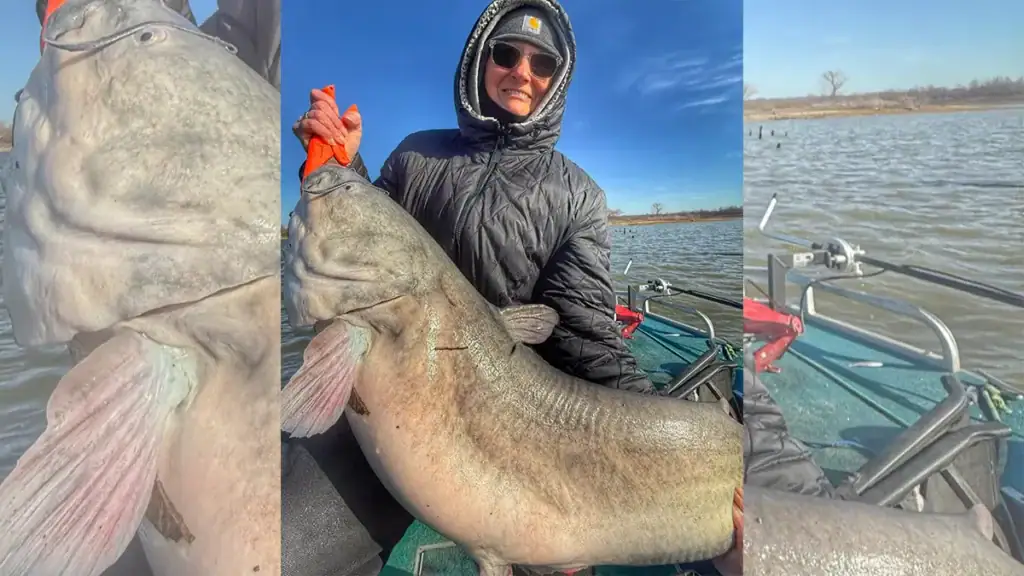
No sooner was he gone that a big blue cat paid a visit. His wife ended up reeling in a fish that measured 46 inches.
How To Get It Done
McClure starts his day by using a cast net to catch live shad. Then he cuts those baitfish into small chunks to use throughout the day.
He uses his signature series of Edgar Rods — a 7-foot-6 baitcasting rod, paired with a large baitcasting reel and 60- to 80-pound test braided line with a 40-pound test monofilament leader. He likes to use big no-roll sinkers and 8-ought size hooks.
“Deep” is a relative term in the water McClure fishes in the winter. The channels he fishes are often no more than 20 to 25 feet deep. But those spots are still deeper than surrounding water and serve as a natural travel lane for the baitfish the blue catfish feed on.
“I like to fish transition areas, “ McClure said. “If it gets warmer for couple days, those fish might move shallower, but they’re still close to that deeper water.”
McClure credits much of his success fishing for blue catfish to his mentor, Cody Vannattan, a guide who is a local legend at Truman.
“He has taught me so much about how these blue cats,” McClure said.
McClure is a busy guy, even in the heart of winter. He also guides for crappies, and he takes a similar approach to fishing for blue catfish.
“They have a lot in common,” he said. “The baitfish will determine where they will be.”
McClure also guides for paddlefish once the Missouri snagging season opens March 15. But he intersperses those trips with outings for blue catfish.
“Even when you find the big schools of blue cats, they’re not always active,” he said. “But I try to go into a trip with a Plan A, a Plan B and a Plan C.
“I know where they like to hang out in the winter. I’ve had days when I’ve gotten on active fish and caught (and released) 50 or more blue cats from one school. That’s a lot of fun.”