In the sonar-laden world of modern bass fishing, there’s a good chance you’ve never heard the phrase “worming a crankbait.” But once you give it a try and get a feel for how this technique works, you’ll understand why that’s the perfect terminology.
A Texas-rigged worm is perhaps the best lure out there for dragging slowly through woody cover, like laydowns and brushpiles. You can get a worm right into every nook and cranny and keep it close to the cover. To “worm a crankbait” is to do the same thing, only with a crankbait.
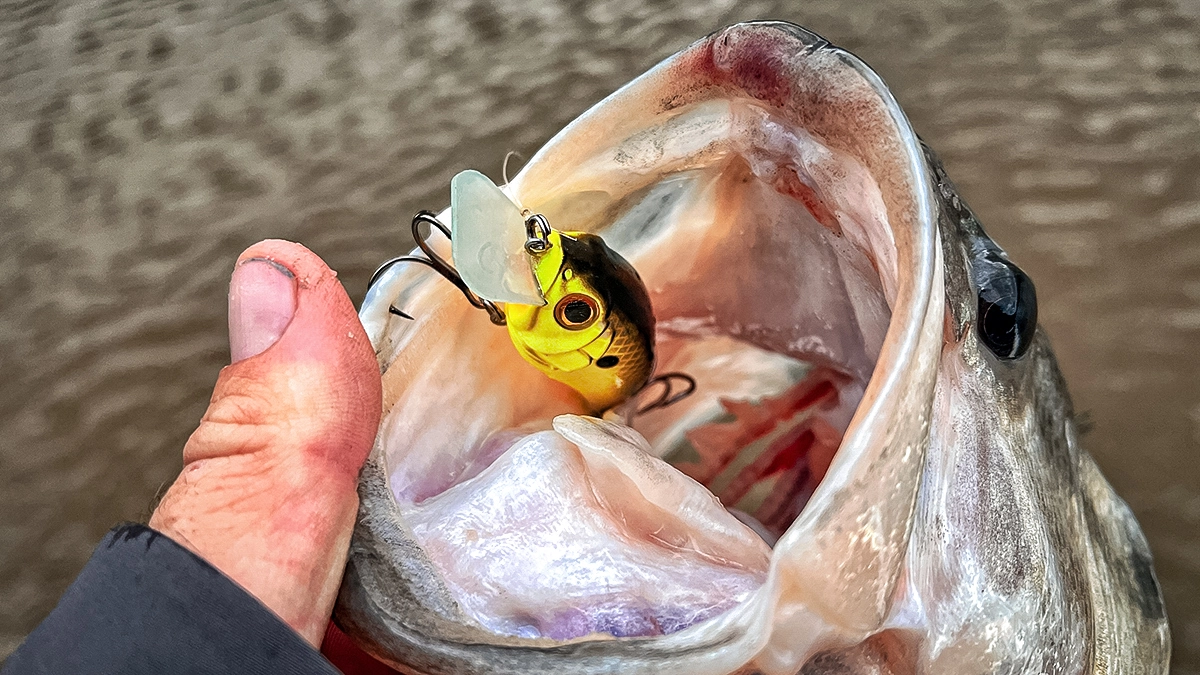
The objective is to crawl a squarebill or shallow diving crankbait through the heart of the cover, presenting the bass with a more aggressive reaction bait. And it works wonders, especially in cold water.
How to Worm a Crankbait
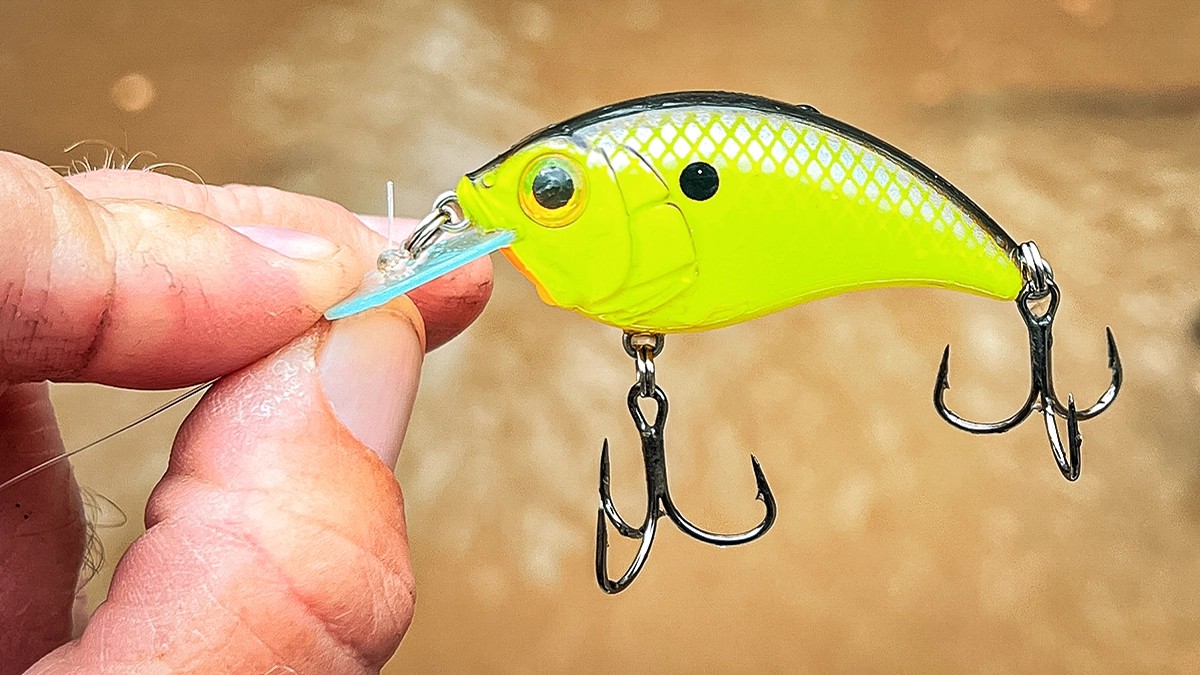
For a laydown, throw your bait all the way up to one side of the tree trunk and use your rod tip to keep the bait as close to the tree as possible. As you get to the limbs, you can continue to move your rod tip left and right to pick your path and worm the bait through the limbs. The goal is to keep the bait as close to the cover as possible.
Checking out the aquarium is one of my favorite things to do at Bass Pro Shops. I’m always amazed at how closely the bass will tuck up against the rocks and under the wood—and just as those bass sit really tight to cover, so do bass in the real world. Keep your bait close to cover and you’ll be in the strike zone.
Don’t Fear Getting Hung
When worming a crankbait through a tree, my dad always says you want to “scrape the bark off.” While that figurative image is meant to convey how close you should get your bait to the tree, sometimes you do literally scrape the bark off.
But then there’s times when your line wedges between the bark and the tree, and your bait gets hung up. Be patient, go and get it undone, and trust the method. As another one of Dad’s sayings goes, “If you’re not getting hung every now and then, you’re not throwing where the fish are.” Getting hung on occasion is just part of the process.
Go Slow and Develop a Feel
One of the big keys to this technique is to fish your bait slowly. It’s already essential for getting bit in the colder months, but fishing a crankbait slowly also will prevent a lot of hangups.
When you feel the cover, don’t snatch—just let the bill do its job. By design, the bill of the crankbait will make contact with the cover and the tailend of the bait will kick up. If you keep slight pressure on the bait, it should roll right over the cover; you can even pause the bait and it will float up free of the cover.
Don’t Set the Hook Too Soon or Too Hard
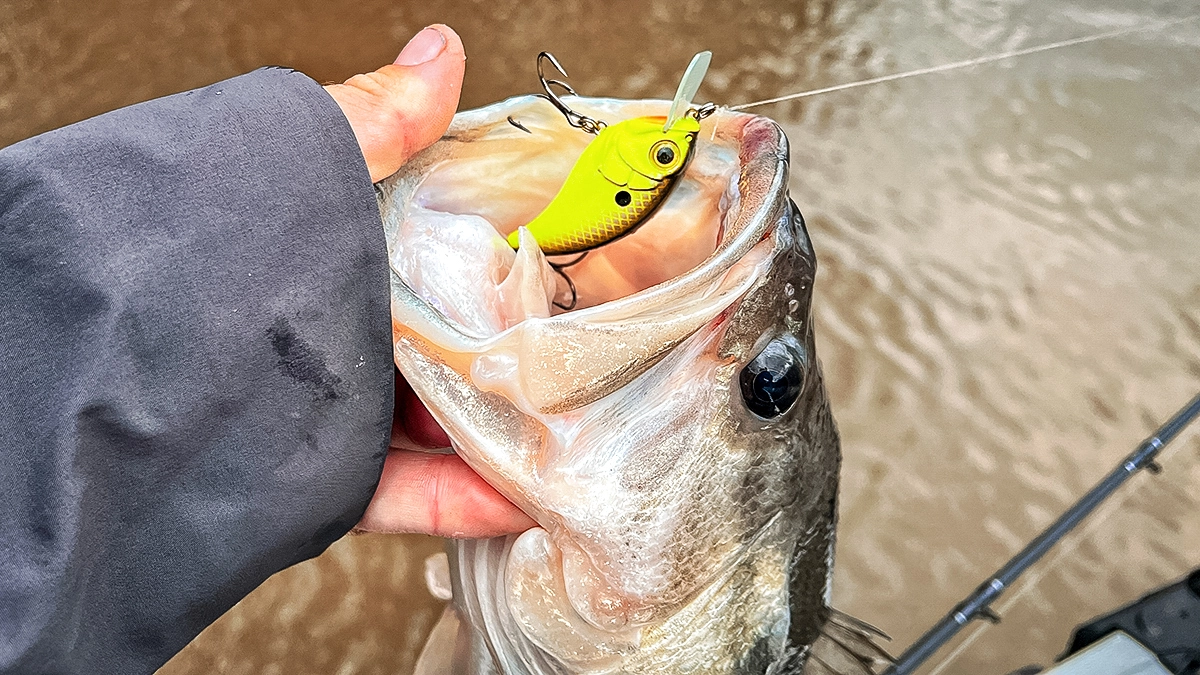
It’s hard to train yourself not to set the hook when you first feel your bait make contact with the cover, but bass hook themselves with these baits most of the time anyway. If you can convince yourself to give it a beat before leaning into them, you can use that split second to determine whether that was a bite or a bump with cover.
When it’s a bite, you’ll feel tension almost immediately as the fish pulls back—that’s when you can lean into them. You definitely don’t want a hard hookset though, which startles the fish even more and can cause them to bury up in the cover. I’ve rolled big ones out of thick cover before they even realized what was going on by using a gradual pulling hookset that just lifts them up and out.
The Right Gear
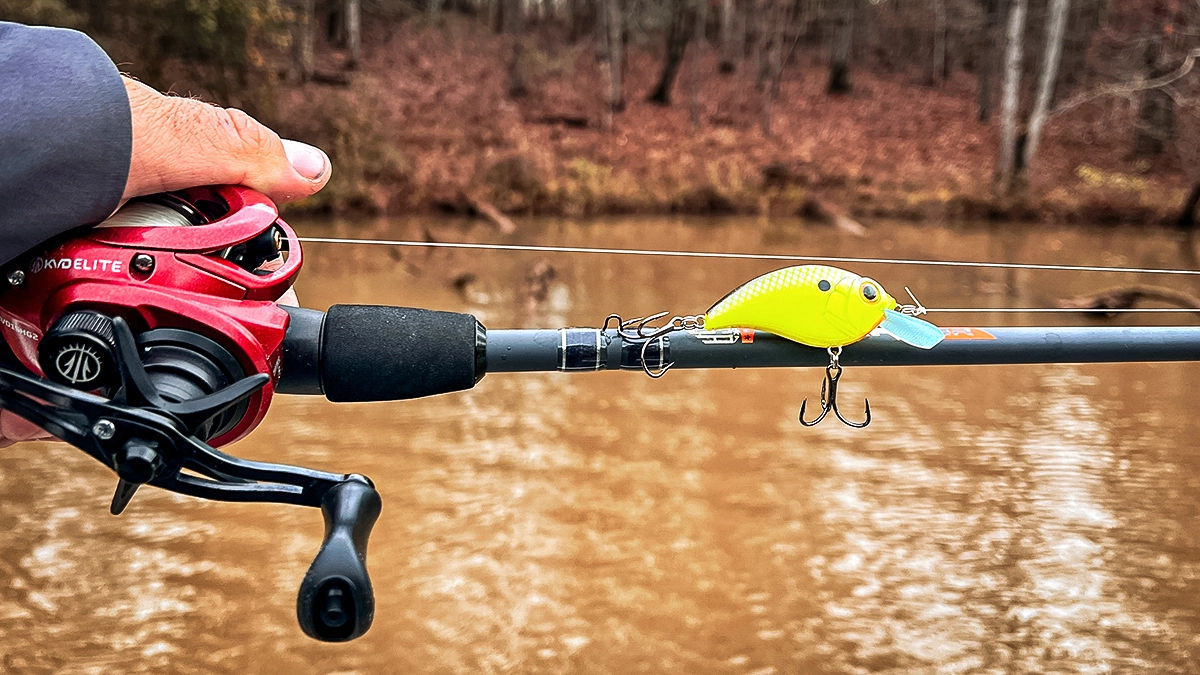
For this style of fishing, you’ll want to beef up your gear a little. A 7’ medium heavy fast action casting rod is a better choice than a more limber crankbait-specific rod: You’ll need to wrestle fish from the cover sometimes, so you’ll need a little backbone. Due to that cover, you’ll also need a little stronger line. Fifteen-pound test is sufficient if needed, due to clear water and high pressure conditions.
If I’m in stained or muddy water where I know big ones live, I’m going with 17-pound test Seaguar InvizX, and could even see myself using 20-pound test somewhere like Lake Guntersville. Seventeen is usually best though, because it’s strong enough and has a little more stretch than the 20-pound.
A Recent Experience
Worming a crankbait is a really fun way to fish. It keeps you on your toes, as your bait is constantly bumping into something, causing your wheels to steadily spin as to whether it’s a bass or a bump on the log. This can be a challenging way to fish, with hangups certain and buried-up fish hard to get out. But it is quite exhilarating to have a big one hit a crankbait in a tree and go nuts.
My most recent catch doing this involved a three-pounder that bit, went under a limb, and then did a tail-walking jump between the limb and the boat. After the aerobics, it returned to the limb and got hung up. I spent about five minutes trying to free the fish, certain toward the end that it had already come off.
Finally and reluctantly ready to give up, I pulled on the line, the limb broke off, and the fish came rolling up from the tree. I jumped down, grabbed a hold of it, and was fired up to get the bass in the boat.
The point of the story: If you get a bite this way, it’s usually a memorable one.