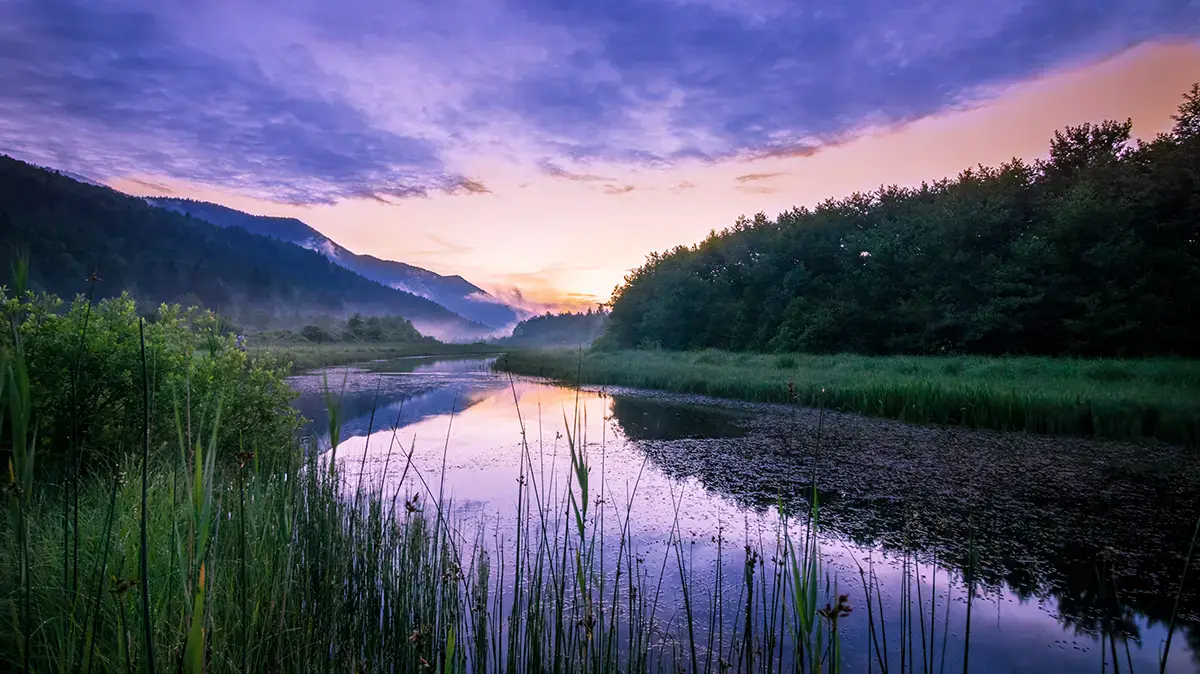
Rivers are alive. They breathe, move, and shift with the seasons, the weather, and even the hour of the day. To someone who just sees water flowing from one point to another, it might look like chaos. But to a fisherman who’s learned to read it, a river is full of structure, opportunity, and predictable patterns. Whether you’re chasing smallmouth bass, walleye, catfish, or trout, the key to success is understanding how to break a river down into pieces and find the spots where fish naturally want to be.
Understanding The Flow
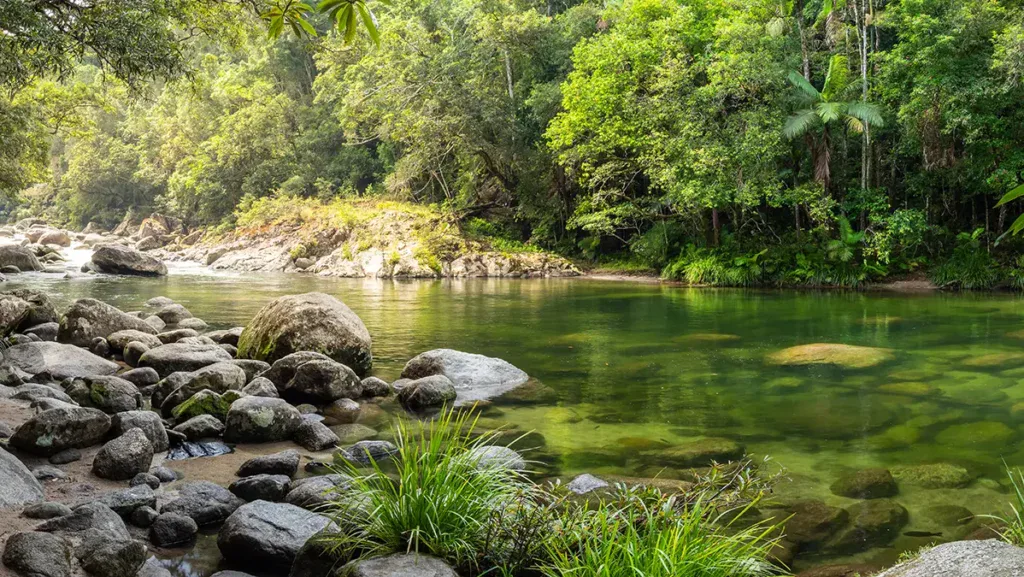
Every river has one defining characteristic, that’s current. That constant flow dictates where fish hold, feed, and rest. Before you even make a cast, take a few minutes to watch how the water moves. Look for the speed of the current; where it accelerates, where it slows, and where it changes direction. You can understand this by looking for three main characteristics in a river system. Those are pools, riffles and runs.
- Pools: These are deep water pockets within the river, normally found on sharp bends and at the ends of fast runs. These areas hold many species of fish and are often used as wintering grounds during the colder months.
- Riffles: When you see water moving fast over a very shallow section of river, this is called a riffle. They are areas of very shallow rock which often go dry in the heat of the summer. Besides trout and smallmouth bass, not much else occupies these shallow areas.
- Runs: If a pool and a riffle had a baby, it would make a run. These are usually just a long section of shallow, featureless water with a steady current flowing through it. Typically, these are used as travel corridors as they don’t have much going on to make the fish hold there.
Fish are energy efficient creatures. They’ll rarely sit in fast, featureless current because they’d burn more calories than they gain from feeding. Instead, they position themselves just out of the main flow, in places where the current brings them food but doesn’t exhaust them. Those areas are what fishermen call current breaks, and they’re the first clue to unlocking any river system
Some common current breaks include:
- Eddies: Circular pools of slower-moving water behind rocks, logs, or bends. Smallmouth, walleye, and trout love these because baitfish often get trapped in the swirling water.
- Seams: The (nearly) invisible lines where fast water meets slow water. Fish sit right on the edge, darting out to grab food drifting by.
- Backwaters: Calm areas completely out of the main flow. These hold baitfish, panfish, and most of your warmwater gamefish.
All of these spots hold fish throughout a given year. Catching fish involves determining which are higher percentage areas throughout the seasons.
Breaking Down River Sections
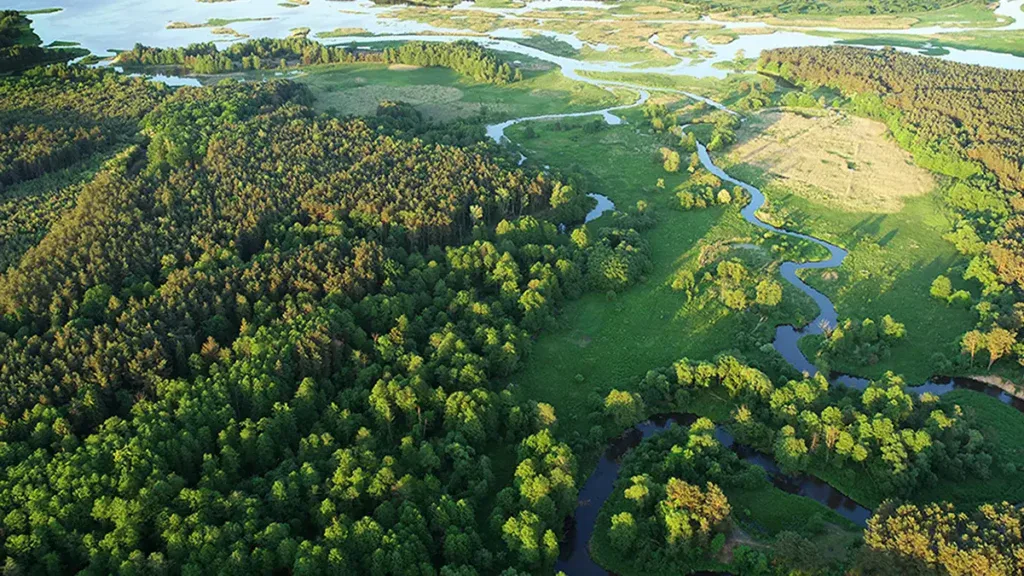
Most rivers can be divided into three basic zones: the headwater (upstream cold-water areas), the middle (main cool-water flow), and the tail (downstream or lower, warmer water stretches). Each section can hold a different mix of species and structures.
Headwaters
The upper sections of a river are often narrower, faster, and rockier. Oxygen levels are high, and temperatures are usually cooler. Mostly trout and some smaller smallmouth bass dominate these areas because they thrive in moving, oxygen-rich water. Here, look for:
- Riffles and runs with small rocks and gravel.
- Undercut banks where fish hide in the shade.
- Small pools below rapids where fish rest and ambush prey.
Mid-River
As the river widens and deepens, the current slows and structure becomes more varied. This is the playground for species diversity. Many species such as smallmouth, walleye, catfish, pike and even some brown trout can all share this water. Key areas include:
- Deep holes near outside bends.
- Submerged timber or logjams.
- Mid-river rock piles or boulder fields that create breaks in the current.
Lower River and Mouth
Downstream, the river often flattens out with slower current, softer bottom, and deeper channels. Walleye, catfish, freshwater drum, pike and largemouth bass dominate here. The best spots tend to be:
- Channel edges and drop-offs.
- Deep holes below dams or bridges.
- Confluences where tributaries enter. These mix water temperatures and attract baitfish.
Reading Structure and Cover
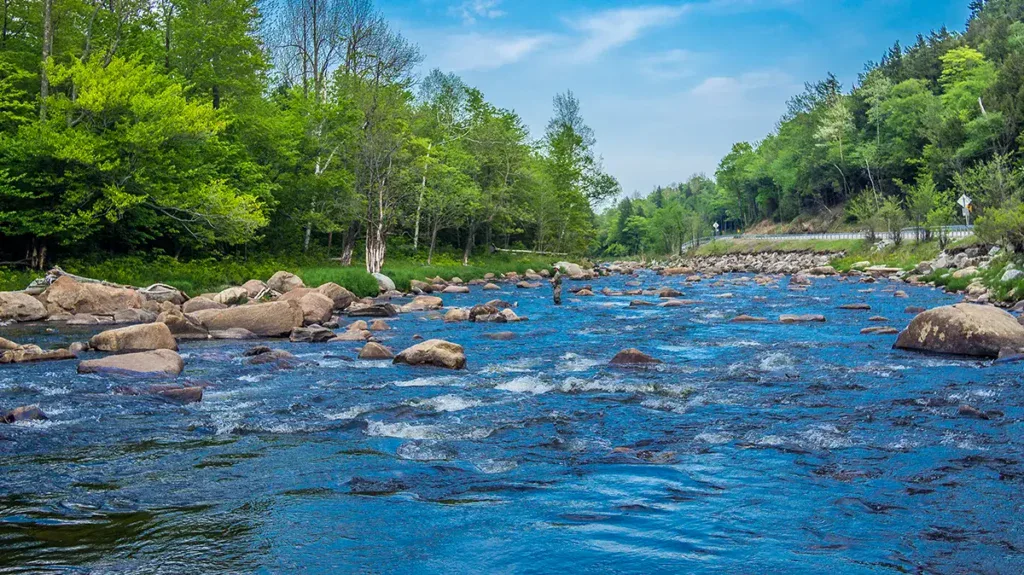
Once you’ve got a feel for the flow and general layout of a moving water system, start focusing on structure (changes in the riverbed) and cover (objects in the water). These are the magnets that will position fish in different ways throughout the system.
Here are a few different structure and cover types to pay attention to:
- Rocks and Boulders: Create current breaks and shade. Smallmouth love them, especially when baitfish or crayfish are nearby.
- Logs and Laydowns: Offer protection and ambush spots. Catfish and bass tuck under these, especially in slower water.
- Weed Beds: Found more in slower stretches and backwaters. Great for pike, and largemouth.
- Sandbars: Form natural edges and drop-offs which are perfect feeding lanes for walleye and bass.
- Manmade Structures: Bridges, pilings, and riprap banks often attract multiple species due to shade and current deflection.
If you can identify how each piece of cover interacts with the current, where it slows down, where it funnels food, and where it creates hiding spots, you can predict where fish will hold even before you see them. Just remember, if you can see the fish, they can see you.
Seasonal and Daily Adjustments
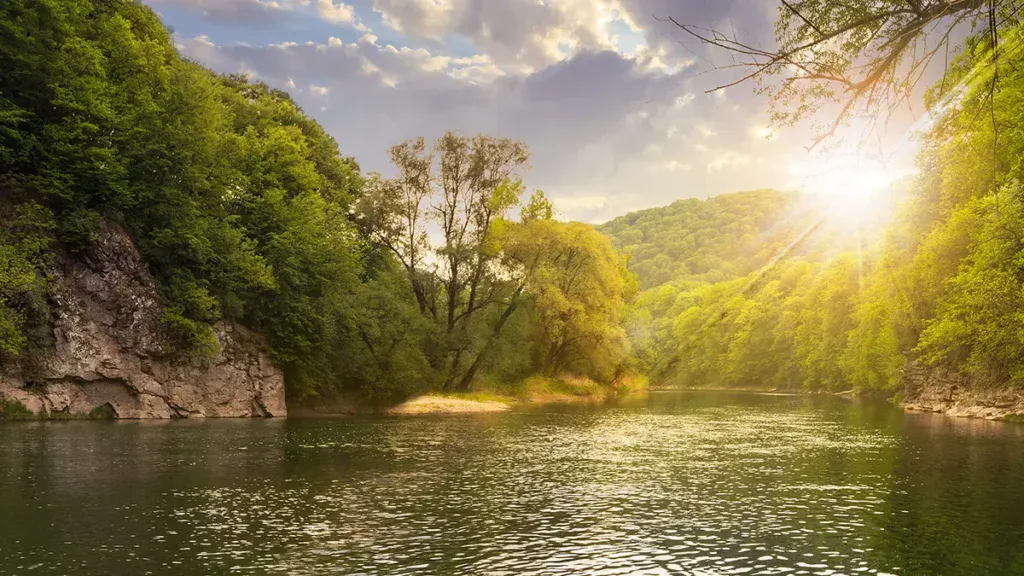
A river changes constantly, and so do the fish. It is important to pay attention to the seasons and how fish relate during them. Remember, whether it’s rivers or lakes, fish still do the same things and follow the same seasonal movements no matter what the water body.
Here are some seasonal patterns to consider when fishing rivers:
- Spring: Fish move into shallower, slower areas to spawn. Smallmouth and walleye often use gravel banks and current seams. Largemouth and catfish slide into flooded timber or backwaters.
- Summer: When the water warms, oxygen levels drop in slower water, pushing fish toward faster-moving, shaded areas or deeper holes. Early mornings and evenings become prime time for all species of fish, especially trout and walleye
- Fall: Baitfish schools move upstream or into current breaks, and predator fish follow. It’s a feeding frenzy before winter, and moving baits like crankbaits or spinnerbaits can be deadly. This time of year you can catch a variety of different species all stacked up in the same areas feeding on the same bait.
- Winter: Most species settle into the deepest, slowest pools available, conserving energy. You have to watch for feeding windows during the winter. Fish don’t need to feed every hour every day. Watching for windows during the warmest part of the day will increase your bite percentage.
Even within a single day, current speed, light, and temperature can shift fish positions. When in doubt, start shallow in the morning and move deeper as the sun rises.
Matching Techniques to the River
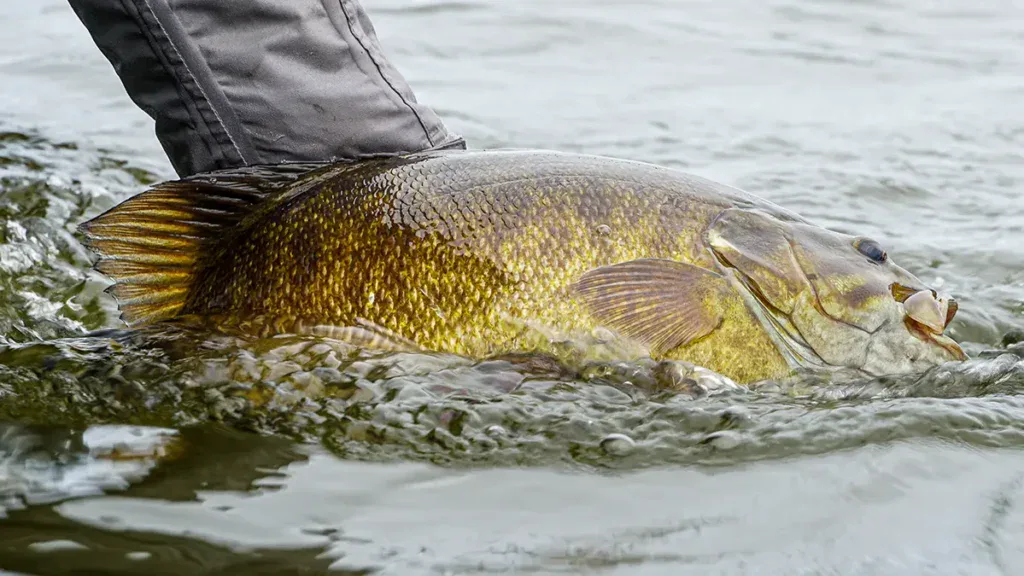
Each species prefers different presentations, but a few general rules hold true:
- For Bass: Cast parallel to current seams or behind rocks with soft plastics, crankbaits, or topwaters in low light. Drag jigs or small plastics near the bottom mid day
- For Walleye: Work jigs or live bait along bottom transitions and deeper edges where current slows.
- For Catfish: Anchor near deep holes or bends with cut bait on the bottom.
- For Trout: Drift small lures or flies naturally with the current through riffles and pools.
- For Pike: Look for calm areas behind grass or blow downs in the river.
No matter the species, always cast upstream and let your lure or bait drift naturally with the flow. Fish are used to seeing food come from above, not below.
The River’s Language
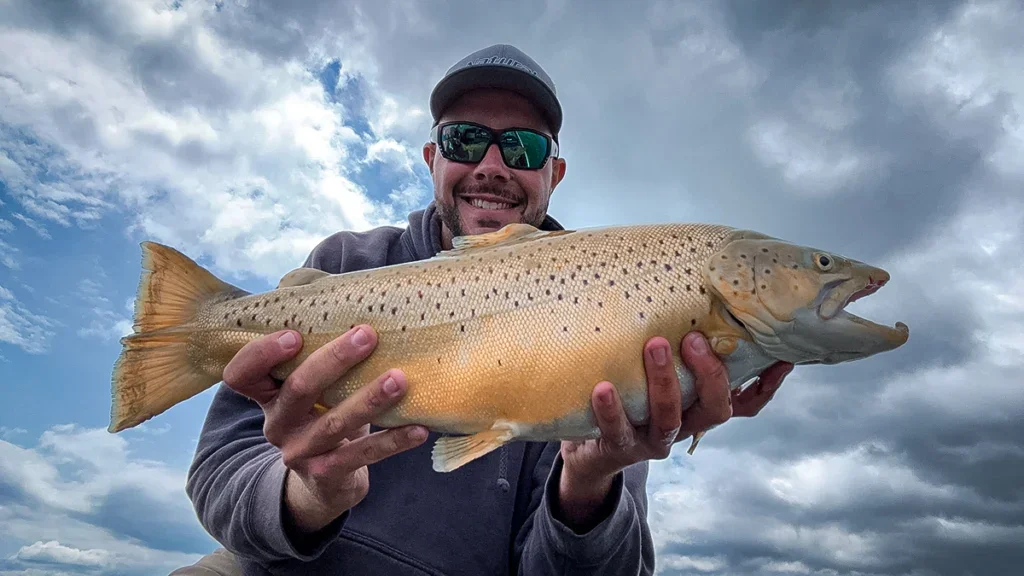
The best river anglers don’t just fish, they observe their surroundings. The swirl behind a boulder, the flicker of baitfish near a seam, or the faint push of water around a log, all tells a story and paints a picture for a bite. Each current line, each eddy, is a clue to where life gathers and feeds.
When you take the time to slow down and read a river, you start to realize it’s not random at all. It’s a system that rewards patience, observation, and understanding. And once you learn to see it that way, you can fish anywhere there’s moving water, from a mountain stream to a muddy southern river, and find success.
Reading a river isn’t just about finding fish, it’s about learning to see the water the way the fish do.