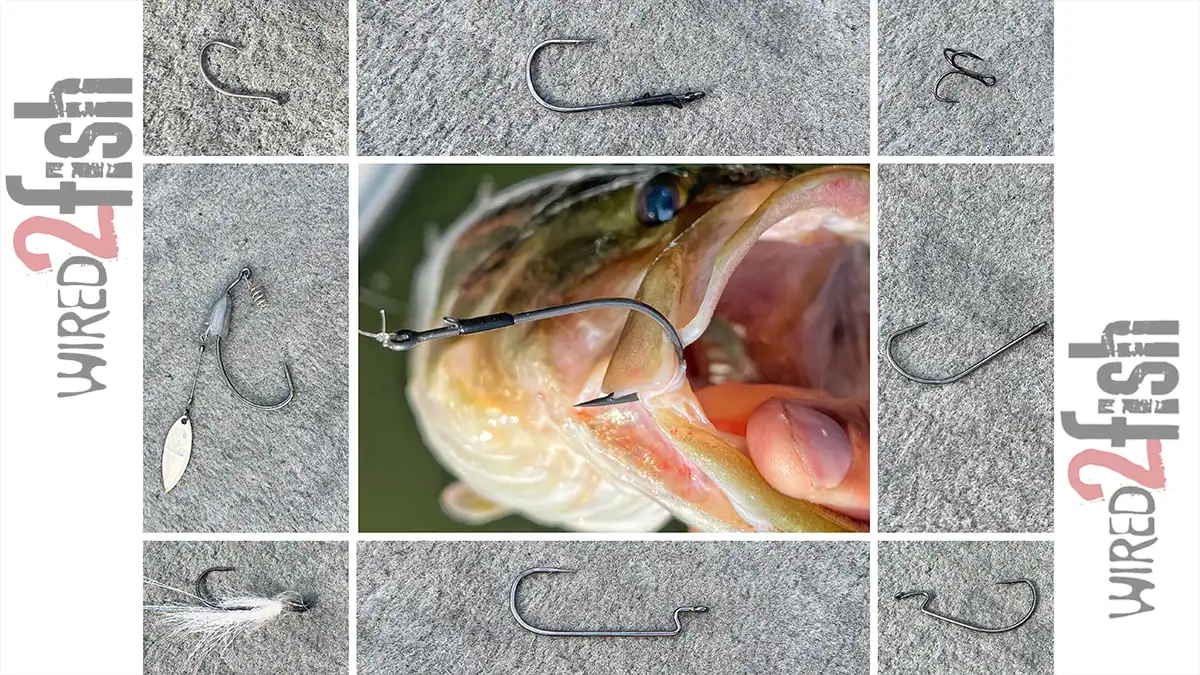
Whether you consider bass fishing a pastime, hobby or sport, it can be difficult to jump into. For starters, fishing can get expensive really quickly. But, even if you’re able to approach fishing with a budget-conscious mindset, trying to process and prioritize all the techniques and gear can be overwhelming. There are so many ways to catch a bass on so many baits and rigs. Where do you start?
Well, we’re here to help with your hook selection. We highlighted eight hooks that every bass angler should have in their tackle box. And we’ve organized the hooks in descending order of importance, with the most important hooks starting at the top. Let’s jump into it.
Worm Hook
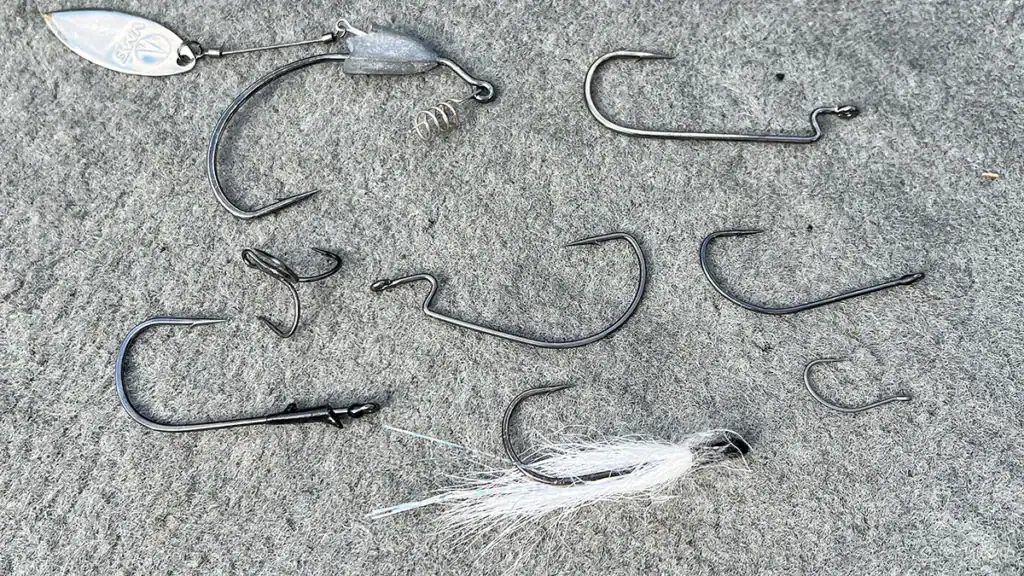
The offset worm hook is the most versatile bass hook of them all. These hooks typically have a round bend and can be used to rig all sorts of soft-plastic baits weedless. Whether you’re fishing with a weightless, slow-sinking stick bait, a bottom-bouncing lizard, or a weightless fluke twitched across the surface, a worm hook is the perfect choice for them all. A great example of the worm hook is the BKK Armor Point Offset Worm Round Bend Hooks.
To use this hook, tie the hook to your main line or leader. Then run the point of the hook through the nose of your bait about 1/4 inch, popping it out of the bottom of the bait. Slide this section of the bait up the shaft of your hook and over the corner bend at the top, until it covers the eye and rests on the bend. Then, take the bait and bend it slightly, insert the hook point into the midsection of the bait, pull the bait straight and skin hook the point to make the rig weedless.
EWG (Extra Wide Gap) Hook
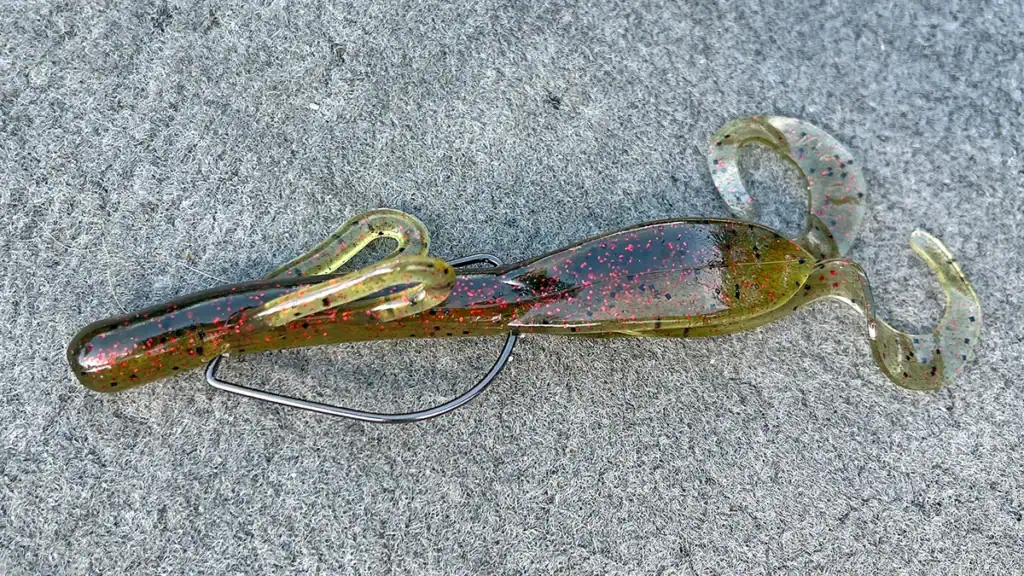
The Extra Wide Gap (EWG) hook is the second most versatile hook; it’s one that you’ll definitely want in your tackle box. An EWG hook functions in many ways the same way that a worm hook does. You’ll still use this hook to rig soft plastics weedless. A great example of the EWG hook is the VMC Redline Series Heavy Duty Wide Gap Hooks.
But this hook differs from a worm hook in one key way — it has an extra-wide gap. The wider gap allows you to fish thicker baits. If you try to rig a tube, creature bait or swimbait on a regular worm hook, you’ll have a hard time hooking the fish. There’s just too much plastic in the way. The EWG however has enough space in the bend for the bait to slide away from the hook point, exposing it so that it can penetrate the fish better.
Straight Shank Hook
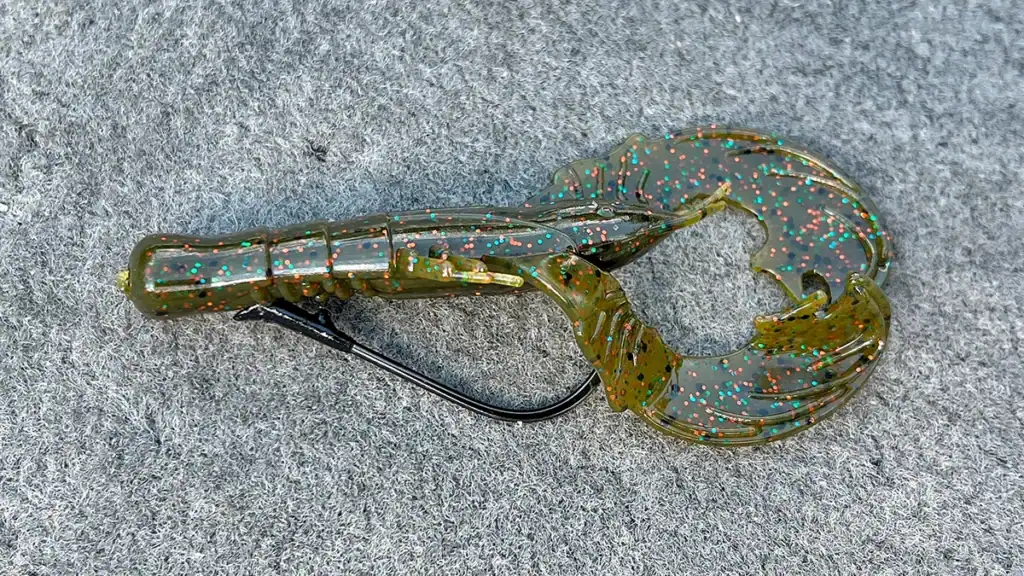
A straight-shank hook is another very important hook for bass fishing. Whether we’re talking about a Roboworm Rebarb Hook for drop-shotting or a VMC Heavy Duty Flipping Hook for punching mats, both have one key trait in common—a straight shank.
Straight shank hooks are great for presentations that require hook orientation to be prefect. Using a straight shank hook on a drop-shot gives you an upward-facing hook point that is poised and ready to pin a fish in the top of the mouth. Likewise, a straight shank hook is ideal for punching and flipping because you can snell the line to the hook, which offers a unique leverage and angle.
The angle that baits are rigged on straight shank hooks also maximizes the effectiveness of their gap, causing these hooks to land sort of between a worm hook and a EWG, even though their gap is often no bigger than that of an equivalent sized worm hook.
Treble Hook
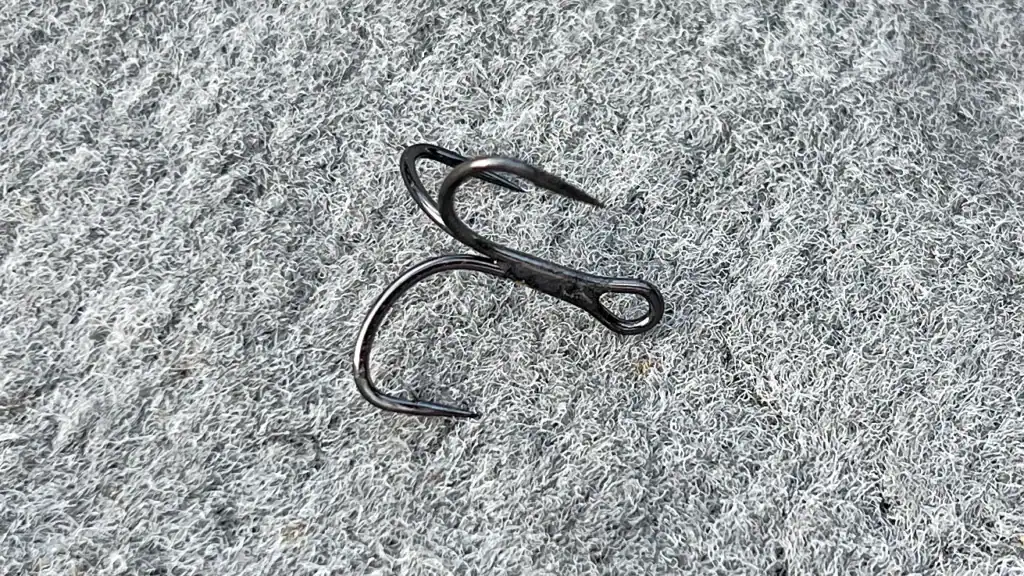
Treble hooks are essentially three individual hooks all welded together onto a single shaft. A treble hook falls to fourth on this list not because it is any less important than the three hooks before it, but because it isn’t as necessary to have in your tackle box. Most baits that require treble hooks come with the hooks already on the bait. However, it is a good idea to keep a few packs of treble hooks in your tackle box.
For starters, you may just want to upgrade the hooks that came on your bait, swapping to something that’s a little stronger, sharper, or bigger. You can also use treble hooks in a variety of other ways; here are three that we broke down in a previous article.
If you’re wanting to change out your existing trebles, try this as a rule of thumb. If you’re fishing with a bait that can go entirely in a bass’s mouth, like a lipless or squarebill, go with an upsized short shank EWG treble. If you’re fishing a bait that the bass will likely swat at, like a glide bait, Spook, or even a jerkbait, it’s a good idea to go with a round-bend hook.
The hook point turns in more on EWG trebles, creating sure hook-ups with fish that eat the bait completely. While the hook point flares out further on a round bend hook, offering more opportunity for a swatting fish to hook itself. A great example of a treble hook is the Mustad KVD 1x Strong 2x Short Triple Grip Treble Hook.
Drop-Shot Hook
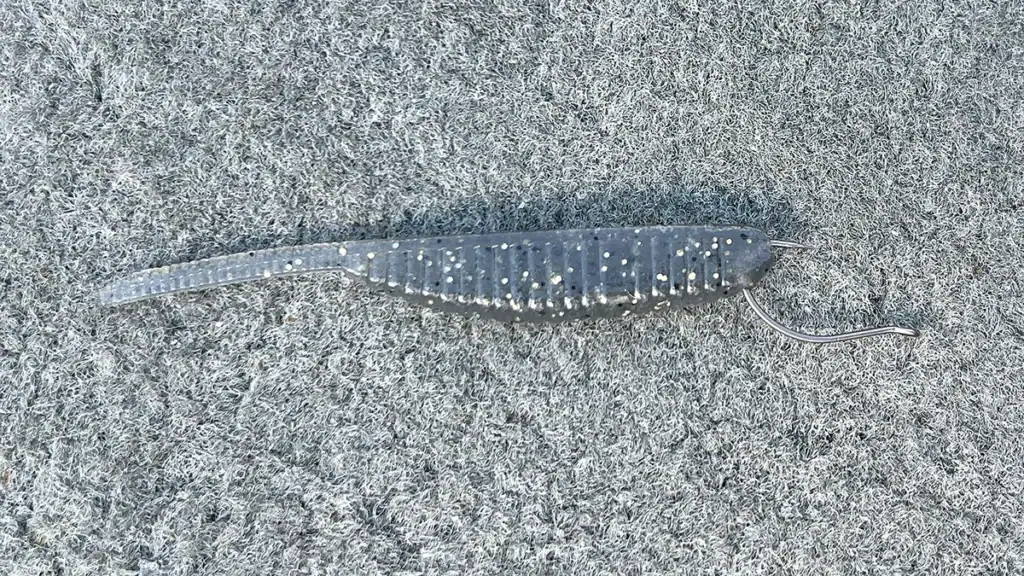
While you can certainly use a small straight shank or EWG hook to rig a dropshot weedless—and I recommend doing so when fishing around brush—the most common dropshot hook looks more like a short-shank, circle hook. Circle hooks, octopus hooks, mosquito hooks and more fall into this category and can be used to nose hook a dropshot bait.
Nose-hooking a bait (by running the hook point into or through the nose of the bait) makes for a much better hook-up ratio and a much more natural presentation. These hooks are great in particular for small baits, measuring three inches or less. If you try to rig smaller baits weedless on any other type of hook, their action is limited. Putting a small, circular drop-shot hook through the nose of the bait creates a free-moving, much more natural presentation. A reliable dropshot hook is the Daiichi Drop Shot Hook.
Wacky Rig Hook
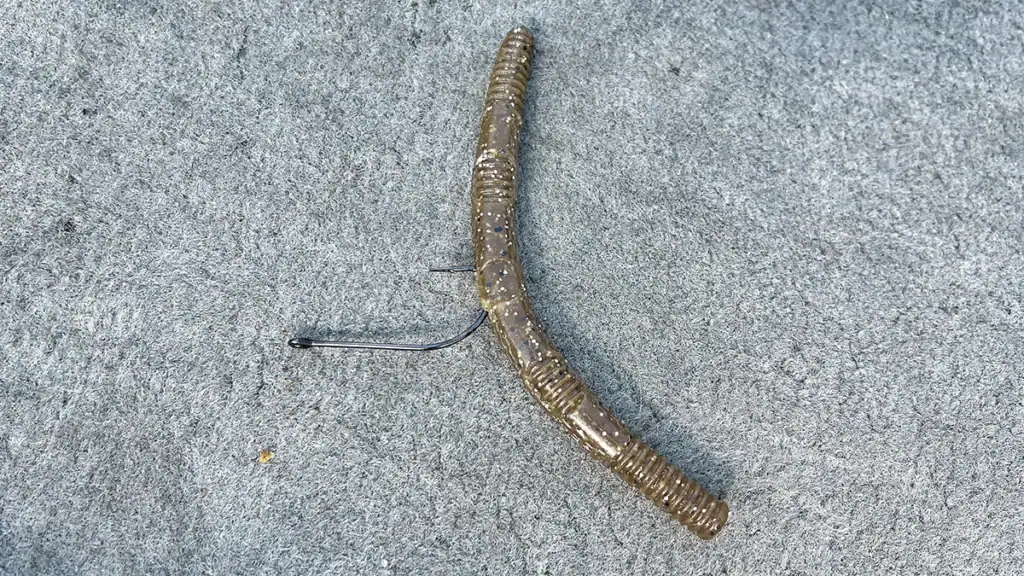
Many wacky hooks can be lumped into the category of straight shank hook or circle hook, but these are still different enough to warrant a section of their own. For starters, you have the option to either go with the basic wacky hook or to use a weedless one, which has a weed guard on it. If you’re fishing in open water or even around sparse vegetation, the plain, open hook is fine. But, if you get around wood, docks, and other hard or dense cover, it’s a good idea to swap to something with a weed guard.
Most wacky hooks also double as Neko hooks; they are just rigged a little differently. A wacky rig is rigged with the hook perpendicular to the orientation of the worm. A Neko rig hook runs inline with the worm, with a Neko weight in one end of the bait and the hook pointed toward the opposite end. Using the same guidelines, you can determine whether you’ll need a standard wacky hook with your Neko rig or a weedless one. A great example of a wacky rig hook is the VMC RedLine Series Weedless Wacky Neko Hooks.
Trailer Hook

Though the need for trailer hooks is less common, they are still extremely important. Keeping a few different trailer hooks on hand can be the difference between a great day on the water and a bunch of “one that got away” stories. I highly recommend using a trailer hook on spinnerbaits and buzzbaits, and I even use them on vibrating jigs quite often.
Adding an extra hook to the back of these baits creates more hookups with fish that are swatting at the baits. But it also really locks those bass on that ate the bait well, which could easily still throw the bait during the fight without a trailer hook. A quality trailer hook is the True Bass Deer Hair Spinnerbait Trailer Hooks.
Trailer hooks often carry some of the same characteristics as straight shank or circle hooks. But there’s one key difference – the eye of a trailer hook is considerably larger, so that it can fit over the point and barb on the main hook. Some trailer hooks come with a hook keeper incorporated into them, so that they won’t accidentally come off the hook. Or you can add a hook keeper if needed, like the Gamakatsu Silicone Stoppers.
Screw-Lock Hook
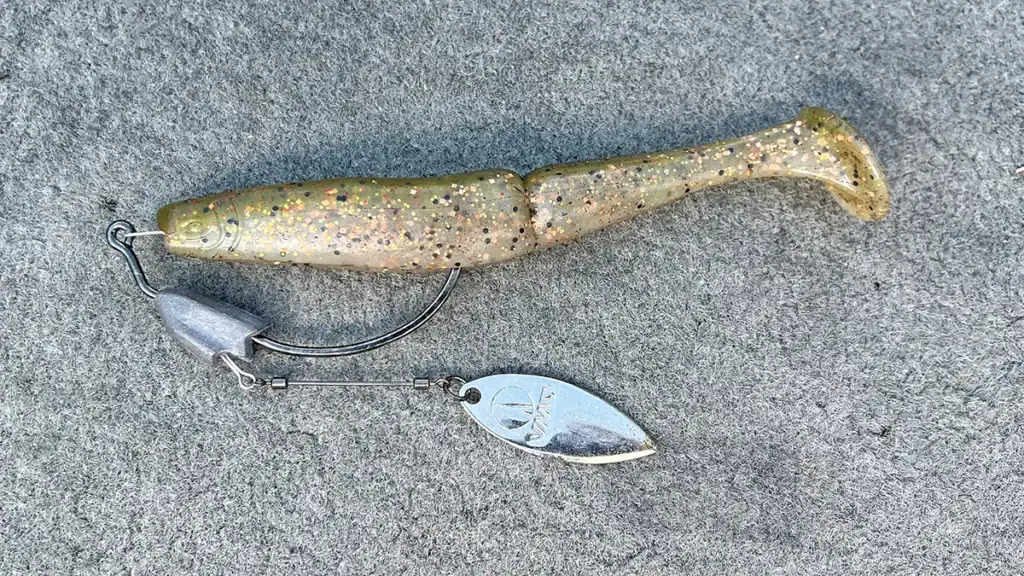
Screw-look hooks bring up the caboose of this conversation, because they are unique enough that they warrant mentioning. These hooks usually equate to a worm or EWG hook, but instead of having the sharp Z bend in the neck for the soft plastic to sit, the heads of the baits on these hooks are secured by small springs (screw locks).
This style of hook (EWG) is super effective for two types of soft plastics in particular: a toad and swimbait. Both of these lures have a good bit of plastic to them. The EWG hook already helps mitigate some of the negative effects. But the head of the bait is also able to swing freely on a screw-lock hook, allowing the plastic to move into the bend and out of the way more easily. This creates a better hook-up ratio. Screw locks also, typically, preserve the integrity of the head better, meaning each of these pricey baits lasts a little longer. There are plenty out there, but one dependable screw-lock hook is the Gamakatsu Superline Spring Lock Hook.
Final Thoughts on Hooks
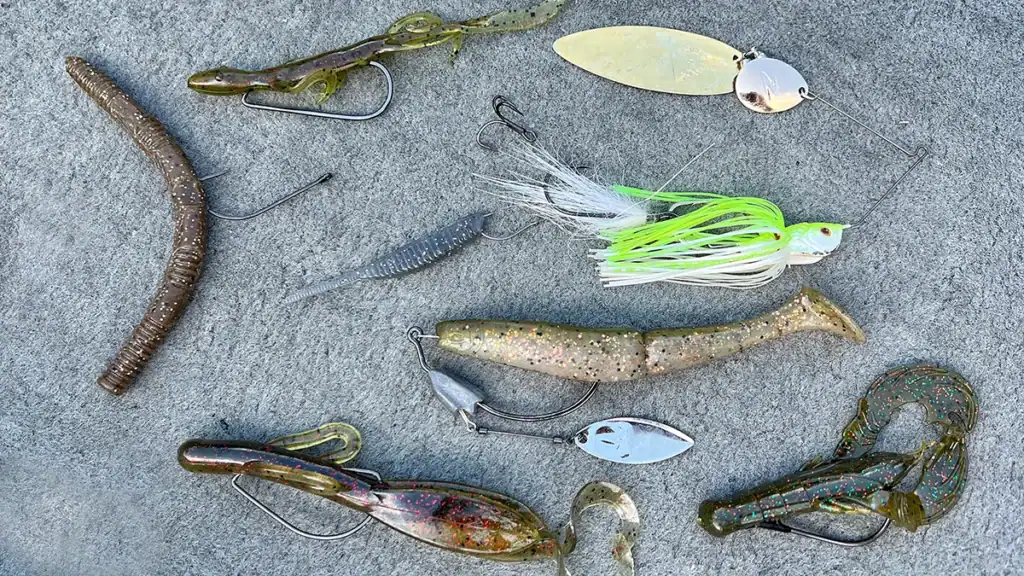
There are obviously more hook types in the bass fishing space that could be mentioned here. And there are a dozen critical jigheads you’ll want in your tackle box as well. But as it pertains to hook styles, if you start at the top of this list and work your way down, you’ll be in great shape. Not only the hooks in your tackle box, but you’ll also need the knowledge of how to use them. With those two pieces, you can achieve 95 percent of what you want on the water.