The humidity hit me like a wet towel from an indoor swimming pool, but at least it smelled like citrus. Then my sunglasses fogged up faster than a dog panting in my face. Water temps were expected to stay at 88 degrees most of the morning — just another day in paradise in Central Florida’s endless summer.
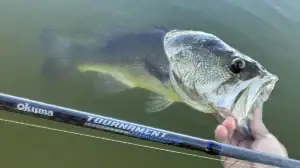
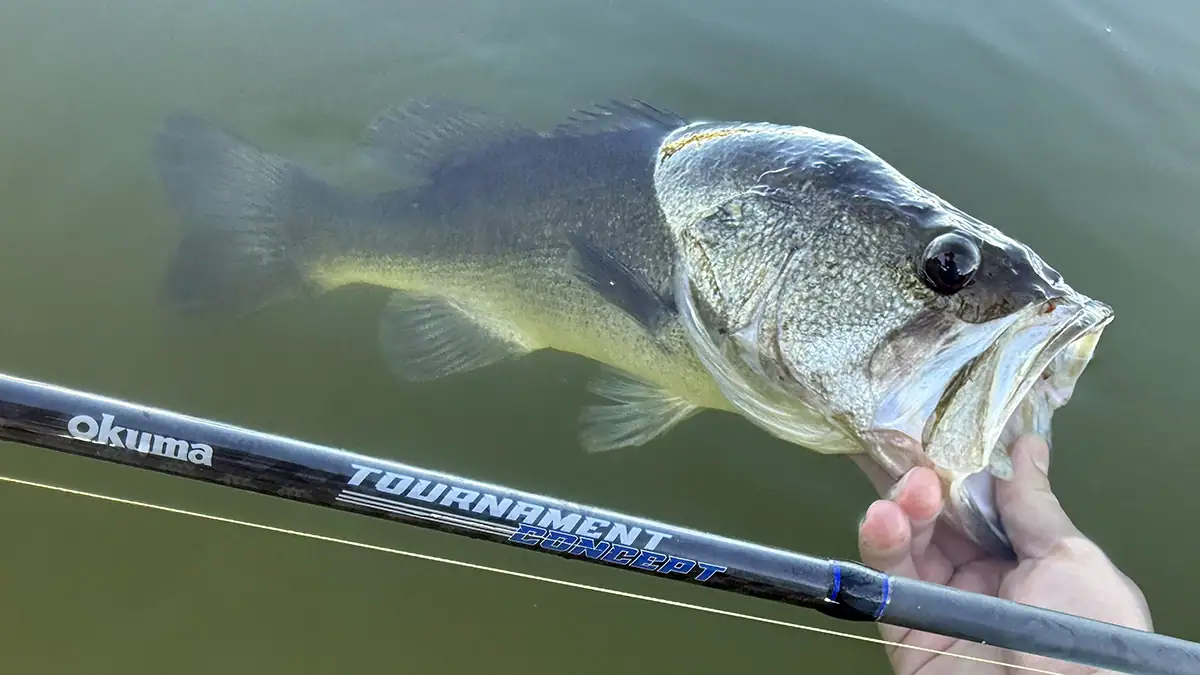
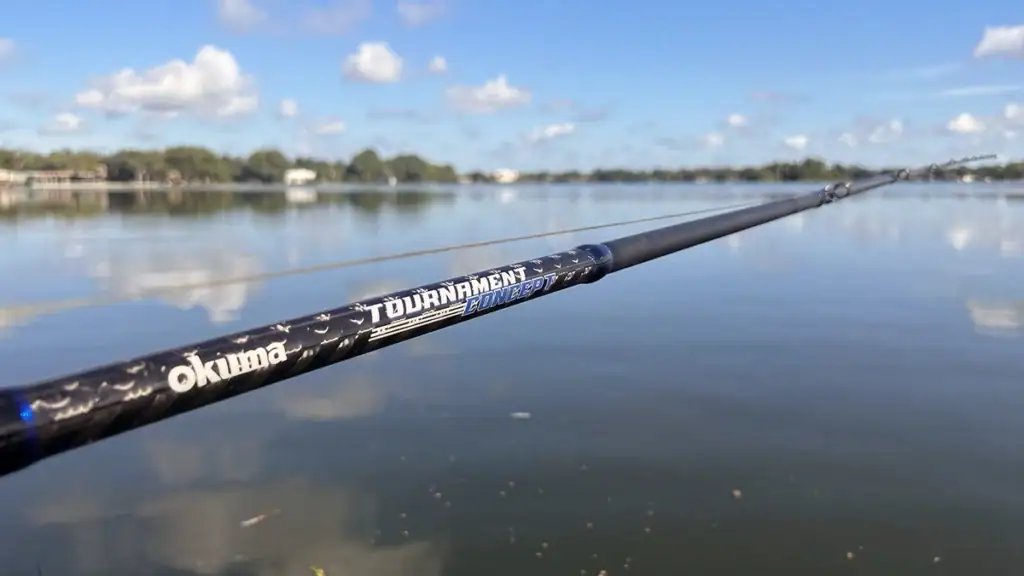
But the heatwaves never returned after August, and I was thankful for that as I headed toward one of the deepest holes in the lake. Honestly, not much structure ever shows on the finder here, but its depth must feel like a nirvana to bass. My priority was to fish the new Okuma Tournament Concept Bass Rod B Series casting rod. The baitcasting rod hits a rare sweet spot in the $160 to $190 price range, and we ran a popular giveaway on Wired2fish that received a bunch of attention. I’ve wanted to try one out ever since.
I had the 7-foot, medium-power, moderate-fast-action stick meant to cast ⅜- to ¾-ounce lures. The Tournament Concept bass rods offer technique-specific options in both spin and casting options. Built on a 30-ton carbon blank, these rods have obvious tactile sensitivity that I fell in love with right away. And I needed that responsiveness to detect subtle bites in deep water because I fish a worm deep and slow pretty often. I also fished the rod plenty of other ways too, including some manners in which it probably wasn’t meant to be fished.
Summer Fishing is Something Else
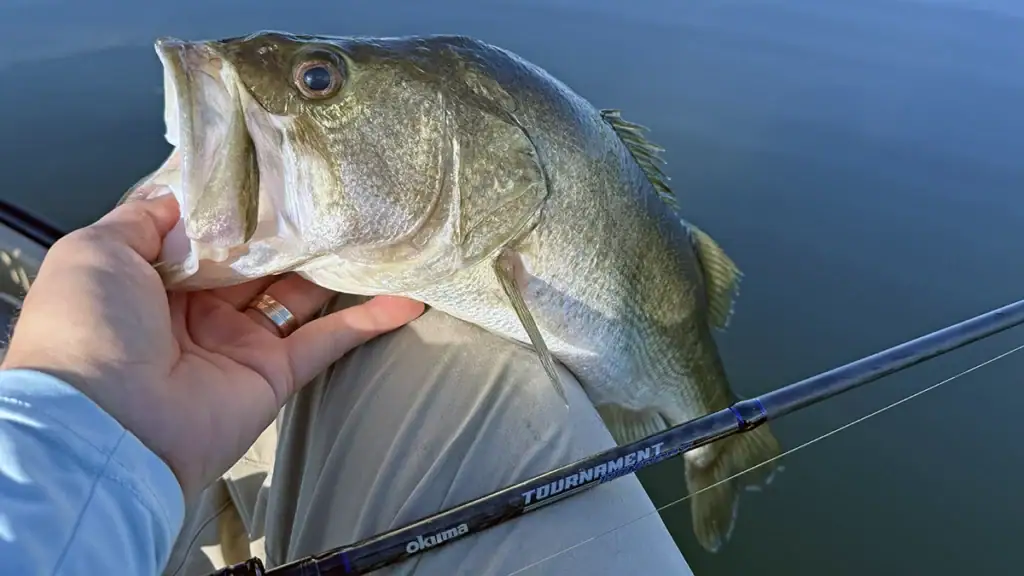
My conventional tactics go out the window when fishing during the hottest months of the year in Florida. Structure is important most seasons, but I disregard that almost completely in the heat and look for holes (we’re talking 15 to 20 feet) surrounded by shallower water. Plus, I read a recent study that kept tabs on tagged bass, and researchers found that larger ones over 20 inches often stayed on featureless flats and deeper zones, spending significant time away from obvious structure.
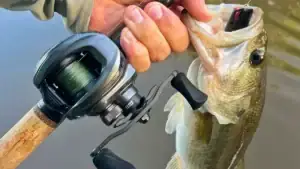
I paired my Tournament Concept rod with Okuma’s Helios XT casting reel, with its 11 bearings and JDM-inspired audible drag clicker when a fish pulls line. The new lightweight reel handled like a dream for a number of styles of fishing, including Texas rigs, jigs, and crankbaits.
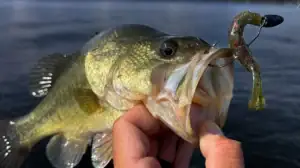
One spot near an island is where I hooked into a decent bass with an oversize head. I was fishing a hole that wasn’t covered in weeds, so I cast out a jig-and-softbait presentation and worked it slowly along the bottom. Most of the other spots had thicker weeds several feet off the bottom, and that’s where I fished a couple of my favorite worms like the Zoom Trick Worm, Z-Man FattyZ, Rapala Crush City Janitor, Strike King Rage Menace Worm, and Berkley Powerbait Maxscent Hit Worm.
No doubt about it, the Tournament Concept model I fished was a great worm stick. I had strong hooksets and the fish stayed connected even when they jumped. The sensitivity was there, and I easily noticed when some fish simply picked up my worm instead of striking it.
The TCS B Series rod performance is designed for real-world abuse on the water. The rod blank strikes a practical middle ground: stiff enough to transmit vibration instantly, yet forgiving enough not to snap under heavy loads. Instead of standard cork that degrades over time, Okuma used tapered TPE split grips that resist wear, wipe clean easily, and stay tacky when wet. At times, I did have to wipe fish slime from the grips.
The hook holder on the rod sits below the reel seat. Placing that hook keeper low prevents line tangles by stopping slack line from catching the keeper during windy conditions. For bass anglers, this lower positioning protects the carbon rod blank from structural damage because it keeps heavy baits like Texas rigs, jigs, or punch weights from swinging against and scratching the upper part of the rod.
A Focus on Hardware
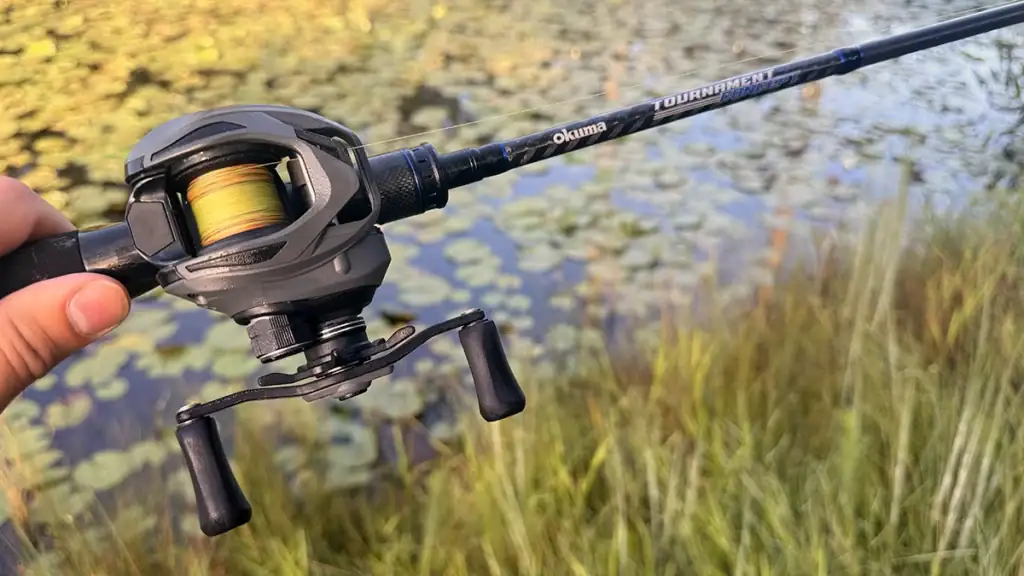
Okuma’s hardware on the rod can best be described as functional reliability. The rod is fitted with Fuji K-Concept guide frames, which are angled specifically to shed line loops and virtually eliminate wind knots when throwing light braid. I was using 22-pound braid from Sunline. FazLite inserts inside the eye frames are smooth and tough, ensuring long casts while handling friction of braided line without cracking over time.
Besides Texas rigs, I also covered ground by drifting across deep flats while casting crankbaits. And that’s truly when I was able to test vibration, sensitivity, action and castability. It’s also that one time during the day when I wished my setup was rigged with fluorocarbon main line. But summer bass love the mini crankbait, and I was able to catch a bunch of smaller fish where the flats reached the weed line. Two of the bigger fish I caught were likely suspended on the flat, acting almost pelagic in nature.
My Biggest Takeaways
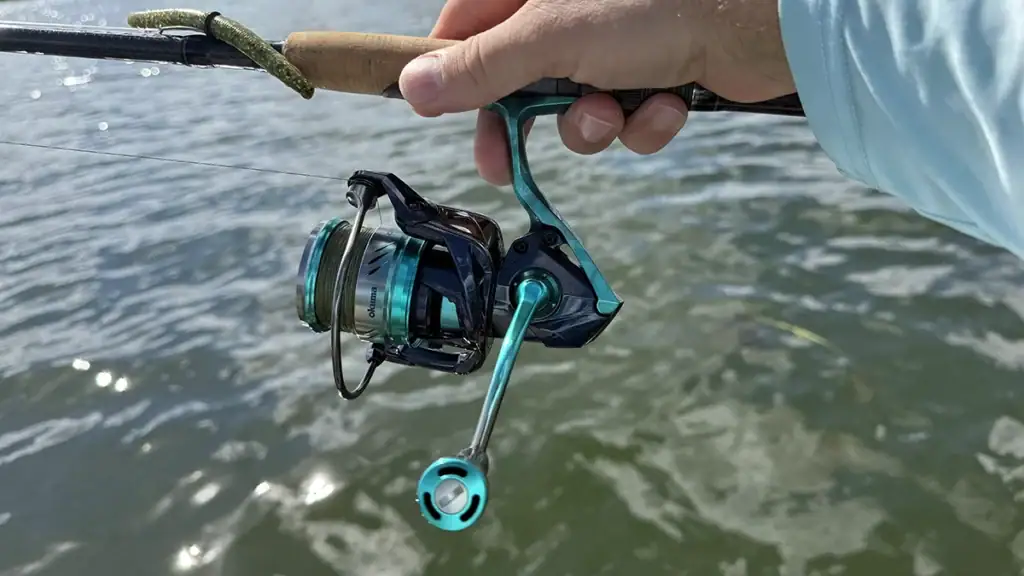
Versatility across the lineup is where the series truly excels, featuring 15 technique-tailored models split between 11 casting and 4 spinning options. I used a casting rod while also having a blast testing out the Okuma Helios XT. But I also brought out Okuma’s 40th Anniversary Commemorative spinning reel to use for casting lightweight stickbaits. I had it paired to a different rod, but I bet it would have performed well on a Tournament Concept spin rod. (That commemorative reel is not just a collectible; it’s loaded with features like lightweight aluminum TCA construction, 8BB+1RB Stainless steel bearings, and an oversized HDGII main gear with machine cut brass pinion gear.)
With the Tournament Concept Bass Rod B Series, you can grab a specialized 7’6″ medium-light spinning rod engineered for forward-facing sonar, or opt for a 7’5″ heavy casting model with a taper built specifically for bladed jigs. The rod I used fell somewhere in the middle, almost like a daily driver for bass fishing.
Ultimately, the TCS B Series sells itself on practical performance. And in this age of inflationary prices, you simply won’t find a rod with as many features at the price it retails. It pairs a sensitive blank with bulletproof hardware like Fuji guides and custom reel seats, punching well above its weight class. Okuma’s based out of California, a state ripe full of bass fanatics, but it handled my local bass in Florida waters just fine. If you’re a customer who hunts for gear that combines value and performance, this series could easily earn a spot on your casting deck.