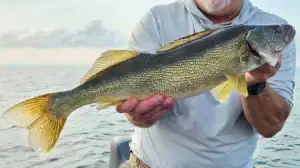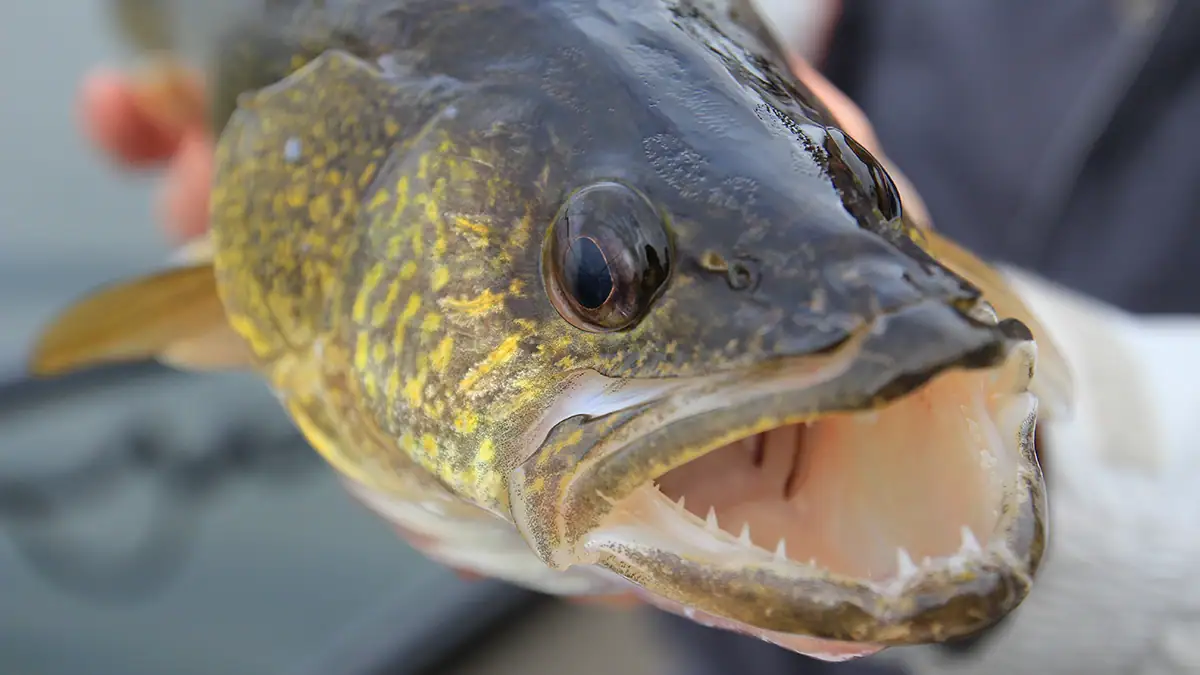
Two northwest Wisconsin walleye experts recently outlined a handful of possibilities as to why population numbers of the popular game fish are dropping in areas where walleye were introduced to non-native habitats in the early 1900s.
Walleye are native to the state’s extensive river system and some larger lakes, but in other bodies of water in northwest Wisconsin they were introduced in the early 1900s via stocking programs.
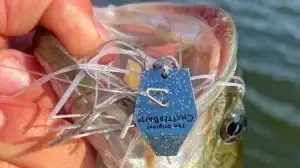
Many introduced walleye populations have declining numbers, while native largemouth bass (LMB) have been increasing for roughly 30 years, leaving the Wisconsin Department of Natural Resources (DNR) senior fisheries biologists trying to figure out the cause. They made their comments at an online presentation late last month featuring four DNR biologists talking about the status of walleye numbers in northwest Wisconsin. They also discussed where walleye populations are thriving in that part of the state.
People might think LMBs are up and walleye down in some of these non-native bodies of water simply because the largemouth bass are eating the walleye, said senior fisheries biologist Craig Roberts. But he debunked that notion by pointing to University of Wisconsin-Whitewater research. While walleye and LMB have a large diet overlap, the study showed that LMB weren’t actually eating walleye.
The Habitat Matters

A second senior fisheries biologist suggested population changes might be tied to changes in available habitat.
“Certain fish require specific types of habitats to carry out their lifecycles,” said Nate Thomas. “So, when you have changes in habitat to a certain magnitude you’re going to see changes in the fish community.”
Water clarity is a good example of habitat change. Walleye prefer dark-stained, cool, clean water.
“A lot of our lakes have increased in water clarity,” Thomas continued. “And that maybe hasn’t directly benefited largemouth (bass), but it definitely has had a negative effect on walleye.”
Another factor is an increase in aquatic vegetation, he said. There’s been an increase in aquatic vegetation in a lot of lakes, and that’s directly benefiting LMB, though it’s unclear the impact on walleye. Still another is increasing variations on when inland lakes are becoming completely free of ice
“Another thing we’ve seen is variable ‘ice-out dates,’ said Thomas, “just more extreme weather events, and we’ve had some long cold winters recently, but we’ve also had some pretty warm dry winters, and the resulting ice-out dates have been quite variable, and they’re increasing in that variability in more recent years.”
He pointed to one Wisconsin lake in Douglas County where in the last 16 years since 2010 63% of the ice-outs have been 10 or more days earlier or later than average for that lake. For the previous 35 years from 1975 to 2009 only 17% were 10 or more days earlier or later than average. The difference in ice-out from 2023 to 2024 was 48 days.
“So, it’s definitely something that’s happening and it’s directly negatively affecting walleye because when the walleye fry are hatching, if they hatch really early or late, they’re missing the time when the zooplankton is available for them to feed on,” he explained.
Warming water temperatures are also definitely benefiting bass and negatively affecting walleye. In addition, there has been a decrease in the hard, cobble substrate near shore in a lot of lakes. And while that perhaps isn’t directly affecting LMB, it’s influencing walleye’s ability to successfully naturally reproduce.
Ideal Walleye Waters in Wisconsin

Thomas also discussed spots where walleye are doing well in northwest Wisconsin by describing the ideal walleye habitat. Walleye spawn on clean gravel cobble substrate and also need some amount of nearshore vegetation nearby. Woody habitat is also beneficial for them at other points in their life.
“A system that has extensive shoreline habitat is beneficial because you will get more of that habitat diversity that they require, maybe some more aquatic vegetation than other areas, also some more of that spawning substrate than in other areas,” he explained.
Obviously, large river systems are prime habitat for walleye, Thomas said. “That’s what they originally adapted to.”
And you can get this in some larger lakes, he continued.
“Large windswept lakes can kind of create some of that riverine habitat if you get a lot of prevailing lake currents that can keep that substrate clean and provide that kind of riverine habitat in a lake environment,” Thomas explained. “And, of course gravel, cobble, substrate, as long as it’s cleaner, and it has some of those wave currents, it’ll be beneficial for spawning success. And they like dark-stained water or water that’s deep enough that they can kind of escape that light penetration. They’re light-sensitive species, and they require that darker environment to effectively catch prey and survive. And of course, natural shorelines are always beneficial for a lot of our fish communities. With a natural shoreline, you get that natural buffer from runoff, erosion and sedimentation.”
He concluded, “So if you have a system that has a lot of these types of habitats or most of these habitats, you’re most often going to find a strong walleye population. And thankfully, we still have some of those.”
To emphasize that point, a third senior fisheries biologist, Max Wolter, pointed out some northwest Wisconsin walleye bright spots that feature some of the optimal habitats Thomas was describing and that are strong naturally reproducing fisheries
He pointed to bodies of water in northwest Wisconsin like Chippewa Flowage, the Turtle Flambeau Flowage, Grindstone Lake, Round Lake, and Shell Lake. Beyond northwest Wisconsin, he mentioned bodies of water such as the Mississippi River, Green Bay, and Lake Winnebago.