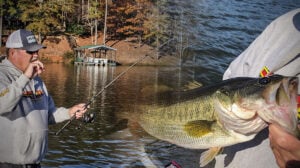
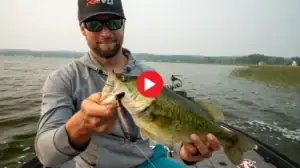
Cold, windy days don’t have to slow the bite down. In this video, Casey Scanlon shows how a flat-sided crankbait can be a go-to tool when bass set up on rock. Early in the day, Scanlon hooks a keeper spotted bass tight to the bank. The fish shows clear signs of feeding on crawfish, which explains why the flat-sided crankbait works so well. The bait stays subtle, runs true, and closely matches what bass are already eating around rock.
Featured Product
- CRANKBAIT – Bass Pro Shops XPS Flatsider Crankbait: Buy at Bass Pro Shops
- ROD – Bass Pro Shops Crankin’ Stick Casting Rod 7′ Medium Heavy: Buy at Bass Pro Shops
- REEL – Bass Pro Shops Johnny Morris CarbonLite Baitcast Reel 6.8:1: Buy at Bass Pro Shops
- LINE – Bass Pro Shops XPS KVD Signature Series 100% Fluorocarbon (12 lb.): Buy at Bass Pro Shops
Where to Throw a Flat-Sided Crankbait
Scanlon targets gravel and chunk rock banks with wind blowing straight into them. He looks for banks with six to twelve feet of water nearby and casts into the two-to-six-foot zone. Channel swings and creek bends play a big role. When a creek channel moves close to the bank, bass often stack up along the first drop. Those subtle changes are where most bites happen. He also pays attention to bottom changes. Transitions from gravel to larger rock consistently hold fish, especially when wind is present.
How to Work the Bait Through Rock
The goal stays simple. Keep the bait on the bottom without hanging up. Scanlon reels the flat-sided crankbait slowly and lets it deflect off rock whenever possible. When the bait hits a larger rock or wood, he pauses briefly. That moment often triggers strikes. Most bites come right after the bait frees itself. Boat position matters as well. Scanlon keeps the boat deeper and casts shallow so the bait stays in the strike zone longer.
Gear Setup for Consistent Contact
For this approach, Scanlon uses a 7-foot medium-heavy composite cranking rod. The softer action helps absorb surges and keeps fish hooked. A slower gear-ratio reel makes it easier to maintain depth and control the retrieve. Thinner fluorocarbon line allows the flat-sided crankbait to reach its full running depth without overpowering the bait. The lure’s subtle vibration plays a big role, especially in colder water when bass shy away from aggressive movement.
Boat Setup
- BOAT – Nitro Z21 XL PRO: Check out at Nitro
- MOTOR – Mercury Pro XS 250 hp: Check out at Mercury
- TROLLING MOTOR – Garmin Force Trolling Motor: Buy at Bass Pro Shops
- FISH FINDER – Garmin GPSMAP Touch-Screen Fish Finder/Chartplotter Combo: Buy at Bass Pro Shops
- FORWARD-FACING SONAR (FFS) – Garmin LVS34 LiveScope Plus Live Scanning Sonar Transducer: Buy at Bass Pro Shops