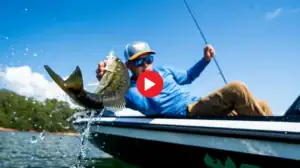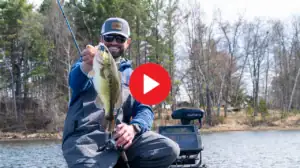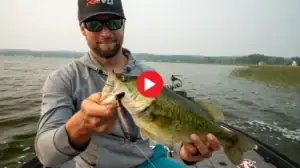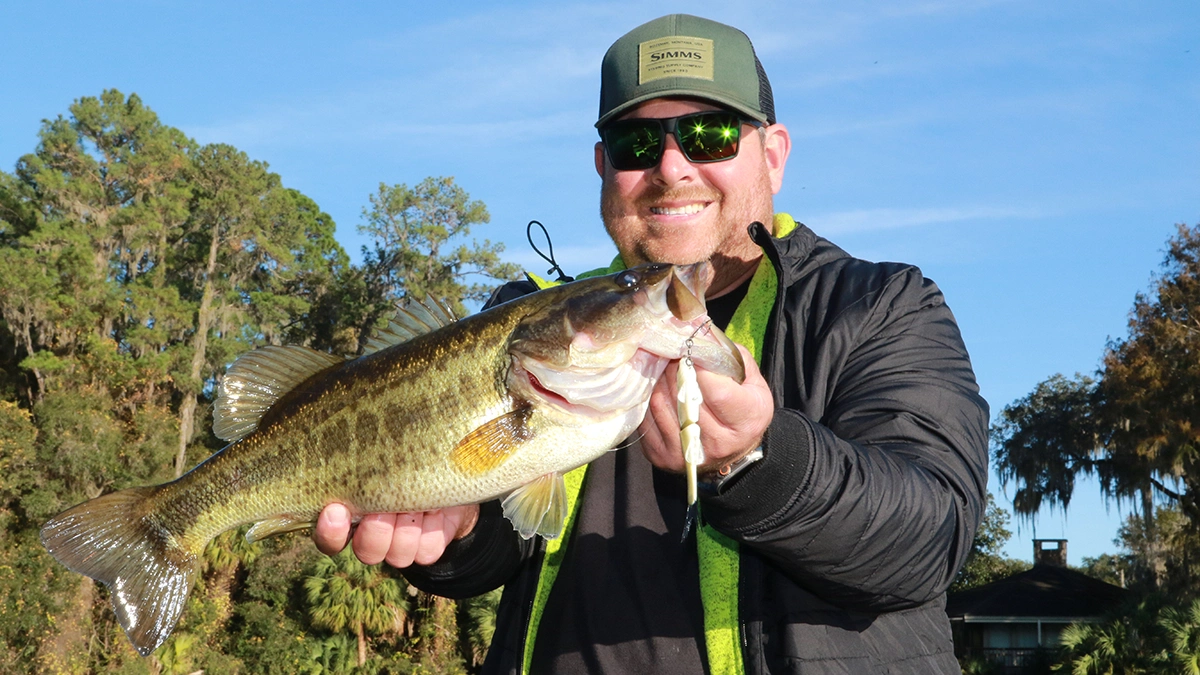
On the tournament trail, he’s known for scratching around super shallow with a wacky worm rig or an unweighted Texas rig, but once John Cox winds down the competitive events, the Florida pro turns his attention to swimbaits.
Call it a change of pace and you wouldn’t be incorrect, but after several months of grinding it out, Cox is ready to air it out. That’s why, on southern fisheries, he considers soft body swimbaits (including soft glidebaits) one of his top presentations.
“Because it’s the end of tournament season and it’s more of a fun fishing period, swimbaits are probably my top two or three techniques in the fall,” Cox said. “That’s just because it’s a whole other style of fishing. It is a very exciting bite; it’s usually a visual bite where you actually see them hit it and it just catches big fish.”
Timing also enters the equation, as the year’s conclusion finds southern largemouth gobbling big meals that’ll help them bulk up for winter’s approaching leanness.
“They do eat swimbaits all year long, but the fall feeding is probably why you get on that bite better,” Cox said. “Fish are schooling up so there’s that competition factor where they’re gonna fight over whatever bait they’re going after. A lot of times, the biggest one in that group usually gets it.”
To that point, Cox believes throwing sizable baits helps him weed out the B-teamers and focus on the star players.
“It’s crazy how they key in on big baits in the fall,” Cox said. “I catch fish on smaller baits, but there’s something about that big bait; maybe it’s the splash or the bigger profile, but something draws those fish to it.
“It seems like a fish will come 10 to 20 feet for a big bait, whereas a smaller bait might only draw in a fish from 5 feet away. It seems that when that big profile hits the water and you start working it, they’re willing to exert way more energy. They’re thinking, ‘I’m gonna get this big meal, so I’m gonna give it all I got.’”
Weather Wisdom
Cox believes he can catch fall bass on swimbaits in most any conditions, but he knows there’s no one-size-fits-all game plan.
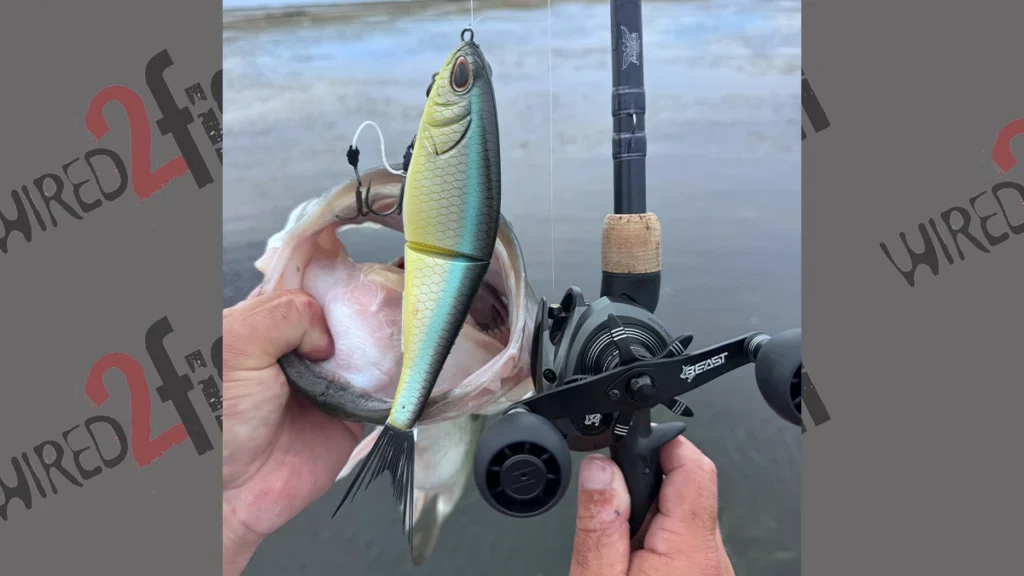
“On the cloudier, winder days, a paddle style swimbait is more consistent because they rely on the vibration of that paddling motion,” Cox said. “The soft glidebaits do better on sunny, clear days, because they can pick it up from a distance.
“On super calm, clear days, they can inspect that paddletail better and they can tell it’s not real, where the glidebait has a more realistic look.”
Another point Cox makes relates to the glidebait’s versatility. It’s nice when they race up and thump a bait, but more often than not, it takes some convincing.
“You can work the glidebait to entice them by speeding up, slowing down, stopping it, half turning it,” Cox said. “I think that’s why people get so sucked into figuring out what it takes to trigger the fish. You make one right move and then you catch them the rest of the day. It’s very rewarding when you figure out what they want.”
The Rundown

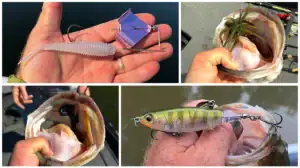
Cox keeps his fall swimbait game plan strategically simple. For a straight wind retrieve that relies on disturbance for bite appeal, he throws a 6-inch Berkley PowerBait CullShad.
Designed with an adjustable weighting system for varying depths, this soft paddletail comes pre-rigged with a harnessed Berkley Fusion19 treble hook that snaps into a belly clip for an efficient profile. On the bite, that treble hook releases from the clip and swings on its harness to minimize the chance of a big fish throwing the bait.
For more performance-heavy retrieves in those clearer conditions, Cox employs a pair of soft glidebaits. First up is the Berkley PowerBait Nessie in the 5- or 7-inch size. Also built with a harnessed treble held in a belly clip, this bait’s mesh-reinforced hinge ensures maximum motion, with the durability to cast or skip into the target zone. Essential to the Nessie design are the stabilizing fins in the pectoral and ventral positions, which keep the bait on a steady, consistent course.
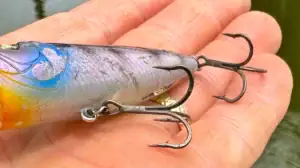
Cox also throws the new Berkley PowerBait Chop Block, a taller profile glide with a similar harnessed treble and belly clip, but this one adds a stinger treble held close to the tail section with a magnet. Another difference from the Nessie — no stabilizing fins.
“The Chop Block is more of a choppy style bait, so you can really work it side to side to entice the fish,” Cox said. “If they’re not eating the Nessie, you can go to the Chop Block to close the deal. I like this bait on super calm, sunny days, where you can see them come up below it and eat it.”
Targets and Tactics
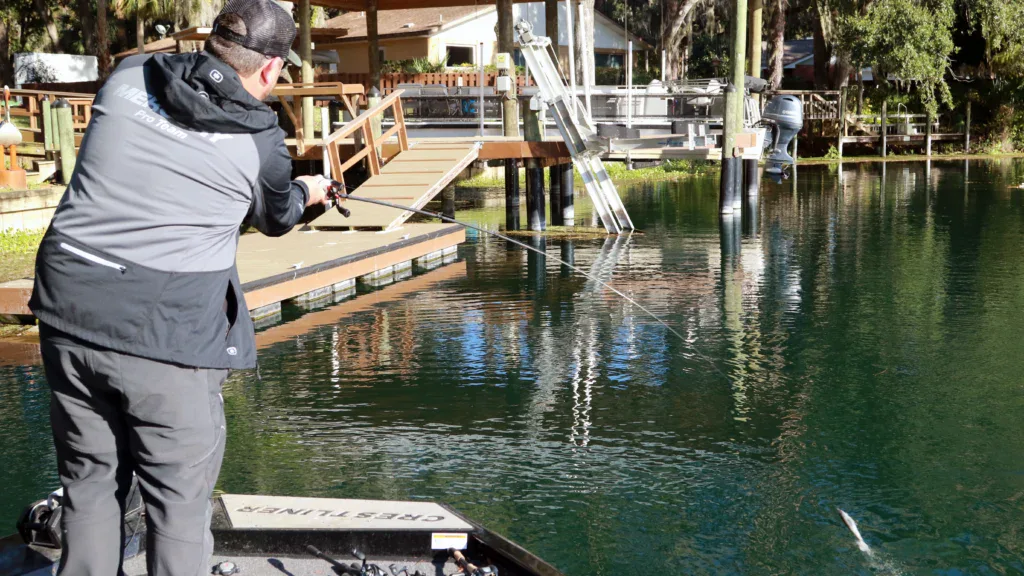
While the fall period typically finds bass scattered and on the move, Cox pays attention to a few logical stopping points. For example, bridges and other neck-downs and flow-throughs present tremendous ambush points for big, savvy fish, so he’ll give such spots a good look. The shadowy areas create zones that simulate the dimness of an overcast day, so Cox is keen to send the Berkley CullShad into action.
Noting the attraction of isolated trees and other hard targets, Cox said: “A lot of times when you’re swimbaiting, you’re hunting big fish and they live on isolated targets. You can cover lots of water as you approach the target and when you get up to the target, you can lay that particular cast right by it.”
Cox emphasizes that docks present an often overlooked swimbait and glidebait opportunity. This is particularly true on sunny days, when the shady structure creates a crossover zone for his bait lineup.
“On sunny days, when fish are holding under the dock for shade, you can put that paddletail swimbait up in the shade and swim it out,” Cox said. “It gives them more time to see it and a lot of times, you’ll have multiple fish chase it out.
“I often start with the CullShad, because I can work it like a spinnerbait or blade bait, but if they don’t eat it, then I’ll throw the Nessie. And if they’re really being picky, I’ll throw the Chop Block.”