There’s a special kind of electricity in the air when cold weather starts to grip the Great Lakes region. The mornings are crisp enough to see your breath, the trees are burning orange and red, and the rivers begin to wake up after a dry, sleepy summer. For trout fishermen, you wait all year for what fall signals: Steelhead and brown trout begin pushing out of the Great Lakes and into its tributaries in a migration that’s as unpredictable as it is exciting.
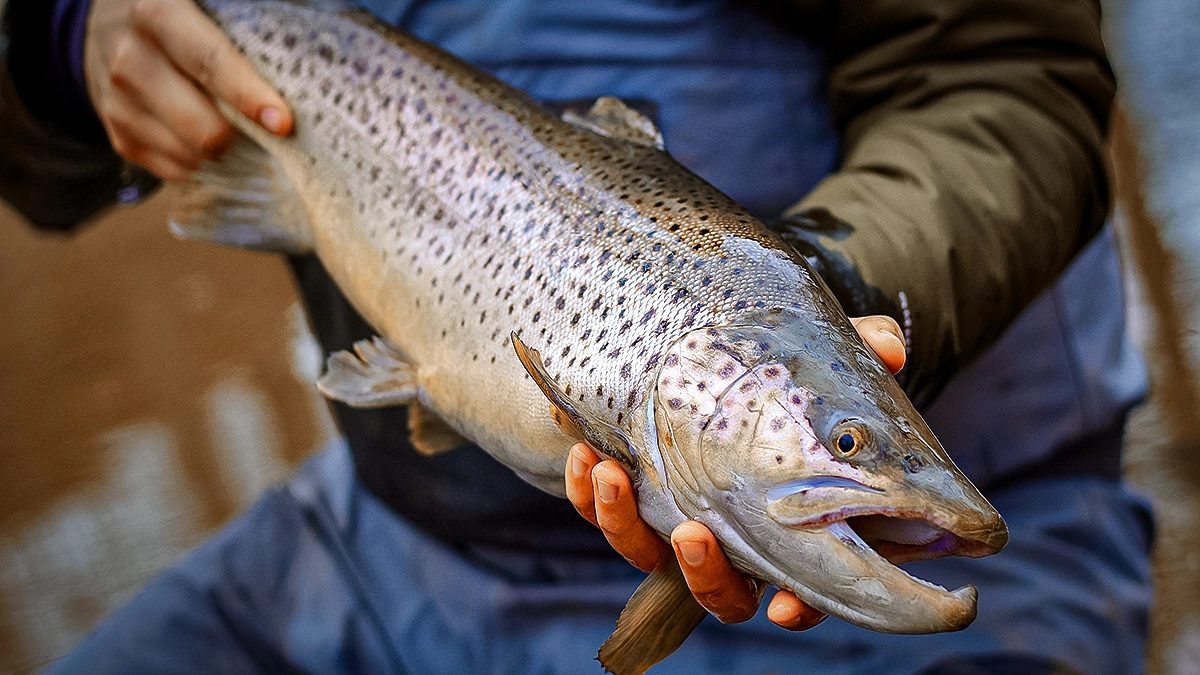
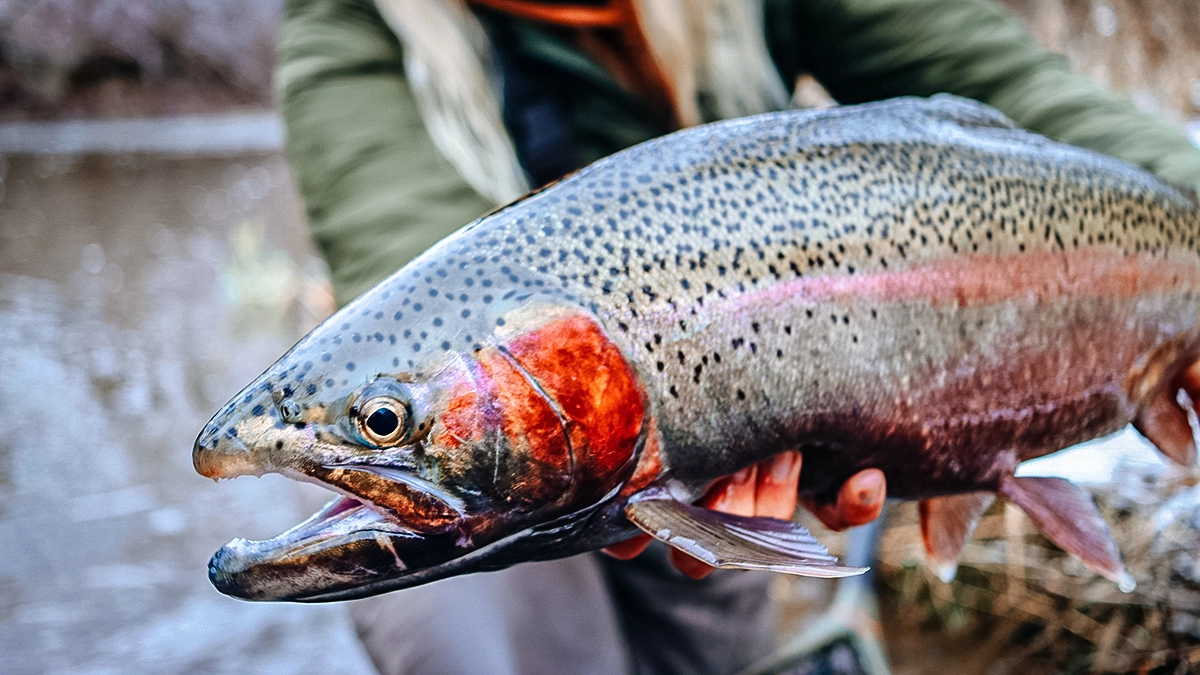
These fish are the crown jewels of autumn, early winter, and beyond. Steelhead, those chrome-bright, muscle-bound rainbows, charge upstream with power and speed that can humble any angler. And right alongside them come the heavy-shouldered brown trout, golden, moody, kype-lipped and often pushing 10 pounds or more. Together they turn small creeks and mid-sized rivers into world-class fisheries from mid-October through December.
Admittedly, I was never much of a trout fisherman growing up, when all we had were small stockies that were bass and cormorant food. But after moving to western NY, I’ve learned to appreciate these big, beautiful salmonids. Here is what you need to know for the late-year run.
When and Why They Run
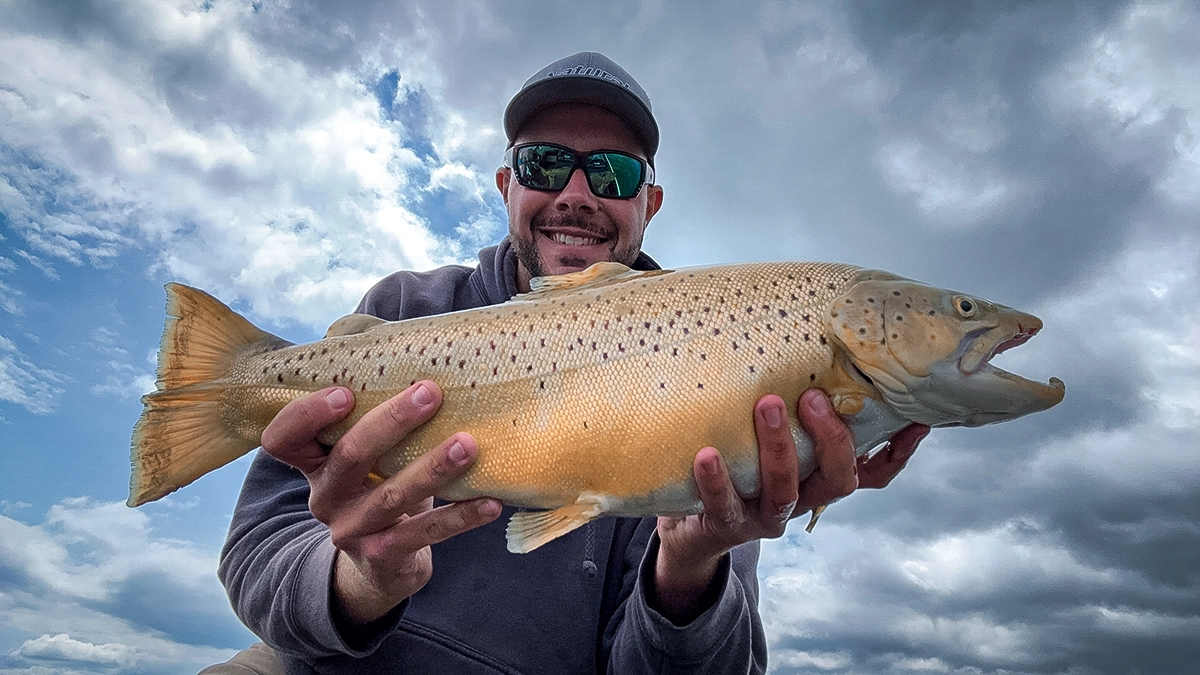
It all starts when the first fall rains hit the Great Lakes basin. Rising water and cooling temperatures are the triggers bringing fresh runs of fish out of the big lakes and into the tributaries. Creeks that were once bone-dry all summer long are ripping and loading up with big fish by the day. Once water temps drop into the low 50s, you can bet fish are staging near river mouths.
Each system is different. On Lake Ontario, tributaries like the Salmon River, Oak Orchard, and the Genesee see early runs of browns followed by steelhead in late October and November. On Lake Erie, rivers like the Cattaraugus, Elk Creek, Conneaut, and the famous Niagara River are legendary for their fall steelhead migrations, often kicking off after the first good rain in October.
Captain Jacob Thomason, owner of Hawg Master Charters on the Lower Niagara River, says the main reason why these fish run later than salmon is because they wait for the salmon to deposit their eggs: “The browns usually slowly follow the salmon and arrive in most of the rivers in late October to eat the natural brown/red eggs the salmon give off. The steelhead follow soon after that.”
The beauty of Great Lakes fish is that they come in waves. Every rise in water can bring a new surge of fish, and each push of rain gives anglers another shot at fresh arrivals.
Reading the River
Late-year steelhead and browns use the same kind of holding water as salmon, but they’re more selective about where they sit. In the early fall season, when flows are high and water is stained, fish often hold tight to current breaks, inside bends, behind boulders, or near submerged logs. As the rivers drop and clear, they slide into deeper runs, tailouts, and undercut banks.
One of the best pieces of advice I ever got for these fish came from my good friend Payton Hanssen, a trout-fishing junkie and local TikTok/Instagram fishing influencer who’s always said “fish where your boots can’t reach.” Browns especially love the undercut edges, root balls, and dark water under bridges where anglers rarely drift a bait. Steelhead, on the other hand, are often mid-river, hanging in seams or along gravel transitions where they can rest and feed.
Pay attention to water clarity. When it’s chocolate milk after a heavy rain, big presentations like spawn sacs or big streamers are the way to go. As the water clears, downsize and go with natural single eggs; small beads can make the difference.
Tackle and Techniques
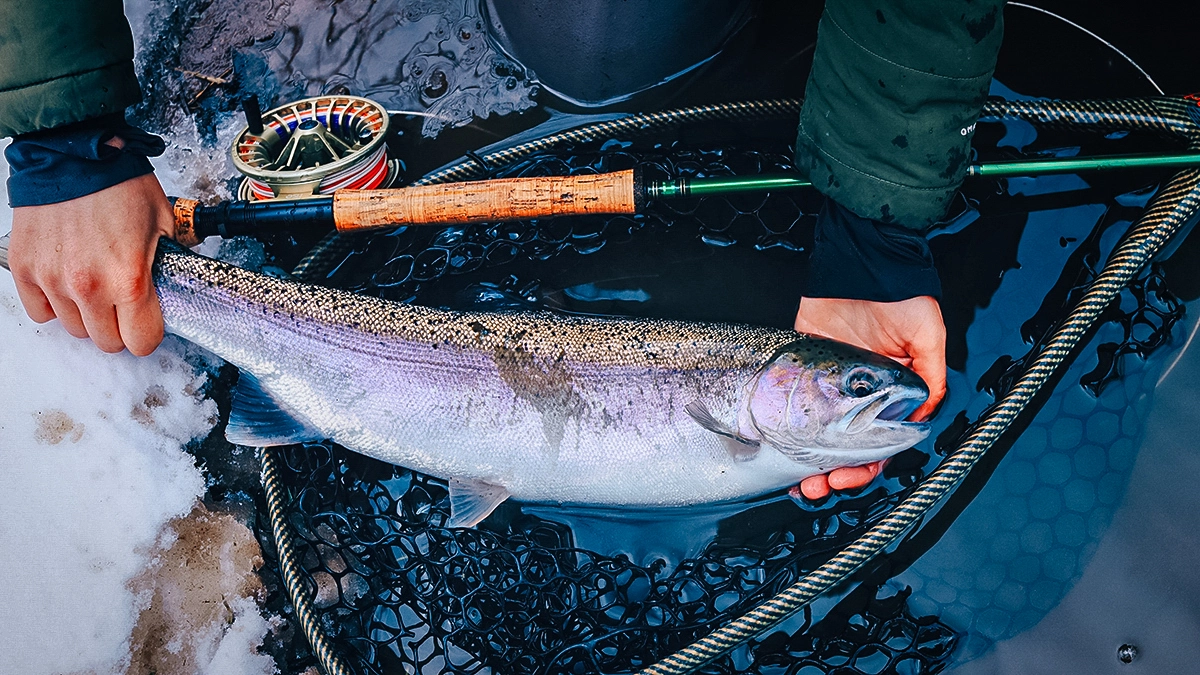
Ask 10 tributary anglers how they catch their steelhead and browns, and you’ll get 10 different answers—though a few will be very similar. Here are some techniques that consistently produce fish across the Great Lakes region.
Float fishing
This is arguably the most effective way to target these fish, especially in medium or large rivers. A long rod (in the 10- to 13-foot range) and a light float setup let you drift natural baits like spawn sacs, beads, or waxworms through the strike zone. Adjust your float so your bait rides just off the bottom.
On smaller creeks, I go with a smaller float and lighter leader, in the six- to eight-pound fluorocarbon range to keep things subtle: Sheffield Floats makes some excellent rods and floats for the job, while the Douglas LRS and XMatrix line of rods have great float rod selections as well. This is also where a centerpin reel comes into play, as it can help present a more natural flow of the float to get more bites.
Bead fishing
Beads have exploded in popularity, and for good reason: They imitate single eggs perfectly and allow for a clean, barbless presentation. Match the color to the conditions—chartreuse, orange, and peach are go-tos in stained water, while natural cream or “washed-out” pinks shine in clear flows. As Capt. Thomason advises, “You’ll want bigger beads in the dirtier water and smaller beads in the clearer water. The bigger, brighter beads stand out more in that stained water to get them to bite.”
He fishes these on a three-way rig with a super long eight-pound fluorocarbon leader and a lead pencil weight. A size eight or 10 Gamakatsu Cotopus Hook should be snelled on your leader about six inches below the bead, which is pegged on your line. Both steelhead and browns gobble these eggs up, especially in the fall. Capt. Thomason adds that you’ll want a conventional rod in the nine-foot class that has enough bend to absorb the hookset and fight the fish. Spool the reel with 12-pound monofilament and you’ll be set.
Fly fishing
For fly anglers, this season is pure magic. When fish are aggressive, swing streamers like woolly buggers, egg-sucking leeches, and intruders across current seams. When they’re finicky, switch to an indicator setup with egg patterns, stoneflies, or small nymphs.
“Usually I’m using rods in the nine- to 10-foot length that are around in the seven to eight class. I love Redington rods for my bigger trout fishing as they are light enough to not fatigue me all day, but strong enough to play those larger lake-run trout,” says Hanssen. Fall steelhead on a fly rod is about as pure an experience as freshwater fishing gets.
Hardware
When conditions are right, spoons and spinners can be deadly, especially early in the season when water temps are higher. Cast quartering upstream and let the lure flutter down through runs. Gold/orange, silver/blue, or black/chartreuse combinations are color schemes with proven success. Browns in particular love a well-swung spinner or spoon.
I love running bigger Acme Cleo’s as well as a Blue Fox Vibrax in a No. 6 size. The bigger size gives off more flash that the big browns and steelhead can’t seem to resist.
Timing is Everything
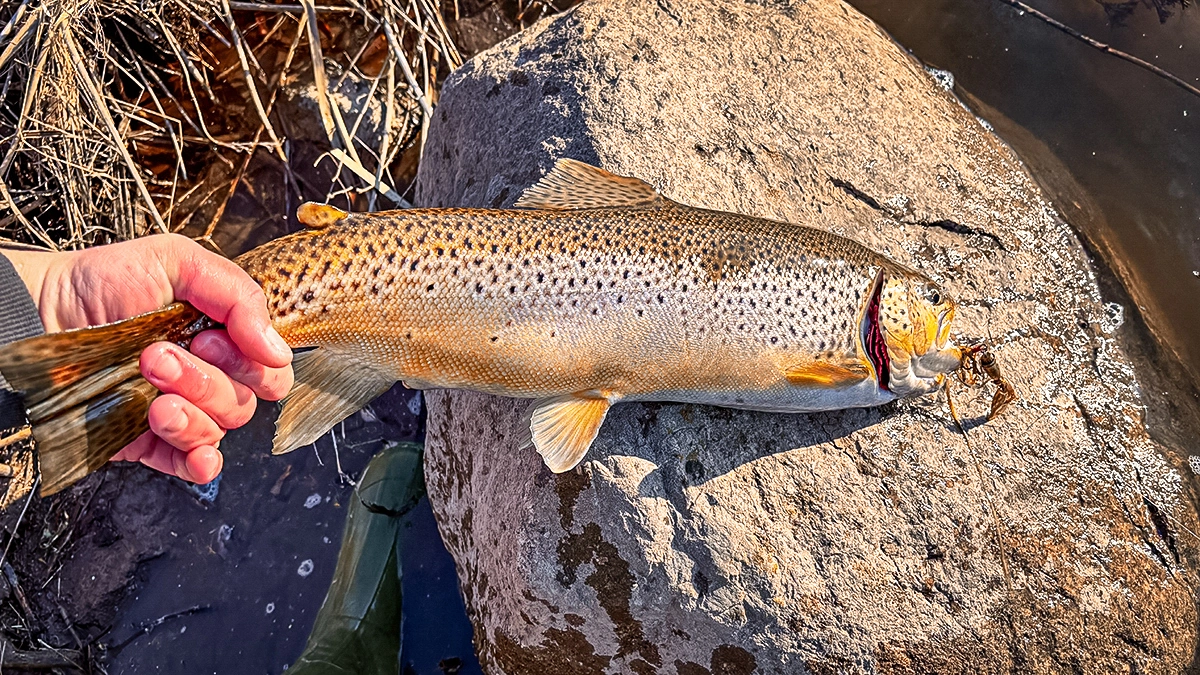
The best bite windows often come in the first 24 to 48 hours after a rain, when the rivers are dropping and clearing. Fresh fish are moving, the water has color, and the fish haven’t seen much pressure yet. Overcast days are prime, and if you can fish when the wind is blowing into the lake, it often pushes more fish toward the tributaries.
Don’t overlook low-water periods, either. Resident browns will hold all fall, and steelhead will stay in deeper pools waiting for the next bump in flow. That’s when finesse tactics, light leaders, small hooks, and natural drifts pay off big.
These fish will bite all day, so don’t think this is an early-morning and evening bite. “Never underestimate the midday bite. That’s the warmest part of the day when big steelhead and browns are more willing to bite,” says Hanssen.
The Fight and the Reward
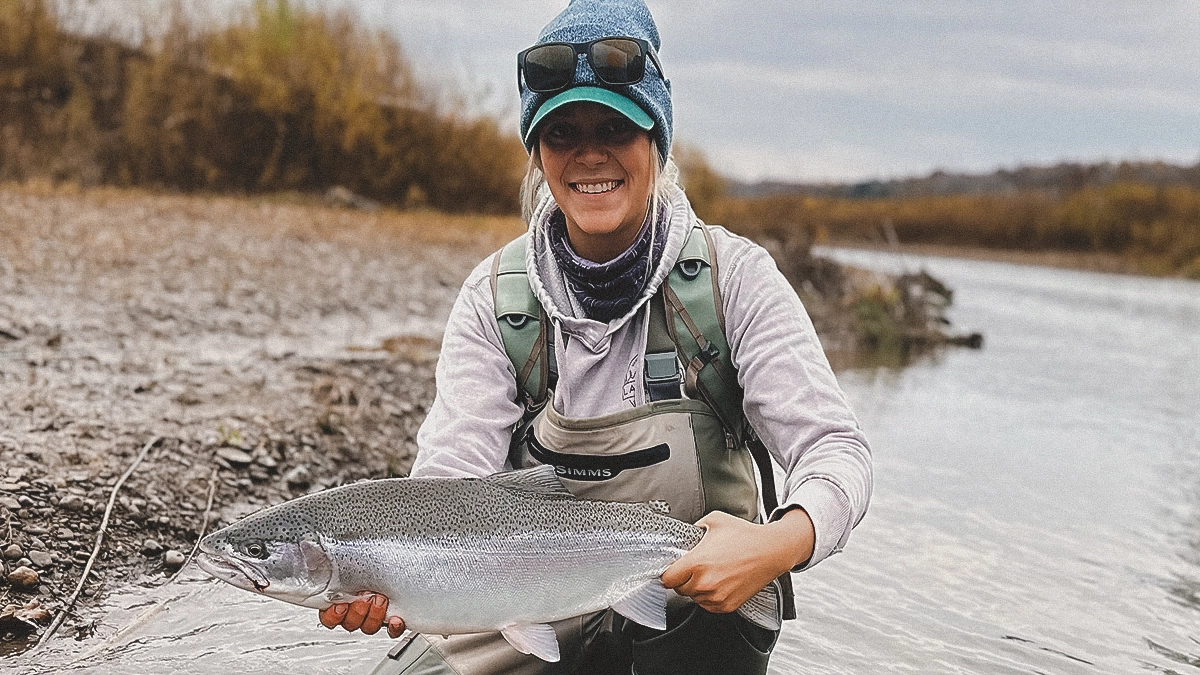
If you’ve never hooked a fresh Great Lakes lake-run trout, you’re in for a thrill. They explode on the hookset, ripping line downstream and cartwheeling across the surface. Browns fight differently—more like a bulldog, using their weight and stubbornness to stay deep and test your gear. Both will humble you if you’re not ready.
Landing one of these fish, especially on light tackle, is an experience that never gets old. It’s why anglers from all over the country travel to places like Pulaski, Oak Orchard, and Niagara once there’s a chill in the air.
Respect the Fish and the Fishery
These runs are a gift, and the future of our fisheries depends on responsible handling. Use barbless hooks when possible, wet your hands before touching a fish, and release them quickly if you’re not keeping one for the table.
And when the banks get crowded, as they often do in the fall, show respect. Give other anglers space, and remember that everyone’s there for the same rush.
The Spirit of Cold-Weather Fishing
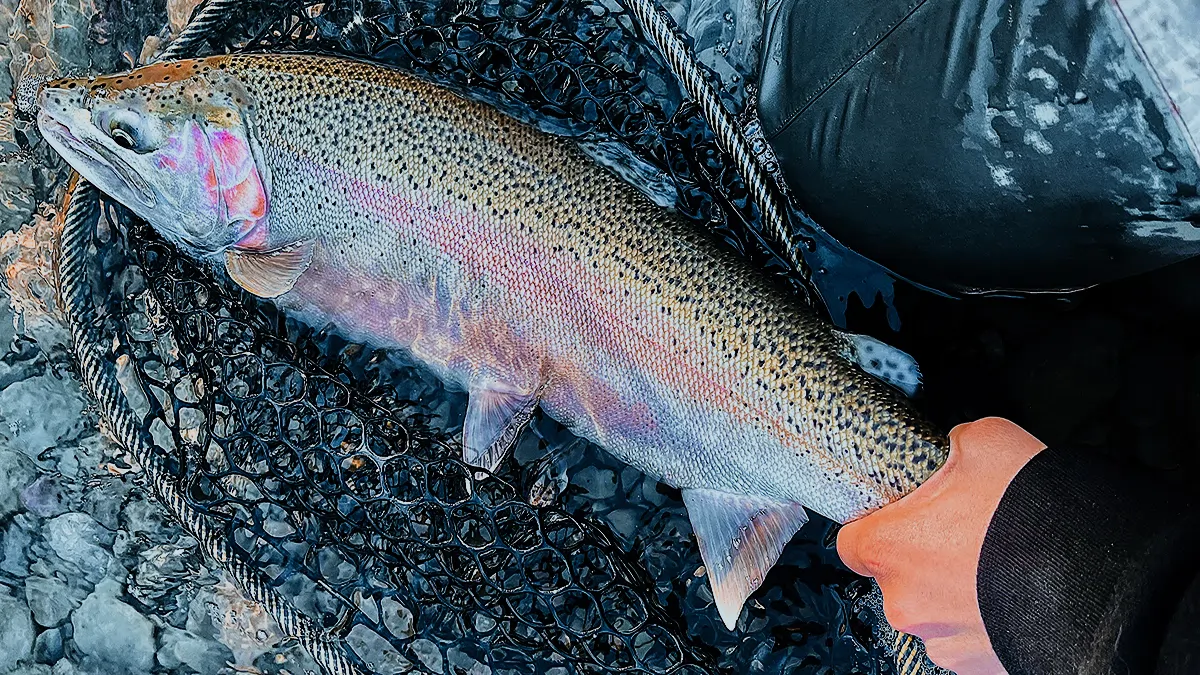
Standing knee-deep in a Great Lakes tributary on a cold morning, with steam rising off the water and snowflakes starting to fall—there’s just something about it. The anticipation before each drift, the sudden thump of a take, and the silver flash of a steelhead twisting in the current is exhilarating. I never thought I’d see a late-year run of this magnitude when I moved, but I’m certainly glad we have this here to make the chilliest months go by a little quicker.
This is more than just fishing. It’s tradition, adrenaline, and peace all wrapped together. When the rivers run cold and the chrome and bronze are in, give it a shot this year. It’s some of the most fun fishing you’ll get to experience here in the Great Lakes Region.