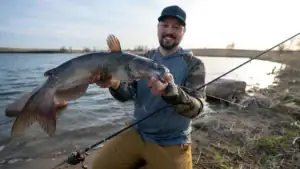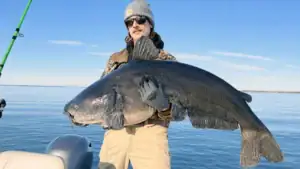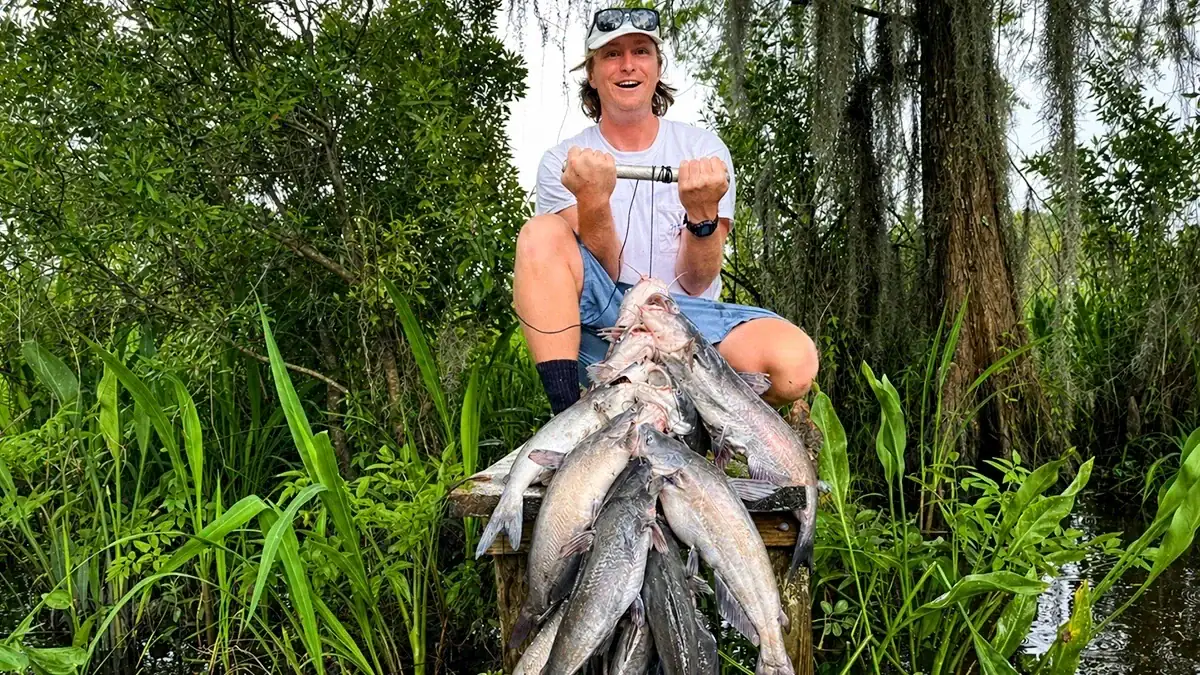
Let’s face it: Fishing the catfish spawn isn’t exactly at the top of most anglers’ lists when it comes to early summer fishing. The big fish move into the shallows, and the normally dependable bottom bite all but vanishes. Most anglers just ride it out and wait for things to get back to normal.
But Mike Jones grew up fishing the rivers of Southeast Louisiana and looks at the spawn a little differently.
“During the spawn, those big fish move up into the shallows,” Jones said. “This leaves the perfect eating-size fish all for me.”
Let the Big Catfish Spawn
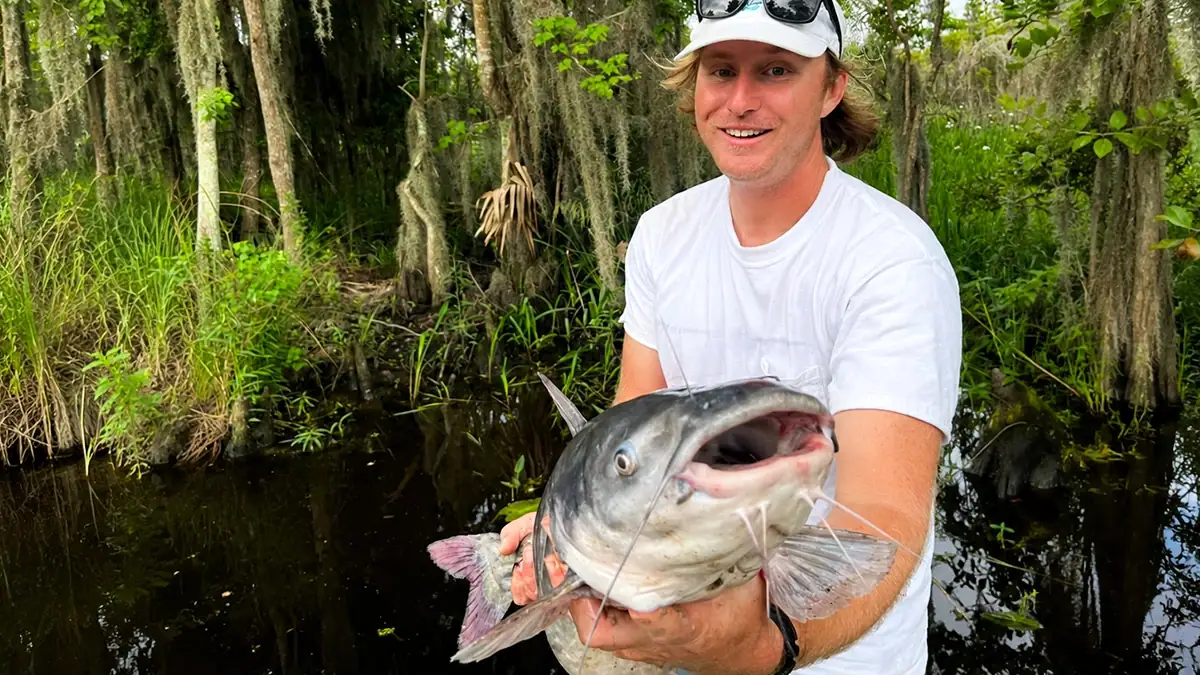
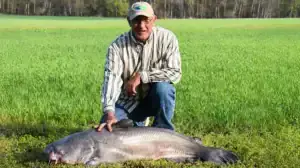
Like most fish, blue catfish have to reach a certain age and size before the spawn even applies to them. For blues, that means growing to around 24 inches over the course of four to five years. That also means that the fish busy up in the shallows during June are the bigger, older fish consumed with spawning. Chasing a bait doesn’t interest them.
The males stake out a cavity along a soft bank, run off the female after she deposits her eggs, and spend the next several days standing guard without so much as a glance at anything you’re going to throw at them. But the smaller fish, the ones that are either too young or unable to compete with the bigger fish for spawning areas, are still out in the main river feeding hard.
And those are the cats Jones wants.
“Most fish I catch this month weigh less than 10 pounds,“ he said. “But that’s the fish I’m after anyway.”
Deep River Bends
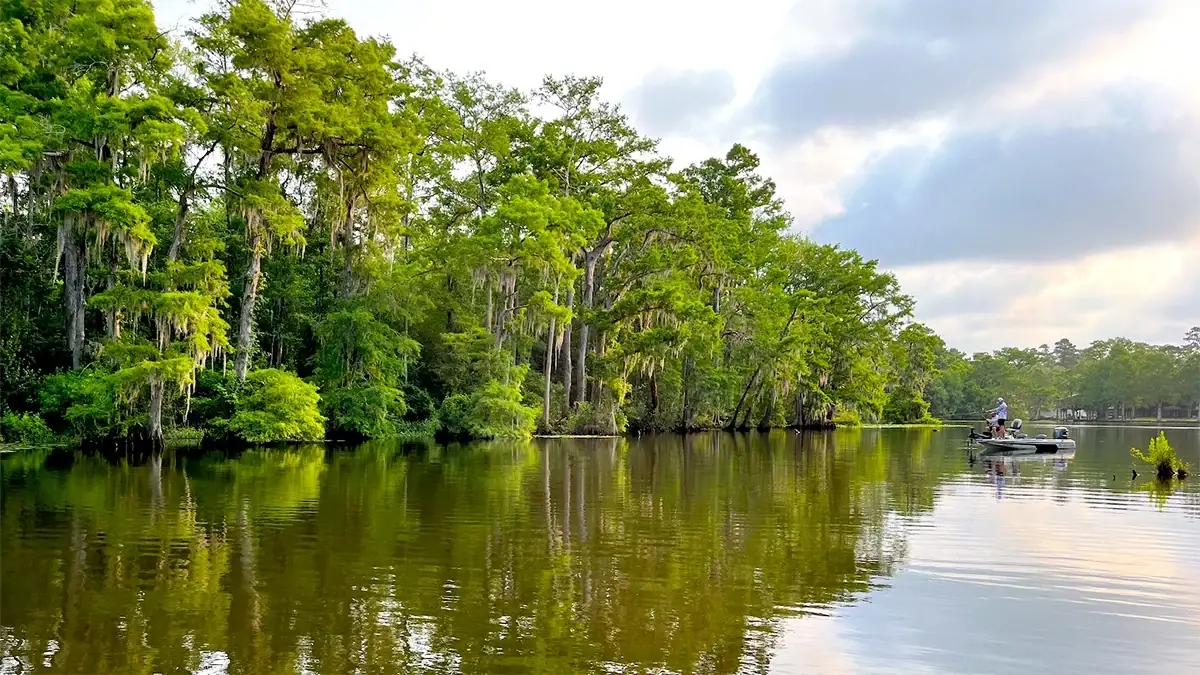
During the spawn, Jones stays on the main river and zeroes in on its deepest bends. Outside a river bend is where the current does its digging, carving out the deepest water in the area, and that deep water is where the shad will school up. It’s those shad balls that pull blue cats together and concentrate them in a way that makes them both predictable and targetable.
“If you look on Livescope you can see them,” Jones said. “The shad are swimming at the mid-point of the water column, and the catfish are sitting just below the shad in the lower third of the river. If you watch closely, you can actually spot the catfish charging up through the shad balls.”
When using a Livescope, the image on its screen tells you exactly where to put your bait. You don’t want to drop it all the way to the bottom and fish it like you normally would. Instead, you want to position it just beneath those shad, right in that zone where the blues are holding and waiting to make their move. Once you identify the depth where the shad are suspended, it’s just a matter of keeping your bait in the right part of the water column and letting the fish do the rest.
Summertime Setup
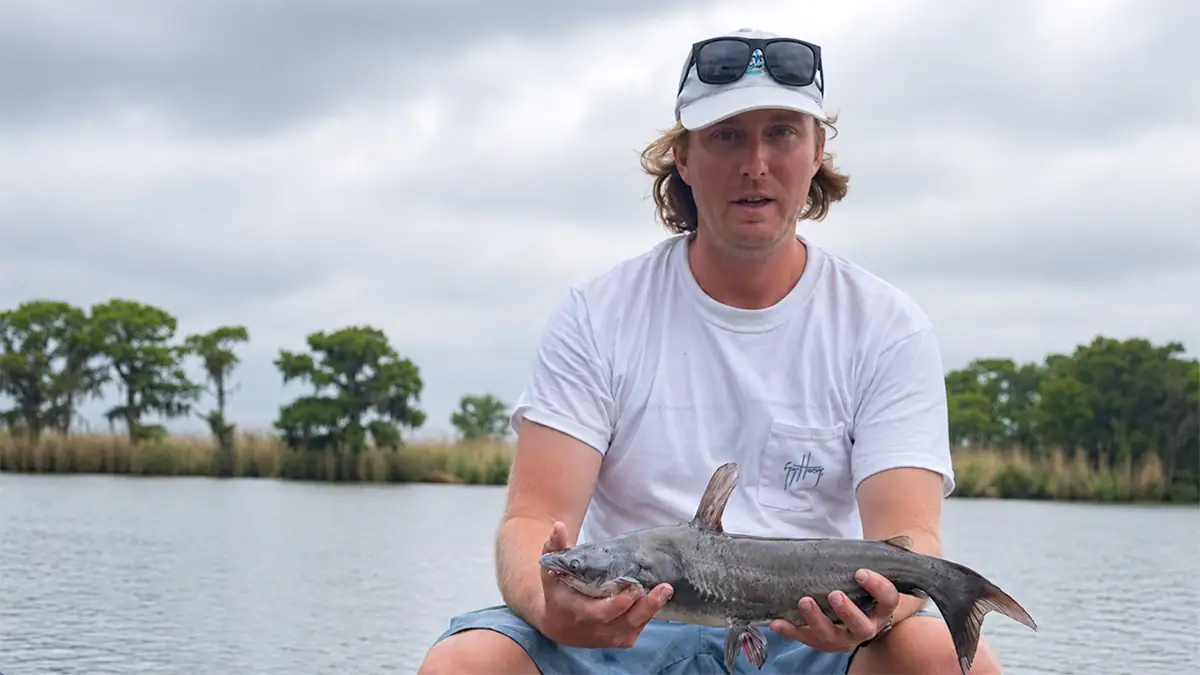
When it comes to targeting these fish, Jones’ top choice for June is a rod and reel. It’s a departure from the way most anglers operate this time of year, but Jones has a clear reason for it.
“During June, there will be lots of small baitfish,” Jones said. “Your best bet is to get some live shiners and drop them to the bottom on a split shot and slowly reel up.” The key, he explained, is getting the bait down to where the fish are holding and working it up slowly through the water column. It’s something you simply can’t replicate with a jug line.
In June, Jones strongly advises against using a trotline because the heat creates an oxygen problem.
“By June, trotlines are not a good option,” Jones said. “The lines need to be fished deep enough so boats don’t get snagged which means most of the hooks are on the bottom beneath the fish. Also, in the summer, it’s hard to keep the bream alive on the hooks for long because of the low oxygen levels. Even if you do happen to catch a catfish, there’s a good chance it will die before you check the line. That’s why you see so many dead ones floating that time of year. It’s best to put the trotlines away until it cools off again.”
The Payoff
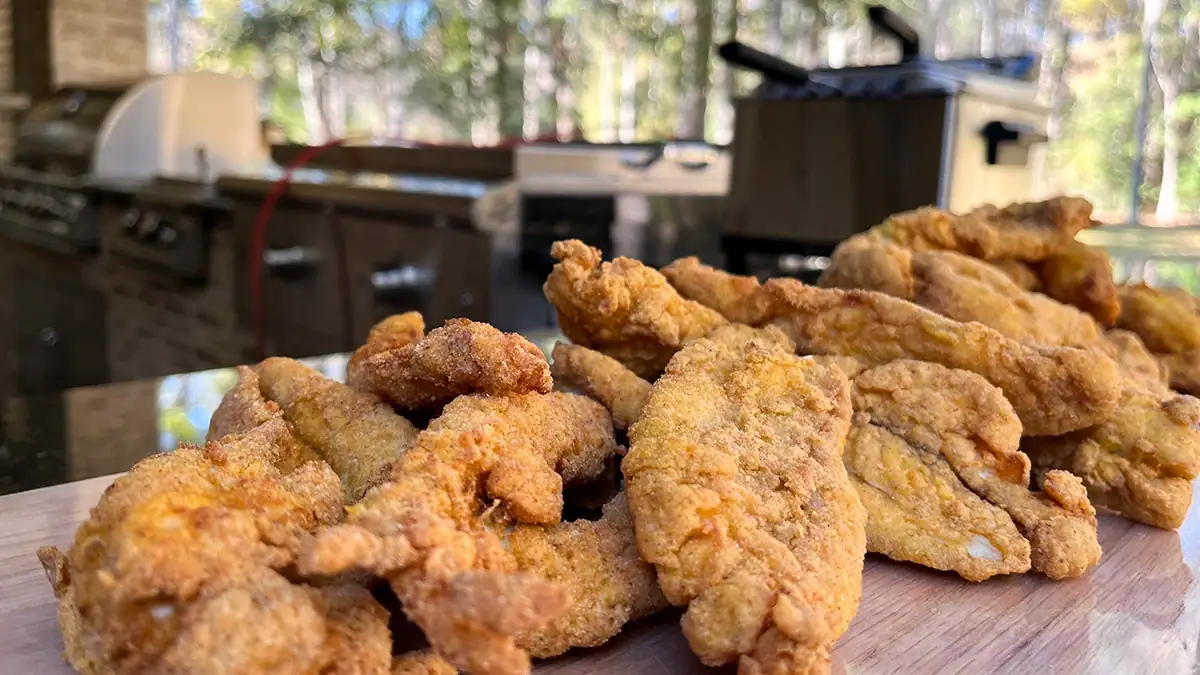
Jones doesn’t measure a good day on the water during the spawn by the size of the fish. It’s measured by how many quart-sized freezer bags he fills by the end of the season. He fillets the fish and trims out all of the red meat before sliding them into quart-sized freezer bags, with each bag being just enough to feed three to four people.
He also noted that quart bags thaw significantly faster than gallon bags, which makes a weeknight fish fry a whole lot more convenient.
“Every year, I’m able to catch enough for the whole year and have it nicely packaged and ready to go,” he said. “All my fish are already cleaned. It’s very convenient.”