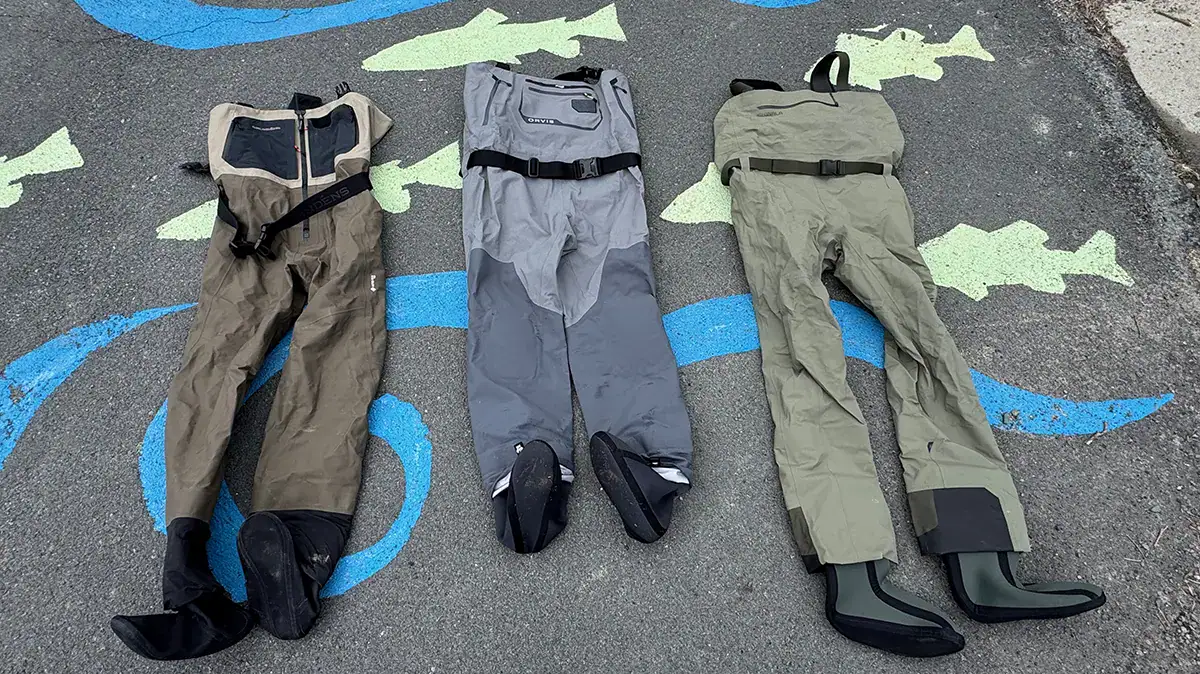
Next to a rod and reel, waders may be the best thing an angler can spend money on, if you don’t have a boat. They allow you to move beyond the bank and cover more water, which leads to more fish brought to net. The right waders keep you warm, dry, and comfortable throughout the day. If you don’t have a boat, waders are invaluable.
There have been some serious advancements in wader tech the past few years, with more options than ever on the market. In this guide, I will walk you through the best waders available now, as well as provide you with all the info you need to pick the right type for your style of fishing.
As a trout chaser, belly boat aficionado, surf angler, duck hunter, and former wildlife professional, I’ve had years where I spent more than 250 days wearing waders. I used all of this experience when making my picks for the best fishing waders in this guide. The following selections are based on a year, or more, of real-world testing.
Top Picks
- Most Versatile Zip Waders: Grundens Boundary Zip — Buy from Grundens
- Best for Drift Boats: Skwala Carbon — Buy from Skwala
- Most Durable: Orvis PRO — Buy from Bass Pro Shops
- Toughest Zip Wader: Simms G4Z — Buy from Simms
- Best All-Around: SITKA Delta Zip — Buy from SITKA
- Best Bargain: White River Fly Shop Classic II Insulated Neoprene Lug Sole Chest Waders — Buy from Bass Pro Shops
- Best for Kids: TIDEWE Neoprene Chest Waders for Children — Buy from Amazon
- Best Hip Boots: Lacrosse Grange Hip Boot — Buy from Amazon
Grundens Boundary Zip Stockingfoot Wader

I have a set of Grundens foul weather gear that’s probably as old as I am, passed down to me many years ago. So I was excited when I learned that they were entering the wader market back in 2023. I’ve been testing their flagship model, the Boundary Zip Stockingfoot Wader, for well over a year, and they quickly became a favorite. The full-length zipper, thoughtful suspension, and ample freedom of movement make these perfect for rock-hopping on my favorite streams.
In addition to the zipper that allows for easy on and off, the uppers feature a number of handy pockets. I found these ideal for stashing soft plastics and jigheads, letting me cover miles without the need for a cumbersome tackle bag. The cut of the neoprene booties is excellent, offering plenty of comfort on even the longest days. I managed a few mile round trips in these, and they never bothered me in the least. That’s not something I can say about every wader.
These are a perfect choice for anglers looking for a top-tier breathable stockingfoot wader with easy access, durable materials, and a focus on mobility and comfort during extended fishing sessions or in cold conditions. They have held up well over the past 16 months, and I expect them to continue to do so for many more. For more info, read our full review of Grundens Boundary Zip stockingfoot waders.
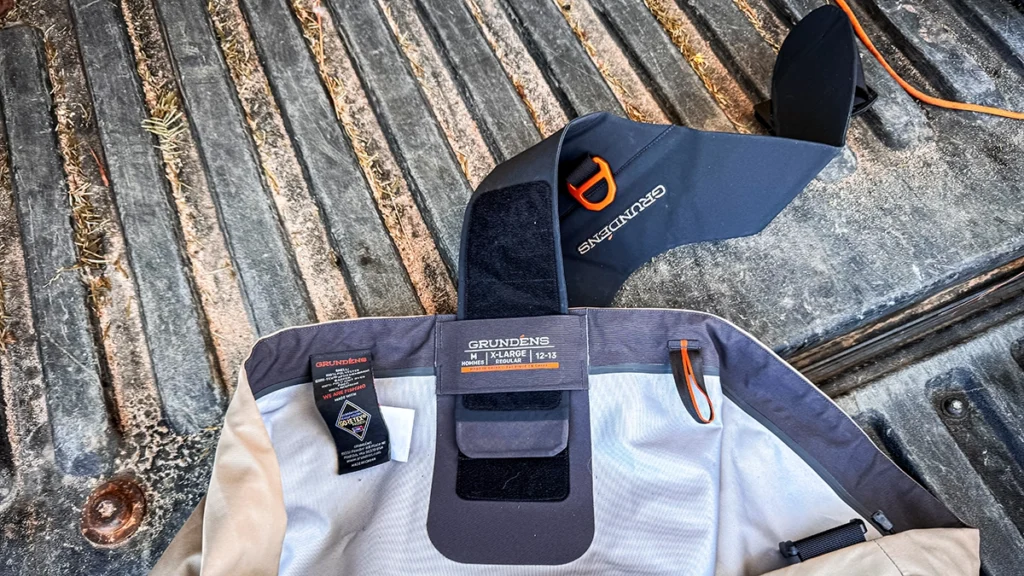
Construction highlights:
- GORE-TEX Pro laminate with four layers in the lower body and three layers in the upper body
- YKK AquaSeal waterproof, submersible center-front zipper
- Neoprene booties with dual reflective layers for heat retention
- Fused, contour suspension system with adjustable fit and integrated D-ring for net attachment
- Double-weave stretch gravel guards designed to stay in place without a boot hook
- Seam placement designed to reduce wear in high-stress areas
- Two fleece-lined chest handwarmer pockets
- Two vertical drop-in chest storage pockets sized for fly boxes and larger tippet spools
Skwala Carbon Wader
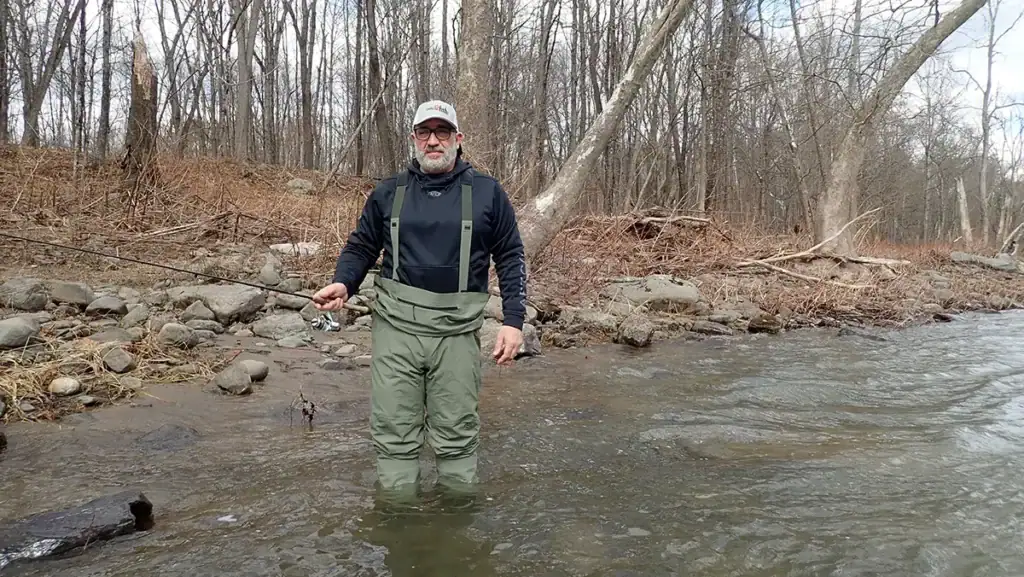
One of my favorite ways to fish a creek is using a canoe as a taxi of sorts, hopping out at likely holes. Skwala’s Carbon Wader is the perfect choice for those who spend some time hopping in and out of canoes, drift boats, or are just looking for a set of waders that converts from chest- to waist-high at a moment’s notice. Plus, these are super packable, making them a great choice for travel or any time space is at a premium.
The star of the show is the suspender system, which lets you lower the chest portion with a quick tug. I found this particularly useful on long hikes to the honey hole, while sitting in a boat, or just in the middle of the day when the sun got high and temperatures rose. The suspension system manages to evenly distribute weight, even when the waders are in waist mode. The buckle-less shoulder yoke evenly distributes weight, and keeps the suspender straps in place when wearing the Carbon wader as a hip wader.
The Carbon waders breathe really well, thanks to their bantamweight four-layer waterproof/breathable laminate, keeping me dry even when I was sweating hard. Just note that these aren’t loaded with pockets or fitted with heavy-duty reinforcements due to the minimalist design. But if you’re looking for a lightweight wader built for movement that can go shoulder season to shoulder season, these are the ones. Consider these a top pick for fly fishing waders and beyond.
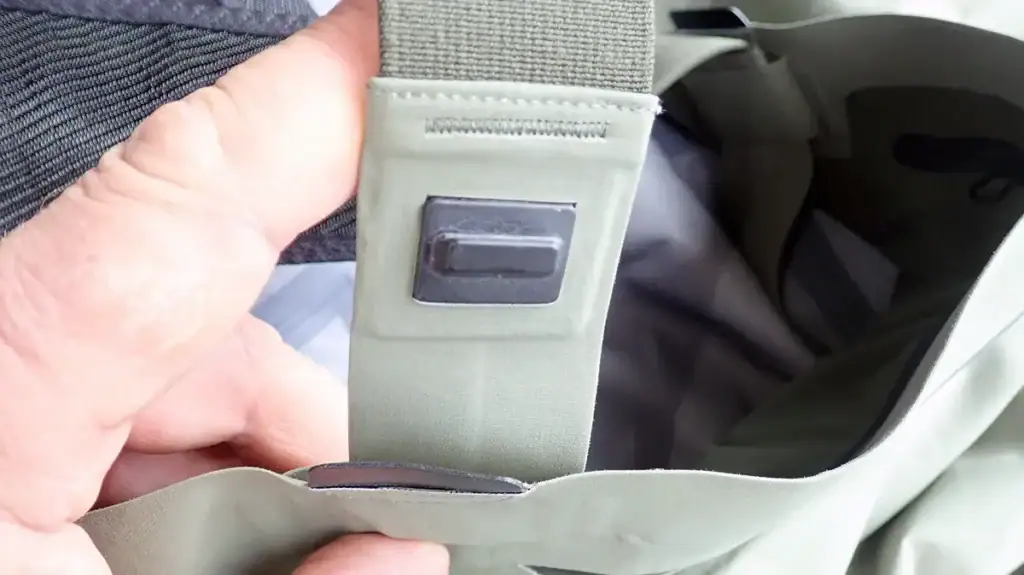
Construction highlights:
- Carbon-embedded fabric for increased abrasion resistance without added weight
- Four-layer laminated upper for enhanced breathability and reduced fatigue
- Five-layer reinforced lower to handle rocks, brush, and repeated knee contact
- Articulated leg patterning for unrestricted movement while hiking and wading
- Seam-mapped design that minimizes wear points and improves long-term durability
- Anatomical neoprene booties for warmth, comfort, and precise boot fit
Orvis PRO Waders
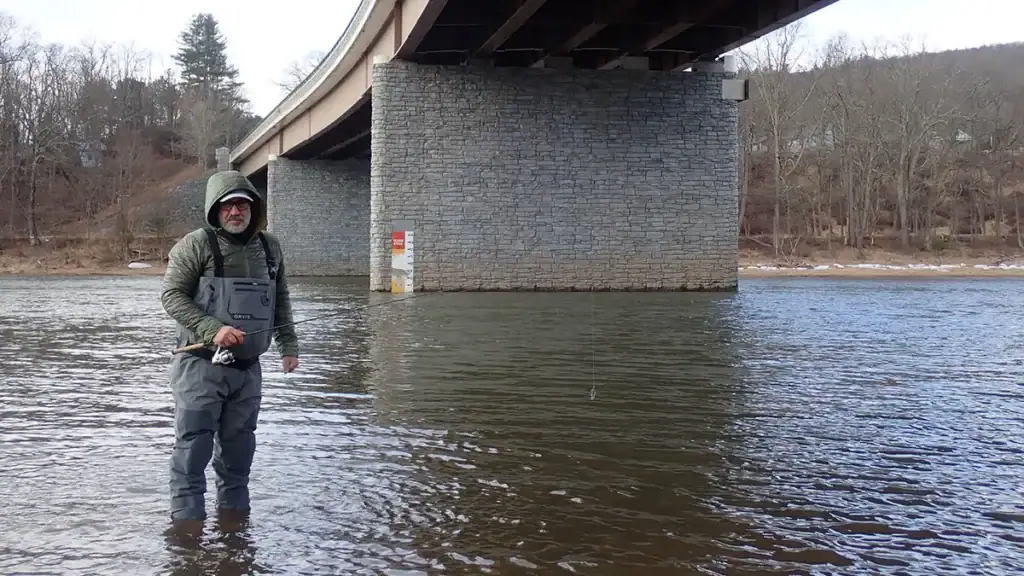
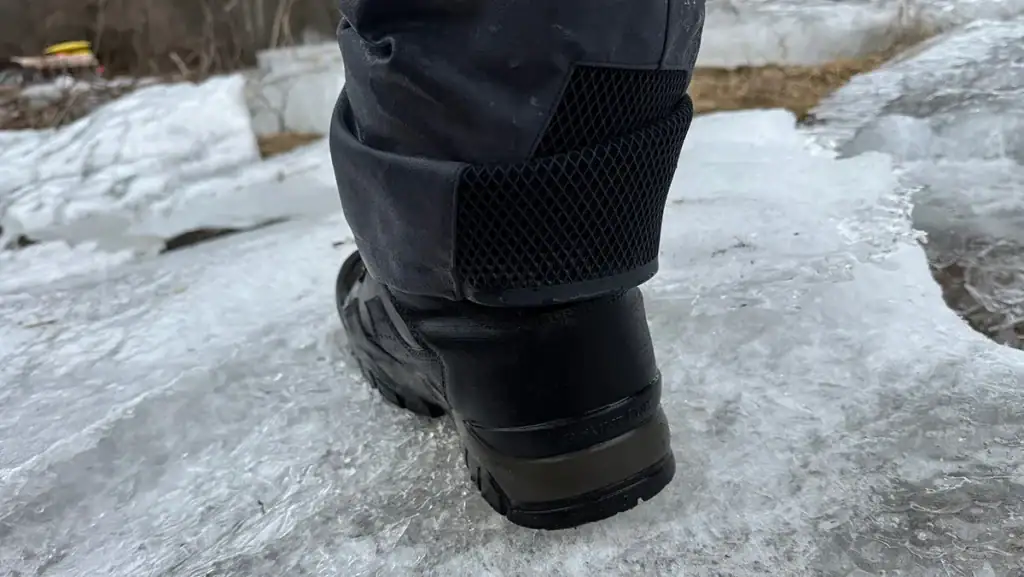
One of my all-time favorite pairs of waders were Orvis’ Silver Sonic Guide waders, which I beat on for more than 10 years before they started to show signs of wear. So I was excited to test out the Orvis PRO Waders, since they seemed to share a number of similar attributes. After a year of beating the brush with them, I can say that they have lived up to their predecessor, with no signs of wear on the four- and five-layer CORDURA fabric shell despite some tough bushwacks and hard scrambles.
Orvis has always done a good job on interior organizer pockets, and the PRO is no exception. The large, four-way stretch power mesh interior pocket lets you stash leaders, tippet, and a couple fly boxes for those who like to travel fast and light. A fleece-lined handwarmer pocket was a favorite on cold days. The gravel guards were another high point, with a unique PU-reinforced mesh construction that eliminates drag and lets out water.
Though not as intuitive, or easy, as the Skawala Carbon, you can convert the PROs to waist-high with the adjustable elastic suspenders for when it warms up. But these are heavy-duty, and not as light as I’d like on truly warm days. If you need a tough fly fishing wader to stand up to hard use, this is it. The downside to these is the lack of a zipper, which can be remedied by purchasing the PRO Zipper variant.
Construction highlights:
- Four-layer CORDURA fabric in the upper and five-layer CORDURA fabric in the lower legs
- Gusseted crotch with low-profile seam layout to reduce bulk and seam wear
- External chest pocket with YKK AquaGuard water-resistant zipper, integrated fly patch, and daisy chain attachment points
- Rubberized tabs on suspenders and front pocket for grip and durability
- Large interior power-mesh pocket with four-way stretch
- Fleece-lined kangaroo handwarmer pockets
- Anatomically shaped neoprene booties for improved fit
- PU-reinforced mesh gravel guards designed to reduce drag and water retention
- Removable 6 mm OrthoLite knee pads
- Adjustable elastic suspenders with opposing buckles for waist-high configuration
Simms G4Z Zipper Waders
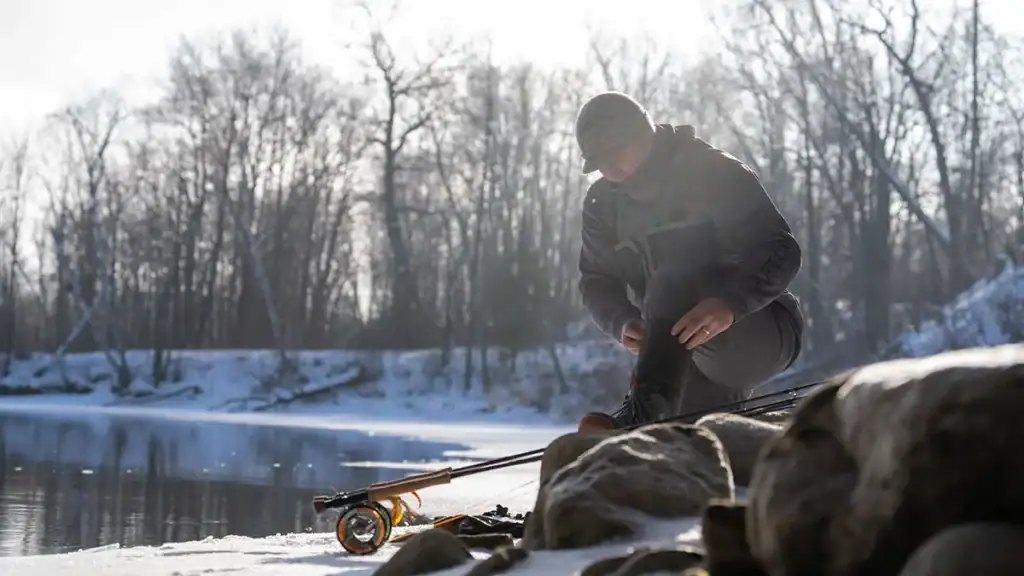
One of my oldest pieces of gear is a Simms wading jacket I got over 20 years ago. Since then, I’ve re-treated it with waterproofing a few times but it still works as well as it did two decades ago. That durability has shown itself in other Simms products, such as the G4 waders — long heralded as the most durable fly fishing waders around.
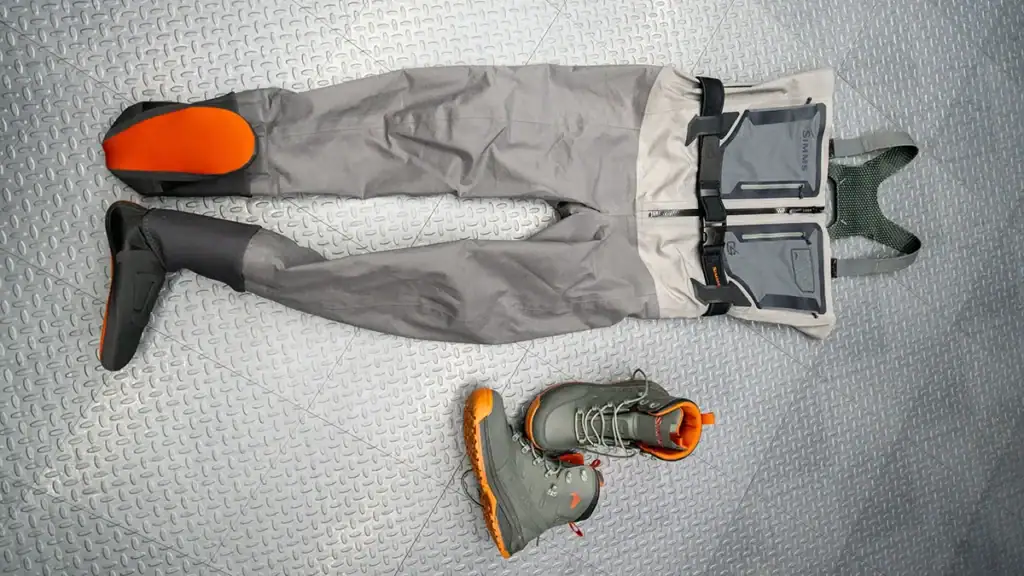
The G4Z has that same durable DNA, and adds one of my favorite wader features: a full-length front zipper. If you haven’t had a zipper on a pair of waders, I can tell you that you’ve been missing out. It makes getting in and out easier, as well as providing an easy way to rid yourself of the morning’s coffee. There’s a plethora of fishing-friendly features here as well, including multiple pocket options with dual stretch-woven zippered chest pockets, zippered fleece-lined handwarmer pockets, and fully waterproof interior TRU ZIP pockets that protect gear and electronics from moisture out on the river.
The Simms G4Z Waders are engineered for serious anglers and guides who fish rugged waters and demand top-tier performance in waterproofing, comfort, and versatility. They are very expensive, but their robust construction and smart design features make them a long-term investment for anyone who spends heavy seasons on the river.
Construction highlights:
- Fully waterproof YKK AQUASEAL front zipper
- Premium three-layer upper and four-layer lower GORE-TEX Pro Shell fabric for waterproof protection, breathability
- Patented compression-molded, anatomically shaped neoprene booties
- Ergonomic, breathable mesh suspender system with quick-adjust cam-lock hardware improves comfort and fit
- Multiple pocket options, including dual stretch-woven zippered chest pockets, zippered fleece-lined handwarmer pockets, and fully waterproof interior pockets
- Neoprene gravel guards block debris
Sitka Delta Zip Waders
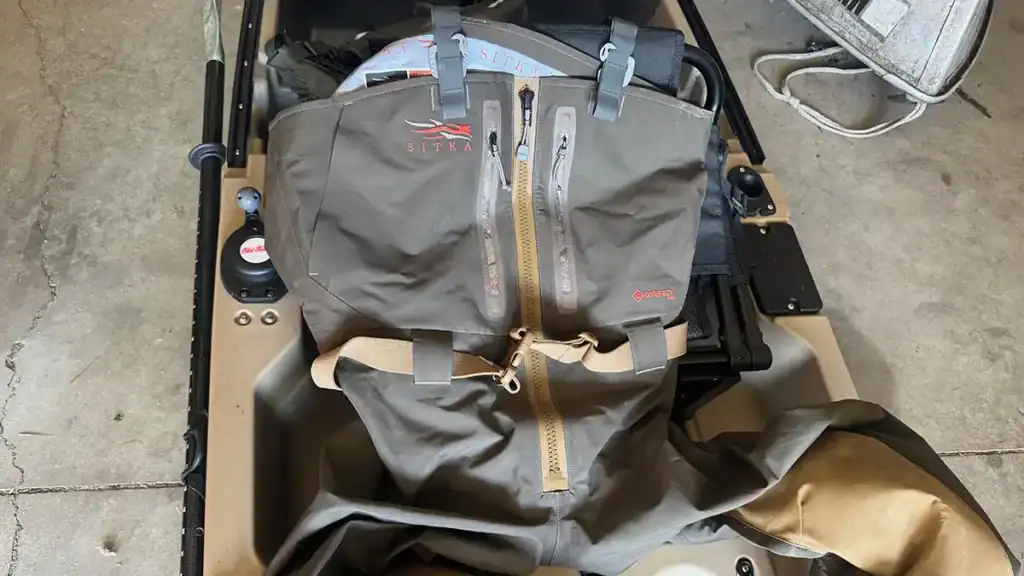
When most anglers think of Sitka, they think duck blinds and camo, not canoes or backcountry smallmouth streams. But don’t be too quick to dismiss the Sitka Delta Zip Waders as just waterfowl gear. After spending a full season in them — from icy wades digging for clams to floating backwoods creeks — they’ve earned a real spot in my fishing gear. If you’re looking for one pair of waders to use year-round, these are it.
As a bootfoot model, also known as fishing waders with boots, these proved capable of handling the muddiest conditions. Despite lacking laces, they stayed in place and offered the most support I’ve ever experienced in a bootfoot wader. They proved to be plenty warm, even through the depths of winter. But note that the boots were a little tight, so consider sizing up, especially if you’re a half size. The zip construction allowed for easy on and off, and the rugged material and kneepads stood up to rough use on the clam flats.
The only real downside to these is their price. There’s no way around it, these waders are expensive. But what you’re paying for is a fully waterproof, fully serviceable system designed for people who flat-out live in their waders — day in, day out. And with their excellent fit, comfortable boots, and go-anywhere nature, you can wear them for just about everything. For more info, read our full review of Sitka’s Delta Zip Waders.

Construction highlights:
- Four-layer GORE-TEX Pro fabric used in the upper and legs for waterproofing and breathability
- Waterproof YKK AquaSeal center-front zipper for entry and exit
- Integrated boot with insulated construction and EVA midsole for underfoot cushioning
- Low-profile suspension system without bulky buckles, adjustable for fit and compatibility with shoulder-mounted gear
- Two water-resistant zippered storage pockets
- Elevated fleece-lined handwarmer pockets positioned to reduce water pooling and improve access
- Defined heel kick for boot removal
White River Fly Shop Classic II Insulated Neoprene Lug Sole Chest Waders
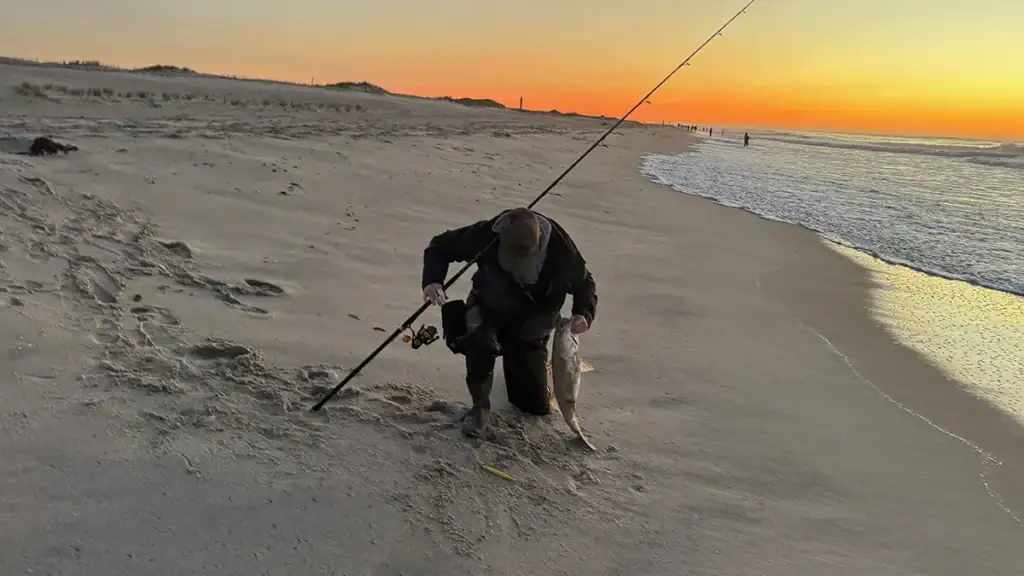
For many years, a pair of Cabelas’ no-frills 3.5 mm neoprene chest waders have served as old faithful, keeping me warm and dry while I repaired holes in the other waders in my rotation. Despite the small price tag, these waders did what I needed them to, day in and day out. They even stood up to the ravages of the clam flats, where I wore them in an effort to preserve my other waders from the sharp shells.
Those utilitarian waders now appear to be marketed under the White River Fly Shop brand, sold as the Classic II Insulated Neoprene Lug Sole Chest Waders. As far as I can tell, that’s just about the only difference. They still seem to have the same flat lock seams, adjustable straps, chest pocket, and boots as the previous version.
They are insulated, but barely, making them a good choice for all but the coldest days. The 3.5 mm of neoprene provides insulation for the uppers, and 200 grams of Thinsulate keeps the chill off your feet. If you need a pair of waders that get the job done but you don’t want to spend a lot of money, check these out. You can also get the Classic II in a felt sole model, if you fish streams with algae-slicked rocks.
Construction highlights:
- 3.5 mm neoprene construction for cold protection and flexibility
- 200-gram 3M Thinsulate insulation in the boots
- Adjustable nylon shoulder straps with quick-release buckles
- Front handwarmer pocket
- Front hook-and-loop closure pocket
- Built-in belt loops with included nylon belt
- Ozone-resistant rubber boots
- Front and rear D-rings for attaching accessories such as nets
TIDEWE Neoprene Chest Waders for Children

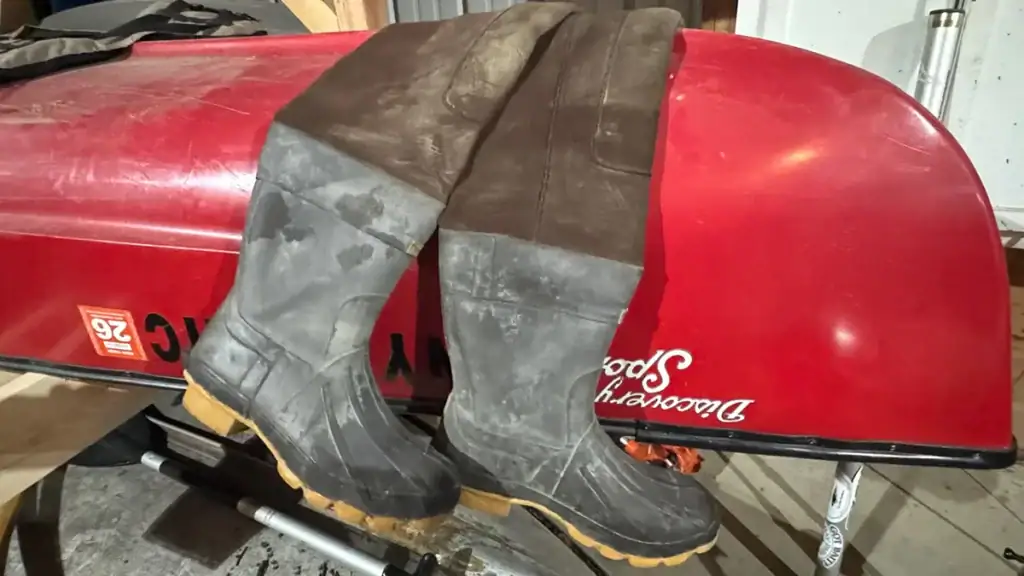
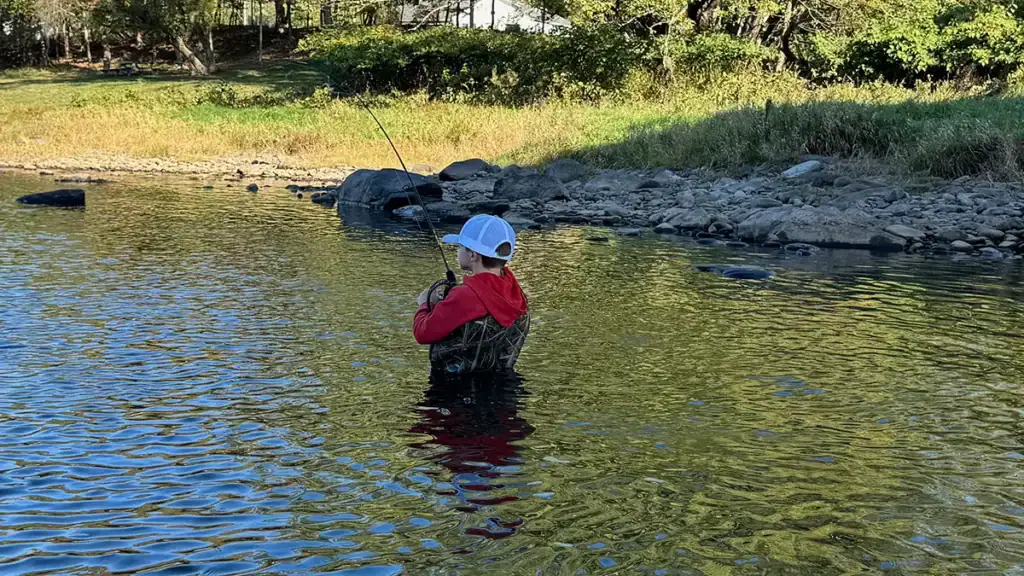
I got my son a pair of TIDEWE’s Neoprene Chest Waders for Children a couple of Christmases ago, and we’ve more than got our money’s worth from them since. I knew he would be excited to get a pair of waders of his own, but I couldn’t have predicted how much. Even though it’s been a couple seasons, the novelty hasn’t worn off. He looks for excuses to go wading whenever he can, and I’m happy to oblige. These have been a worthy purchase.
These waders feature a 3.5 mm neoprene upper, which has kept my son warm through most of our adventures, even during duck season. They have proven to be plenty abrasion resistant, with no cuts despite plenty of time on the clam flats and tough bushwacks down to the river. The attached bootfoots fit well enough, with some room to grow, and have enough tread to keep him upright even with some spirited maneuvers.
You will want to pay careful attention to the size chart when you make your selection. Wader sizing can be tough, especially for smaller folks. Fortunately, there’s plenty of adjustment available in the shoulder straps and waist belt for growing kids.
Construction highlights:
- 3.5 mm neoprene upper with polyester jersey shell and stretch liner
- Triple-finished seams (stitched, glued, and taped) for waterproofing
- Reinforced knee areas for added protection and durability
- Rubber outsole with tread pattern designed for traction on wet and muddy surfaces
- Thickened boot vamp for puncture resistance and insulation
- Adjustable shoulder straps and waist belt to accommodate growth
- Chest pocket for small items
Lacrosse Grange Hip Boot
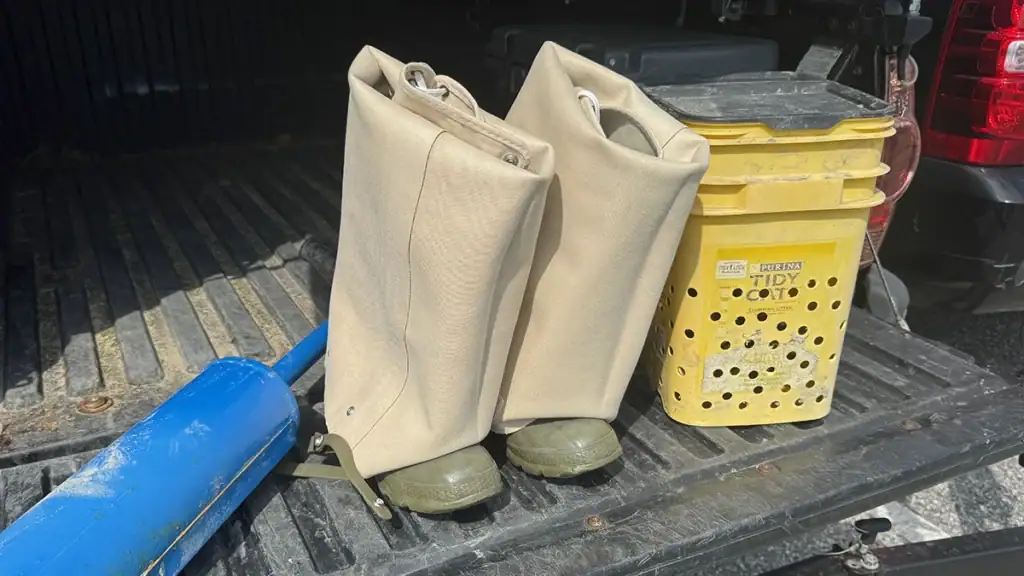
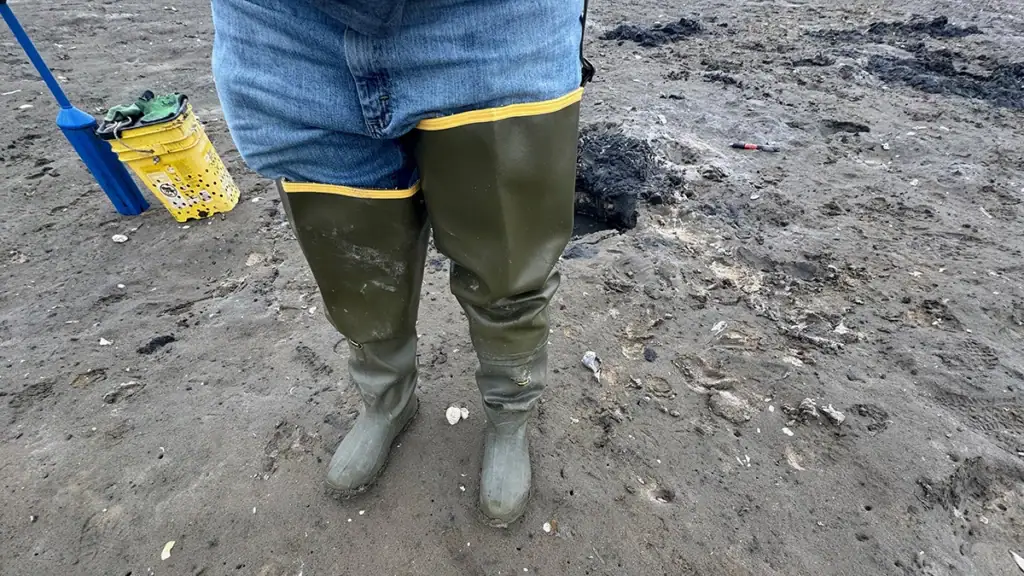
Though they have fallen out of favor, there’s still a place for the classic hip boot. If you’re beating the bank of your favorite pond, fishing small creeks, or staying on the edge of the marsh, it’s hard to beat a good pair of hip boots. And some of the best hip boots are the ones made by Lacrosse, such as the Grange. I’ve been using a pair to fish, hunt, clam, and lay steel for the past 16 or so months, and they have held up quite well.
The Grange hip boots have an excellent internal harness that laces tight to your calf and snaps around your leg for a secure fit. This means they stayed put on me, even when walking through sticky, tidal mud on the clam flats — something I can’t say for most of the other hippers I’ve tried. Speaking of mud, the Chevron cleated outsole provides plenty of traction, but manages to shed muck quickly. A set of straps on the top secures them to your belt so they won’t fall down until you want them to.
The Granges are made of rubber, which is excellent for scent control, if that’s a concern of yours. It’s also very durable, though that comes at the expense of weight, tipping the scales at around seven pounds per pair. But if you’re looking for a versatile hip boot that stands the test of time, you can’t go wrong with the Grange. They have existed in basically the same form since 1951. Just note that they aren’t insulated, so you might want to consider the Burly for really cold temps.
Construction highlights:
- ZXT rubber construction with a 32-inch height for thigh-high waterproof protection
- Integrated calf harness with laces and snaps for adjustable fit
- Chevron-cleated rubber outsole designed for slip resistance
- EVA footbed for basic cushioning and support
- Rubber material intended to limit odor retention
Things to Consider When Buying Waders
Like most things, there’s no “one size fits all” when it comes to wader selection. Waders come in a variety of configurations, each designed for different circumstances. They are made in a variety of materials; some are crafted for light weight and others for durability and abrasion resistance. Some are designed to keep you cool, and others to insulate against the cold. I’ll go over what you need to know to pick the correct waders for your application, so you can hit the water putting your best foot forward.
Bootfoot vs. Stockingfoot
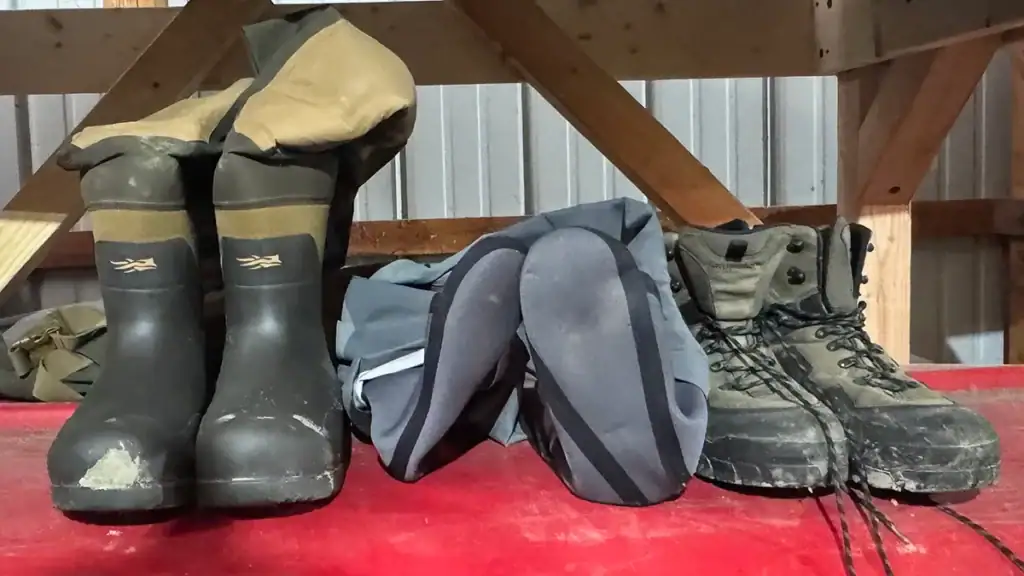
One of the biggest considerations when selecting waders involves the foot. Basically, waders come in two configurations: boot or stockingfoot. Each has its pluses and minuses.
Stockingfoot waders require the addition of a separate boot to go over the attached neoprene “sock” that contains your feet. While this adds to the complexity, the boots are often built more like a traditional hiking boot, which offers superior support. If you have to tackle technical terrain on your way to, or in, the water, these are your best choice. They also typically offer the most comfort, especially for long days. But note there’s an additional cost, as some wading boots can be spendy.
As the name implies, bootfoot waders have an attached boot — you may also have heard these called “fishing waders with boots.” This means the waders are a complete unit, with no need for separate footwear. This is an ideal arrangement if you’re going to be in deep mud, which could clog up a wading boot or otherwise make removal difficult. Bootfoots used to fit very loosely, they are essentially a rubber boot attached to the bottom of a wader. But recent advancements have allowed modern bootfoot waders to offer a better fit, and more support, than ever before. But note that they are still not as supportive as a good stockingfoot/wading boot combo.
Bootfoot are also a better choice for those anglers who regularly encounter sand. Even though most stockingfoot waders are fitted with some sort of gravel guard designed to keep debris out, sand usually sneaks in. While this isn’t a huge problem if it happens occasionally, over time the friction created by sand between the boot and neoprene bootie on the wader will cause it to leak. I destroyed many a wader in my surf fishing days, gradually sanding the bottoms off.
Materials
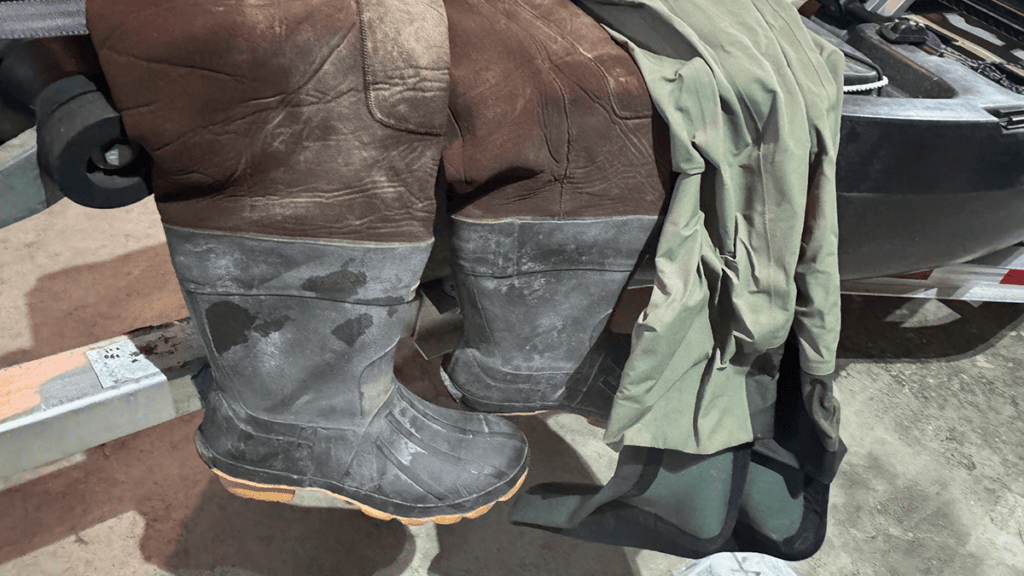
The materials used in waders for fishing have evolved significantly over time. Early fishing waders were made from heavy materials like canvas, wool, and rubberized fabrics, which provided basic waterproofing but were bulky, stiff, and uncomfortable for long periods. In the early 20th century, vulcanized rubber became common, offering better water resistance but often trapping heat and moisture inside.
By the mid- to-late 20th century, lighter synthetic materials such as neoprene improved insulation and flexibility, especially for cold-water use. The biggest shift came with the development of breathable waterproof fabrics like Gore-Tex, which allowed moisture vapor to escape while keeping water out, greatly improving comfort and mobility.
Today’s waders combine advanced laminates, reinforced seams, and lightweight designs, reflecting a steady move toward durability, performance, and comfort. Breathable materials like Gore-Tex have become commonplace, but you can still get lightweight, non-breathable coated nylon as a cost-conscious alternative. Neoprene is still readily available, and favored by many who fish or hunt deep into the winter, as the thick material offers some insulation.
It may be somewhat counterintuitive, but I have found breathable waders to be a good choice throughout the year when layered appropriately. Because moisture can escape, it can’t sap heat away, which goes a long way to keeping you warm even when temps are in the single digits. On the coldest days, I layer up with insulated long underwear, followed by a fleece wader pant, and some heavy socks.
Chest, Waist or Hip Boots
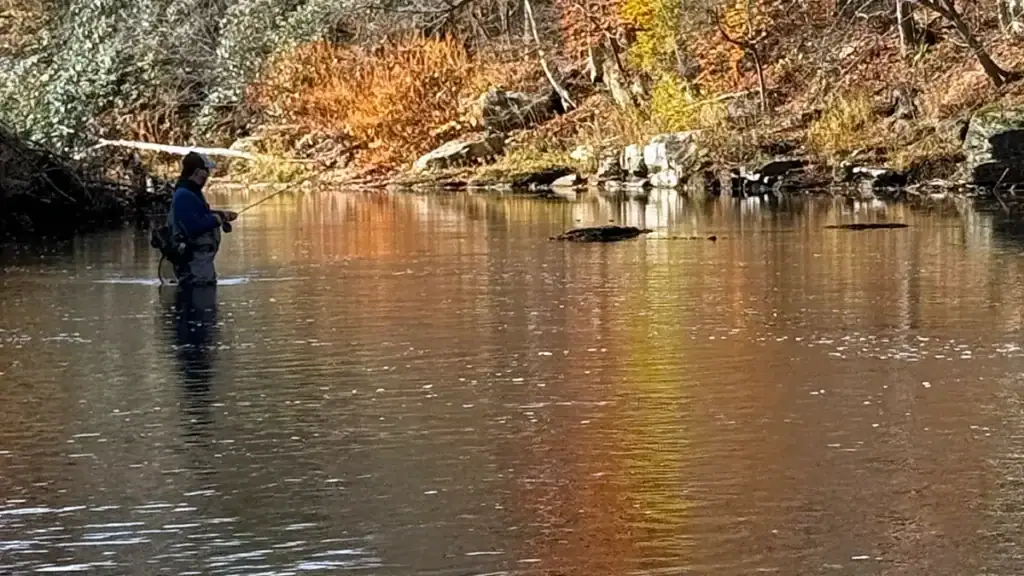
Choosing between hip boots, waist-high waders, and chest waders depends on water depth, conditions, and how much mobility you need. Learn how to read a river to identify the likeliest spots on your home waters and make the most informed decision.
Hip boots are best for shallow water, muddy banks, or quick tasks where you won’t be wading deeply, offering maximum freedom of movement and easy on-and-off use. They are also great for performing chores during mud season, so they can be a welcome addition to any footwear lineup.
Waist-high waders work well in moderate depths like streams or calm rivers, giving more coverage than hip boots while staying cooler and less restrictive than full waders. And if you’re going to be fishing from a drift boat or the like where you’re occasionally going in the water, they can be a great choice.
Chest waders are the right choice for deep water, strong currents, cold conditions, or situations where you may need to step unexpectedly into deeper areas, providing the most protection and warmth. If you could only get one pair, these are probably the right choice as they offer the most versatility.
How I Tested These Waders
I’ve spent more time in waders than most, clocking up to 250 days a year at one point in my life. I took that experience into account when making my selections for this guide. Testing occurred over the course of a year — or more — with these waders.
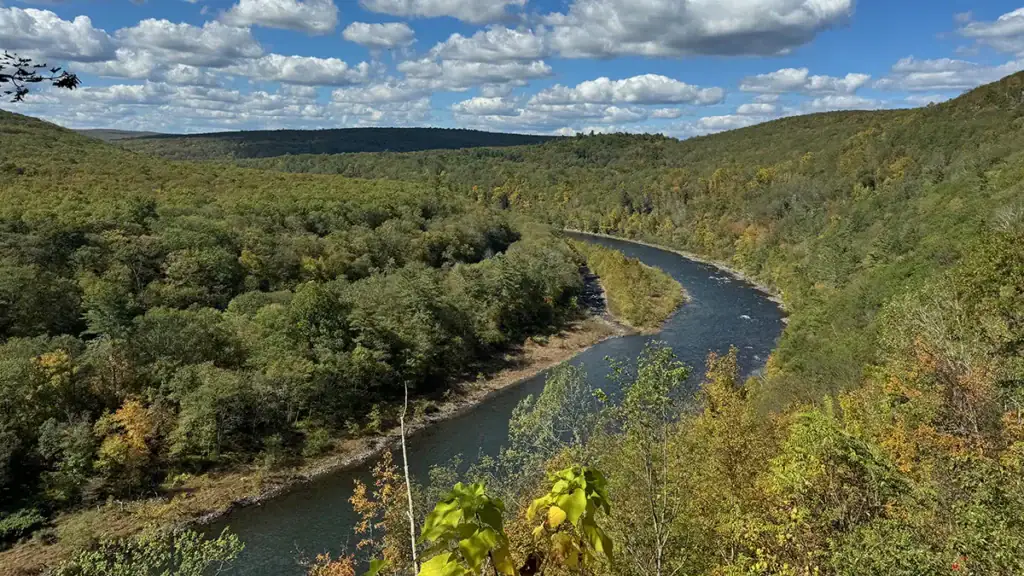
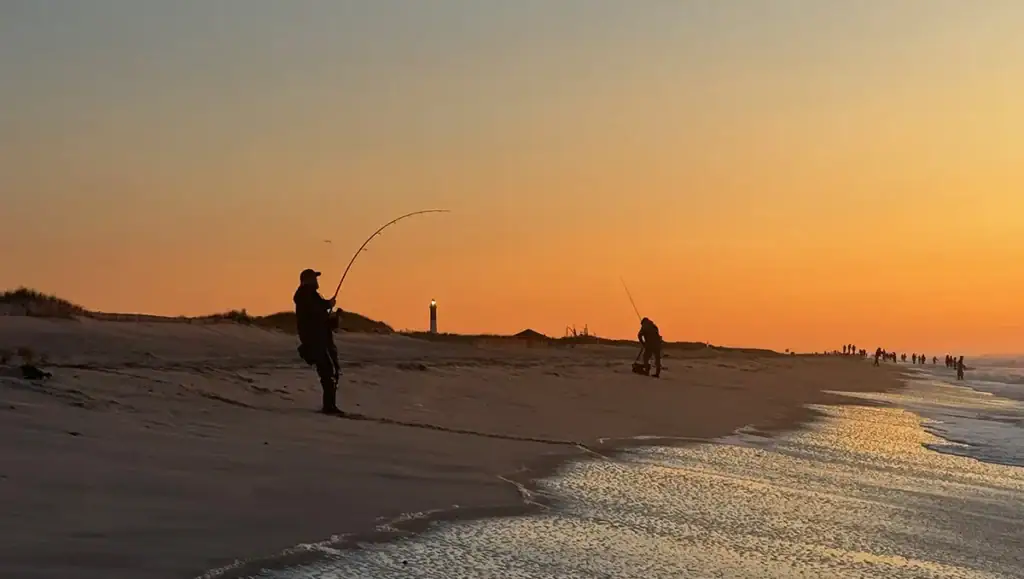
I spent much of my testing time on the mighty Delaware in all four seasons, but there was also time spent on bigger and smaller rivers. I did a fair amount of pond hopping and belly boating as well, and spent some time on the tidal flats and the open beach. In short, all of these waders got a serious workout before I made any recommendations for the best fishing waders.
Wade Right In
The best fishing waders comes down to how, where, and how often you fish. By focusing on fit, durability, breathability, and the conditions you’ll face most, you can narrow your options to a pair that keeps you comfortable, dry, and confident on the water. Whether you’re chasing trout in cold mountain streams or covering miles through the marsh, investing in fishing waders that match your needs will pay off in longer days and more enjoyable time fishing.