When it comes to the hard-water game, at times it’s daunting. From finding the right spot, the right lure presentation, and being in the strike zone, it all can seem overwhelming. There’s much to consider when figuring out fish hidden under a thick layer of ice, as well as keeping up with always advancing modern technology. Ice fishing is not about luck anymore, you have to rely on preparation, mobility, electronics, and an almost obsessive understanding of fish behavior. At the end of the day, we all just want to come home with a pile of fish.
I’ve enlisted the help of some top-tier ice anglers from around the Midwest to help point you in the right direction. Sam Sobi, Tom Boley, and Brian “Bro” Brosdahl are likely names you recognize from the ice fishing world today. These guys spend countless hours on the water, perfecting their skill and turning those days of fishing into catching. They offer advice on the three most popular fish species to catch under the ice: panfish (bluegills and crappies), yellow perch, and walleyes.
Targeting Panfish

Panfish—specifically large “dinner plate” bluegills and crappies—are among the most popular targets for ice anglers of all skill levels. They are as enjoyable to catch as they are to eat. However, consistently finding and landing trophy-sized fish throughout the winter requires attention to detail and an understanding of nuances. To help you master these subtleties, Midwest expert Sam Sobi shares his seasonal tips for locating and catching bigger panfish in shallow water.
Nothing is Too Shallow
“Growing up, especially ice fishing, we always fished the deep hole or some section of the lake that had plenty of depth,” said Sam Sobi.
Don’t be afraid to drill out shallow bays, flats and sections of the lake that range from 4 to 8 feet. They don’t mind living shallow in the winter. “There’s still plenty of food up in the shallows to hold fish there. The shallows aren’t just for the summer,” he said.
North-Facing and Weedy Bays
“I love to look at a lake map and see a north-facing bay that has shallow depth,” said Sobi. “Most likely there are weeds in the bay, the fish spawn there and more often than not spend a large portion of their life in that bay.” If the weeds are green and somewhat healthy, panfish may never leave and other fish may venture to that spot throughout the winter.
Weeds, Weeds, Weeds
Like most shallow water fish, weeds dictate how fish move and how they live. “Of all the aquatic vegetation found in most lakes, milfoil and coontail are the best,” said Sobi, “but even undesirable weeds like pond weed will be used by fish if they are green and alive.”
Panfish love the weed cover and feed on small bugs and invertebrates. Those bugs live around soft bottoms of the lake and near weeds. If the lake is clear enough, Sobi looks down the hole regularly, otherwise he uses the Vexilar Predator underwater camera for scouting and fishing.
Map Study is Crucial
Sobi is a huge fan of the OnX Fish App or the local DNR website to check for fisheries survey data. “Many states, especially Minnesota where I’m from, have a great database of lakes the DNR has surveyed throughout the years,” he said. “Look back throughout the years to see what was surveyed, and if you see big year classes in the past that are now in the trophy potential range — fish that lake,” said Sobi.
The OnX Fish app makes this research fast and easy to identify what lives in a lake and where to access. Whether it’s public access or land, the beauty of ice fishing is you can walk out. This creates an opportunity to fish small bodies of water that don’t have nice boat access and may receive little pressure throughout the year. If the survey looks promising, it’s worth the effort to explore the lake.
Sobi’s Top Gear For Panfish on Ice
“My one-two punch for crappies and bluegills in shallow weeds is a small spoon,” said Sobi. “I like a natural colored pinhead and jig, and then a loud one like chartreuse or white. If the water’s dirty, I use those loud colors. If it’s clear, I go natural or black.” The Clam Pinhead Pro and Clam Half Ant in 1/32 ounces are some of Sobi’s favorite baits.
Besides that shallow panfish especially in the weeds can be tough to see, you’ll want to utilize a good flasher. Sobi uses the Vexilar FLX-38 or the Vexilar FLX-18. Vexilar’s perform better than other flashers in shallow water, and especially in the weeds. So easy to use — turn your unit to low power mode and start fishing.
Yellow Perch Bites
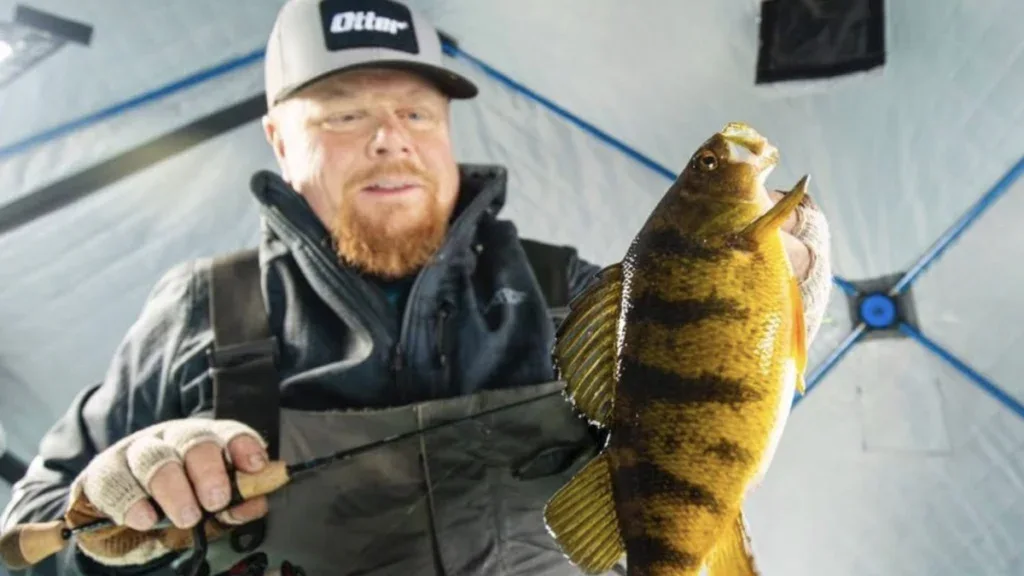
For most ice anglers, this is the first fish that comes to mind in winter. Perch are a great fish to catch as they fight hard and make excellent table fare. These fish are readily accessible across the country, making them a highly targeted species.
When it comes to finding perch on the ice, the fishing trends one of two ways. You can find a massive school, and it’s one after another, or it can be a slow steady grind. Either way, paying attention to spots, color, size and shape of your baits can be crucial.
Brian “Bro” Brosdahl is no stranger to chasing big perch throughout the whole ice season. Whether it’s putting clients on jumbo yellows or chasing after them himself, Bro knows his way around perch. Here are a few tips Bro recommends to put more perch on the ice this season.
Perch Follow the Food
“Yellow perch are a lot like cattle, you’ll always find them around some sort of food or structure where food is present,” said Bo. Whether it’s insects like blood worms in the mud, scuds in weeds, or mayflies around rocks, yellow perch will always gravitate to live around food related structures. Even big mud basins hold thousands of perch due to the high concentrations of bloodworms.
Pounding The Bottom
In muddy areas or just off of the weedline, pounding the bottom can be a great way to trigger strikes from bigger perch. “Since you are vertically fishing, pounding the muddy bottom creates a huge disturbance to draw more perch into your area,” he said. “They are extremely curious fish and will come check out these mud clouds looking for a snack.” Using heavier spoons like a Northland Tackle Tungsten Forage Spoon makes this technique super easy and extremely effective.
Find The Weeds, Find The Perch
Yellow perch are extremely opportunistic creatures and weeds provide the perfect cover for them to eat a wide variety of prey items. From baitfish, to bloodworms, to scuds and mayflies, weeds always will hold perch.
“Perch will always be concentrated on the farthest outside edges of the weed beds because that’s where the bloodworms and other invertebrates will most likely be concentrated,” pointed out Bro. Of all the variations of aquatic vegetation, Bro suggests Milfoil and Cara (which is actually an algae species) are the top places he finds most of his perch.
Bro’s Top Gear for Ice Fishing Yellow Perch
When it comes down to perch gear, Bro keeps it simple. Smaller light action rods, light line, and a few different baits to grab their attention. Bro is a huge fan of the Northland Tackle Tungsten Forage Spoon as well as the Northland Twitchin’ Puppet. “Perch react better to slender profiled baits and both of these baits fit the bill perfectly,” said Bro. Usually he tips them with waxies, spikes or a minnow head for scent and a little more appeal.
To find the perch, bro relies heavily on his Humminbird Mega Live Two on his Humminbird Xplore units. Specifically in the downview setting, Bro said it’s perfect for seeing fish coming in at all angles and to present the bait in a natural way.
“You don’t want to use too heavy of line when using these baits,” he said. His go to ice line is Sunline FC Ice in a three- to five-pound test fluoro. This ensures no frozen guides but you can still feel every subtle bite. Anything over five-pound test for yellow perch is overkill.
Walleye in Winter

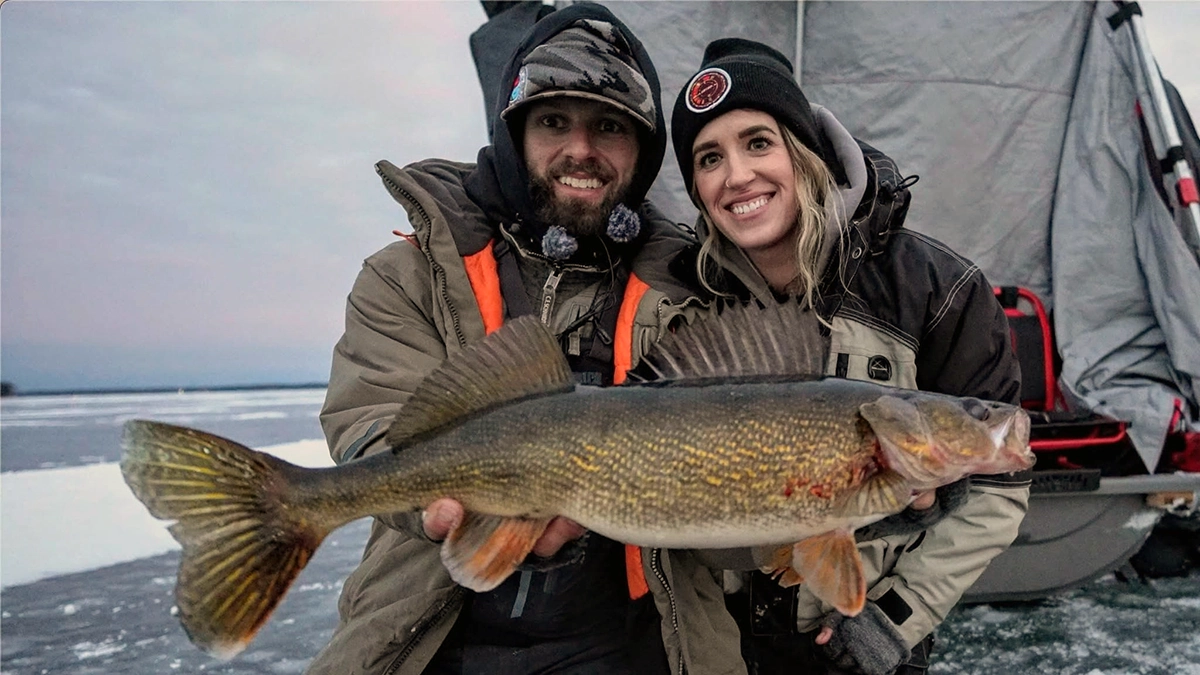
Often considered the crème de la crème of the ice fishing world, walleye are the most targeted predatory species through the ice. They fight hard, grow to big sizes and are some of the most delicious fish in freshwater. Their white flaky meat draws anglers from all walks of life in hopes of dinner.
Walleyes can be the most frustrating to catch on the ice. They are smart and wary fish that are always on the move. Finding and staying on them consistently can be quite the challenge, but fishing Youtuber Tom Boley has figured out how to catch these big fish consistently throughout the ice season. He has it dialed to a science catching big walleyes in the north country through the ice. Here are a few of his ice fishing tips to catch walleyes.
Look For Shallower Water
“Most ice anglers often think that walleyes sit in much deeper water in the winter time and that couldn’t be further from the truth,” said Boley. “Most of my best numbers and big fish days come from anywhere from four to 12 feet of water.” Deeper isn’t always better. Walleyes are still predatory fish and hunt during daylight hours in the shallows. Not just at night.
Keep Baits Higher In the Water Column
Walleyes tend to rise a little higher off the bottom than most fish. “Keeping your baits higher will ensure your bait stays in the strike zone longer,” said Boley. He usually keeps his baits in the lower third to mid column when fishing for walleyes in whatever depth he’s fishing.
Work Baits Aggressively
“Unlike open water angling where you can cast to fish and make them react, ice fishing requires a way to draw fish into you,” said Boley. Working your baits aggressively can make a huge difference in the number of strikes you get. Walleyes are curious creatures and will swoop in to check out an aggressive bait.
Boley’s Electronics For Ice Fishing Walleyes
Electronics play a huge role in how Boley finds walleyes day or night. Having quality Humminbird units is how he breaks down water quickly and effectively. Boley takes a two pronged approach for electronics for walleye.
“I love to have two units for chasing walleye,” said Boley. “Is it necessary, no, but extremely helpful. Especially with how finicky they are.”
He runs two units while on the ice. Both Humminbird Xplore units. One is just for Mega Live Two to help locate the school from a far, the other is in 2D sonar mode to not spook the walleyes.
“Walleye can be easily spooked from live sonar,” he said. “Even from a distance it can push fish away. Having two different graphs is crucial to my success ice fishing for walleyes and catching big ones. Keeping them comfortable and not spooked will result in more bites and more fish landed.”