Early in Rick Clunn’s career, he learned an important lesson about bass and their role as a predator. While attending a survival school, he met an Apache Native American teaching animal tracking who taught him something that stayed with him.
When he heard Clunn talking about bass fishing, he interjected, “You’re doing it backward. If I want to understand the owl, I do not study the owl. I study the mouse. You study the bass but not the food that controls where it will be.”
Clunn thought about the advice for a second, then embarked on a journey to learn as much about the bass’ forage as he possibly could. He eventually became an expert in the bass-prey relationship, a factor that contributed greatly to Clunn becoming one of the all-time greats in professional bass fishing.
His first priority was determining where the fish food was. Once that was determined, he knew the bass wouldn’t be far away.
Get to Know Shad
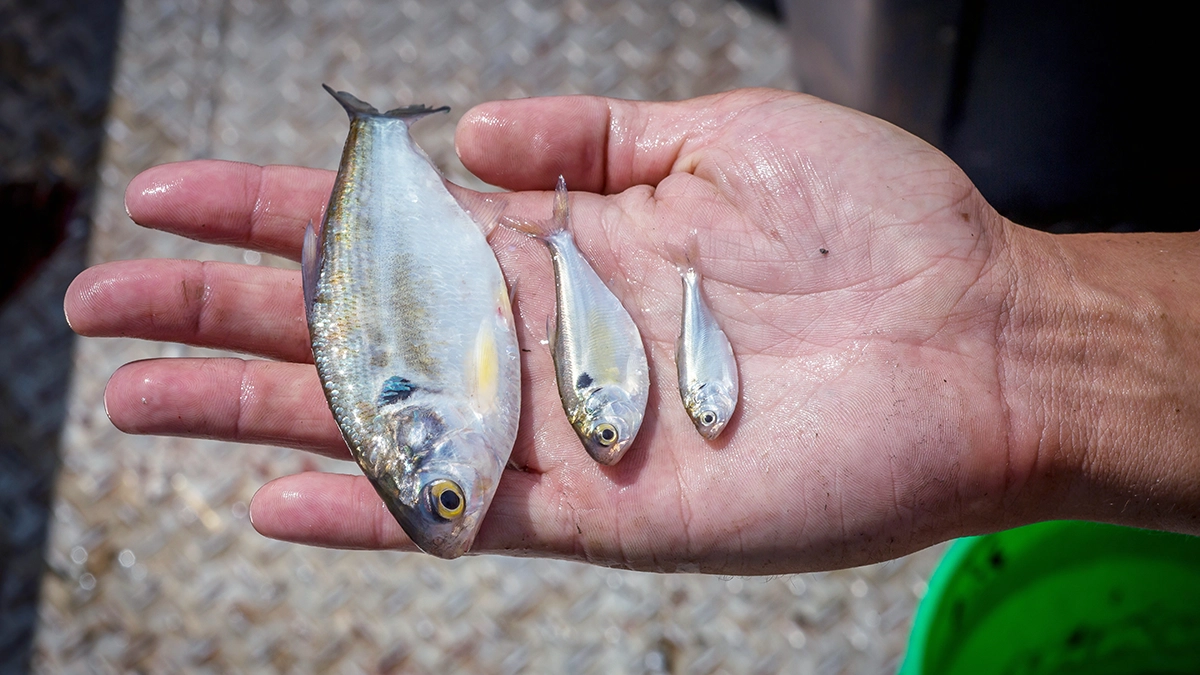
Because gizzard shad are the primary forage for bass in many of the reservoirs on the B.A.S.S. circuit that Clunn fished, he dedicated himself to finding what made the baitfish tick. He went so far as giving bass he caught the “odor test,” seeing if they smelled like shad.
He also learned that the size of the baitfish could provide a clue as to the size of the bass feeding on them.
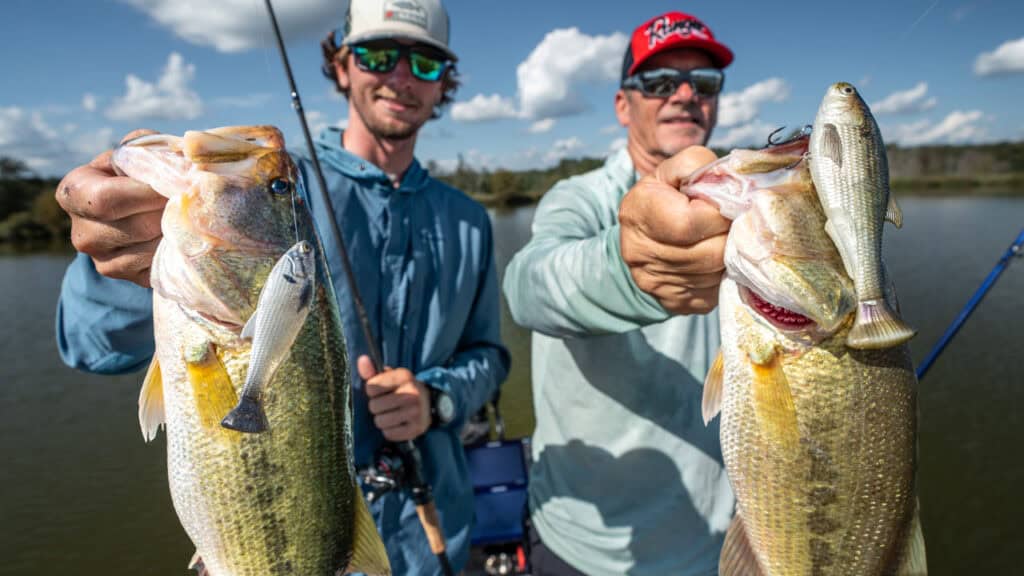
“Bass over 6 pounds don’t want a bunch of small meals,” Clunn told Wired2fish. “They want a couple of big meals, and that’s enough to satisfy them. That’s why they’re not out there chasing down a bunch of small baitfish. They prefer to sit in cover and wait to ambush something larger.”
Clunn remembers when that knowledge paid off big when he was fishing a B.A.S.S. tournament at Lake Fork in Texas. He found a school of big gizzard shad in the shallows and he went to an oversized squarebill crankbait, the RC King Kong Shad, to imitate them. He ended up catching largemouths weighing 8 pounds, 9 ounces and 6 pounds, 6 ounces in the same day.
Other fishermen could improve their success by similarly studying the “mouse,” Clunn said.
Shad 101
Let’s start with the basics. Many reservoirs are filled with thousands of shad, probably what bass consider the idea of fast food.
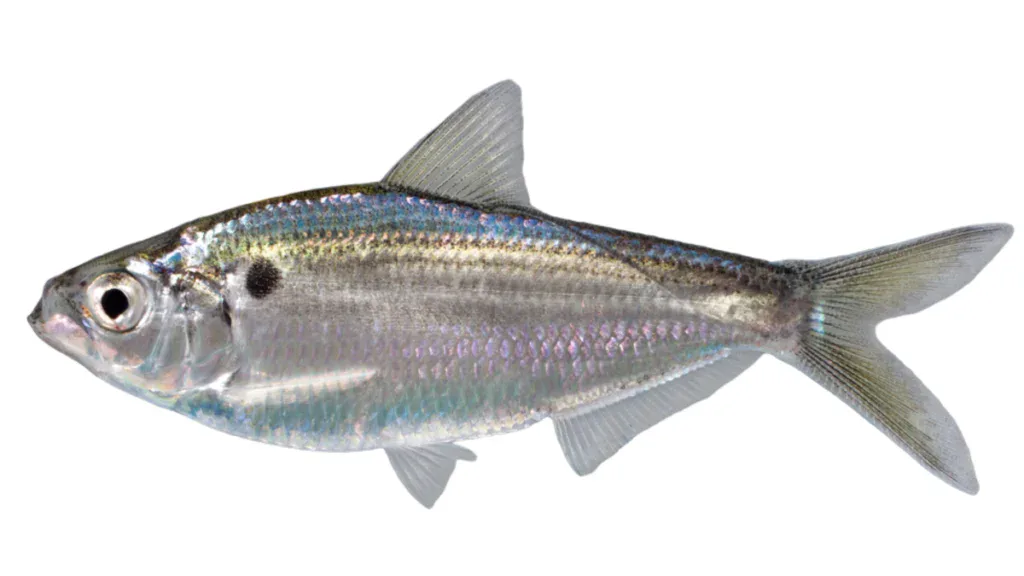
Gizzard shad are the most abundant and are a major part of the food chain. They are primarily bottom feeders as adults, eating algae, fallen leaves, and decaying plant material. Threadfin shad are filter feeders, usually found suspended in open water and feeding on plankton.
Both have their specific advantages. Gizzard shad are more prolific, grow quickly and can withstand a wider temperature range. Threadfin shad thrive in warmer climes and are susceptible to die offs when the water temperatures dip below 50 degrees.
The nice thing about threadfin shad is that they are more short-lived and stay at the size where they are perfect prey for bass and other gamefish for most of their lifespan. Gizzard shad can grow to the point where they are too large for bass and even larger predators to prey upon. That means the largest are able to take up unwanted biomass. Both species thrive in “productive” waters—that is, water that is rich in nutrients.
“We’ll hear from fishermen who think gin-clear water is ideal,” said Jeremy Risley, a fisheries biologist for the Arkansas Game and Fish Commission and the lead of the agency’s black bass program. “But really, it’s not. Actually, the greener the water, the better. We want 18-, 36-, 48-inch visibility. That shows us the water is more fertile and has more plankton. The young-of-the-year shad need that plankton to survive. It’s a crucial part of their lives.”
That plays a big part in why famous reservoirs such as Lake Fork, Guntersville, and Sam Rayburn are such impressive bass factories. They all have fertile water and plenty of shad for bass to prey upon.
Shad abundance can vary greatly from year to year on one specific body of water. It can trend lower during years of prolonged drought, and bass populations will decline with the lack of food. Conversely, high-water years can result in boom times for shad production and can recharge a bass population.
“When we have these high-water years, we see shad numbers go up because all the added flooded brush and vegetation give them protection, and the productivity of the water goes up,” Risley said.
It doesn’t take long for that rise in shad numbers to have a positive effect on the health of the bass population, according to Tyler Ham, a sportfish ecologist and program lead for the Missouri Department of Conservation’s reservoir sportfish program.
“Generally, when we’re electrofishing, we’ll see some healthy bass the next year after a good shad spawn,” he said.
Productive Baitfish
It’s not hard to see how a productive reservoir can build such a large population of shad. A single female gizzard shad can lay as many as 250,000 eggs, Ham said.
“That sounds like a lot, but I’ve seen studies that show only 1 percent of those shad will survive into adulthood,” Ham said. “They are broadcast spawners, meaning that the females will broadcast eggs into areas that are protected from wind and waves, and the males will fertilize them.
“But they don’t protect those eggs as some fish species do. The eggs are susceptible to predation from other fish such as bluegills and green sunfish, so only a small percentage survive.”
Still, a small percentage of a lot is still impressive, especially in plankton-rich water. And the survivors grow quickly.
The shad spawn can take place anywhere from late April into late May in the Ozarks. Through the first growing season, gizzard shad are generally 3 inches long, Ham said. And that’s a prime size for bass.
“They’re quick growers. Usually by early summer, they’re big enough for gamefish to prey on them,” Ham said.
But there is a limited time when the gizzard shad serve as an ideal food source, he said.
“There is a finite window when shad can serve as a good prey species,” Ham said. “By age 3, they can grow to 8 inches. When they get above 8 inches, they’re almost predator proof.”
Too Many Shad?
Many fishermen have seen calm water suddenly erupt with activity as gamefish chase shad to the surface and tear into them. Casting into those swirls is supposed to result in a “gimmee.”
But against all odds, sometimes the gamefish refuse to hit. So what’s going on?
“In many cases, the fishermen aren’t matching the size of the shad the gamefish are eating,” Risley said. “They can get very tuned in to the baitfish they are chasing. If it doesn’t look natural, sometimes they won’t touch it.”
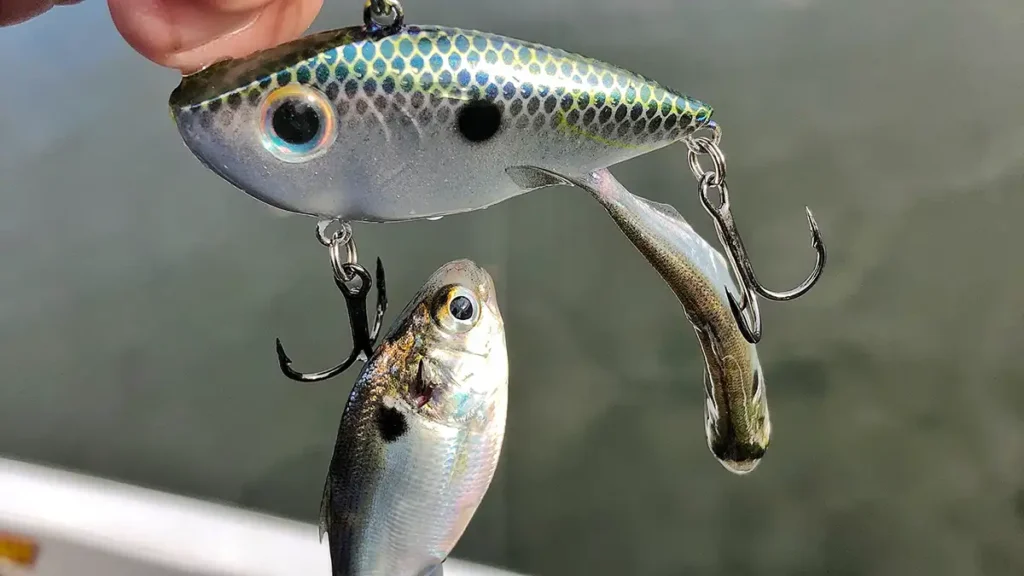
Often, fishermen have to “match the hatch,” as trout fishermen do. In other words, they have to imitate the size and shape of the baitfish bass are feeding on.
Sometimes, even that doesn’t work. It can be hard to compete against the real thing. So anglers often retreat to different areas where shad are more scattered and lures have more of a fighting chance.
Not the Only Forage
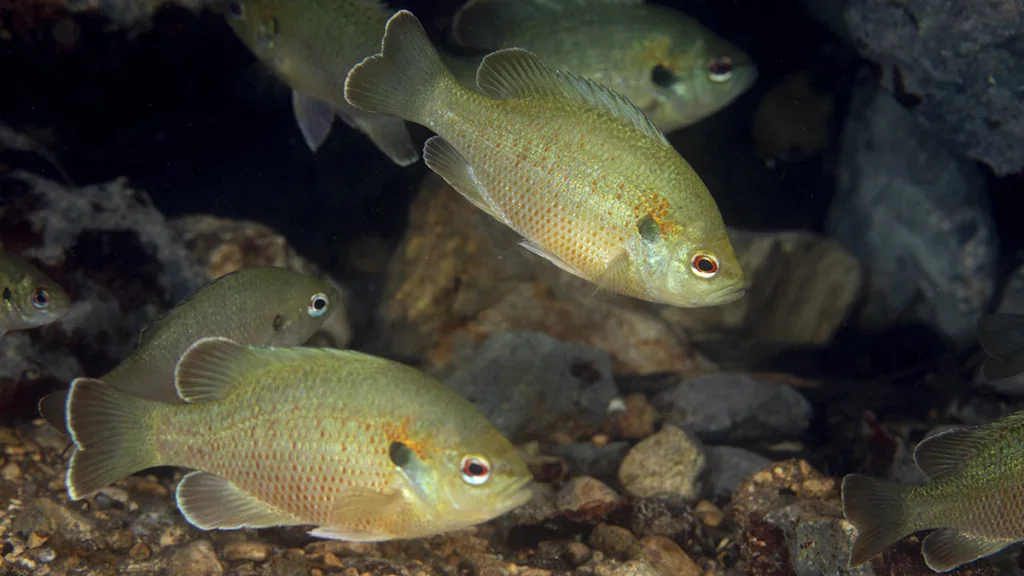
Shad aren’t the only entrée on the menu for largemouth bass.
Depending on the region, the dominant forage species can differ. For example, blueback herring are a major baitfish in the Carolinas and Georgia. Golden shiners and sunfish are what’s for dinner in many Florida lakes. And sunfish, minnows and crayfish are important food sources in Northwoods states such as Minnesota and Wisconsin.
Even in reservoirs with strong gizzard and threadfin shad populations, crayfish and panfish supplement the bass’ food source.
But there’s no mistaking that shad species are a universal entrée in America’s bass belt.
“They’re a linchpin when you think of the food web,” Ham said. “They serve to connect the lower part of the food chain with the top. Having a steady forage base is a vital part of having a healthy bass population.”