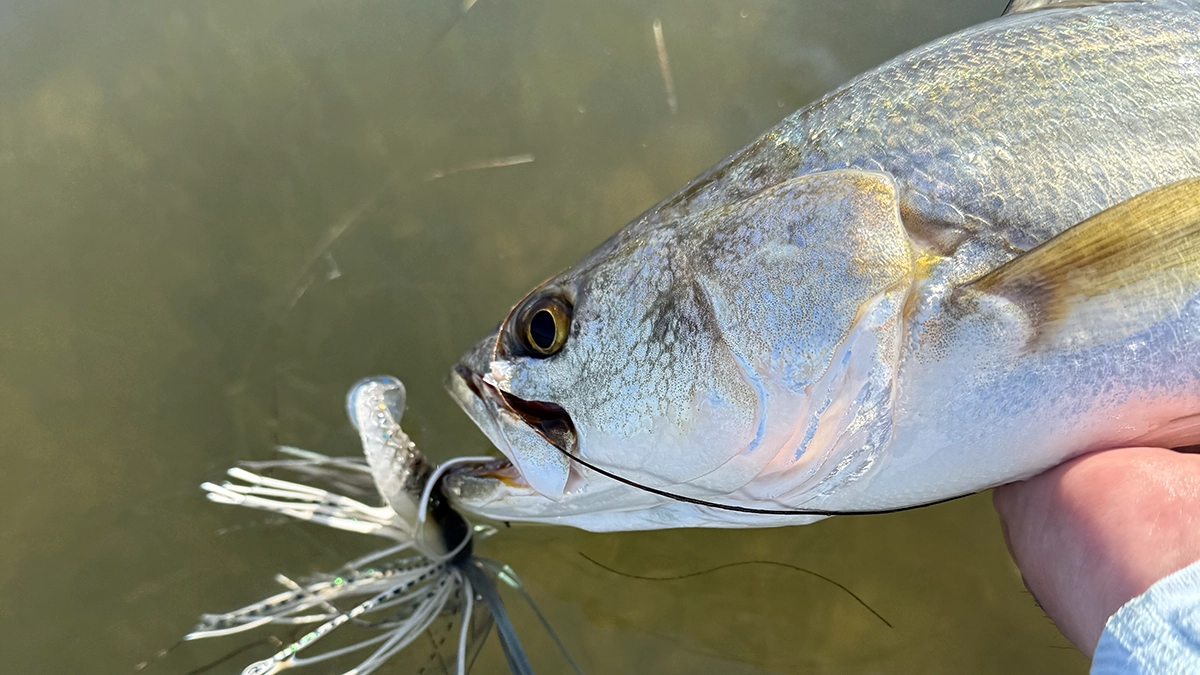
Taking a break from the lakes, I headed to Florida’s Intracoastal Waterway (ICW) in search of speckled seatrout. (I always chuckle when typing out intracoastal because social media butchers the spelling of it so regularly, with “intercostal” and “intercoastal” the most common typos.) My plan was to fish an area I hadn’t explored in years, propelled by rumors of fresh seagrass growth on the flats. And the kicker? I was going to fish Berkley’s new Saltwater SlobberKnocker Blade Jig to catch them.
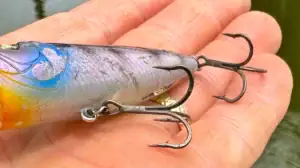
I paired the SlobberKnocker to a Berkley PowerBait Saltwater Paddlin’ PowerStinger. The PowerStinger is a lifelike minnow that incorporates honeycomb technology in its boot tail, designed with back and belly slots for multiple rigging styles. A swimbait might not be everyone’s favorite trailer in fresh water, but there’s likely no better option in the salt.
Cooler temperatures clear the waters this time of year in parts of Florida, knocking back algae blooms. Plus, less rainfall in the dry season means limited runoff from streets, stormwater infrastructure, and nuclear-green lawns. The area I fished was a world of shallow water, soft plastics and weedless rigs. At least, that’s one bait most anglers have tied to a rod. Which was why I was a bit of an oddball when casting my bladed jig.
If you don’t know about speckled seatrout, they remind me of a saltwater version of a walleye. Walleye do grow larger than spotted seatrout, although both species have a set of canines and soft body. Bonus points go to seatrout for their propensity to attack a topwater plug.
Walleyes are green; trout a silver color sprinkled with black dots. Smaller versions of each fish tend to school up and anglers can catch a bunch of fish from one area in short order. And lastly, both species are known more for their fillets than fight, with walleye tasting better in my opinion.
SlobberKnocker Fishing
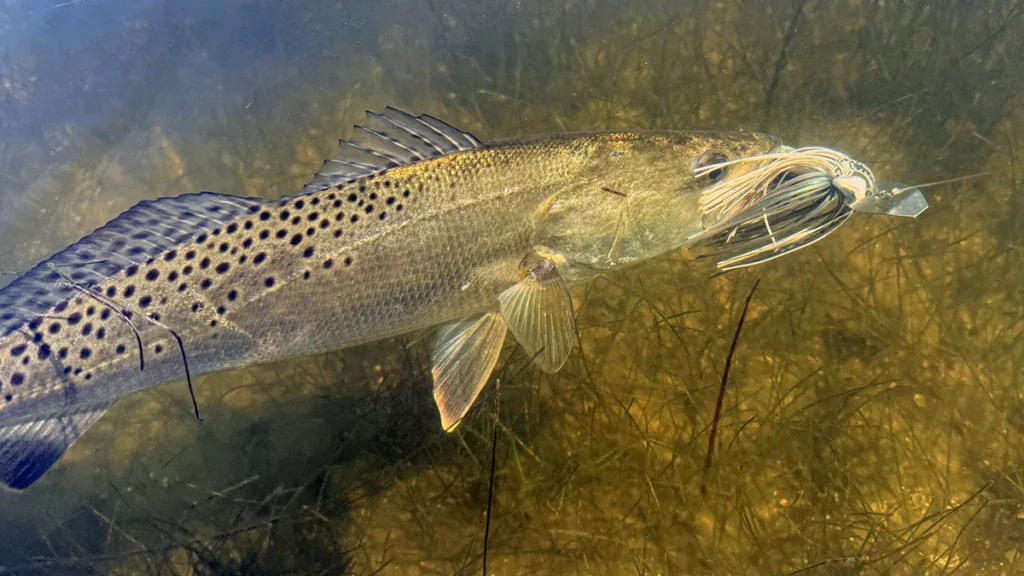
I cast the SlobberKnocker as a prospecting bait covering water that wasn’t quite as clear as I hoped. I tried along edges of flats that bumped up against sand, oyster bars, mud bottom, and even over solid grass flats. Bladed jigs are common lures in the brackish estuaries near the mouth of the Mississippi River and northern Gulf. Not surprisingly, these areas also produce redfish, trout and largemouth bass on spinnerbaits for anglers.
It was my success with bladed baits in places like Louisiana’s endless marsh habitat that made me feel comfortable tossing the SlobberKnocker on a baitcaster in east coast Florida.
Finally, I located where a bunch of seatrout were stacked. The fish were pretty shallow — less than 3 feet of water — sitting in potholes. In fact, I thought they were red drum at first. And the first time I found the fish, I drifted across their backs, spooking them worse than Freddy Krueger ever could have.
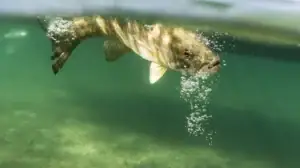
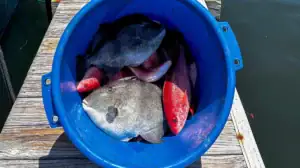
But I’d played this game before, and I knew what to do. I drifted off the spot, and anchored upwind and waited. The trick was to let them resettle in the spots they wanted to be. After about 10 or 15 minutes, I started casting to the target zone and hooked up. In fact, every couple minutes I convinced a seatrout to bite during that feeding window.
About the Berkley Powerbait Saltwater SlobberKnocker
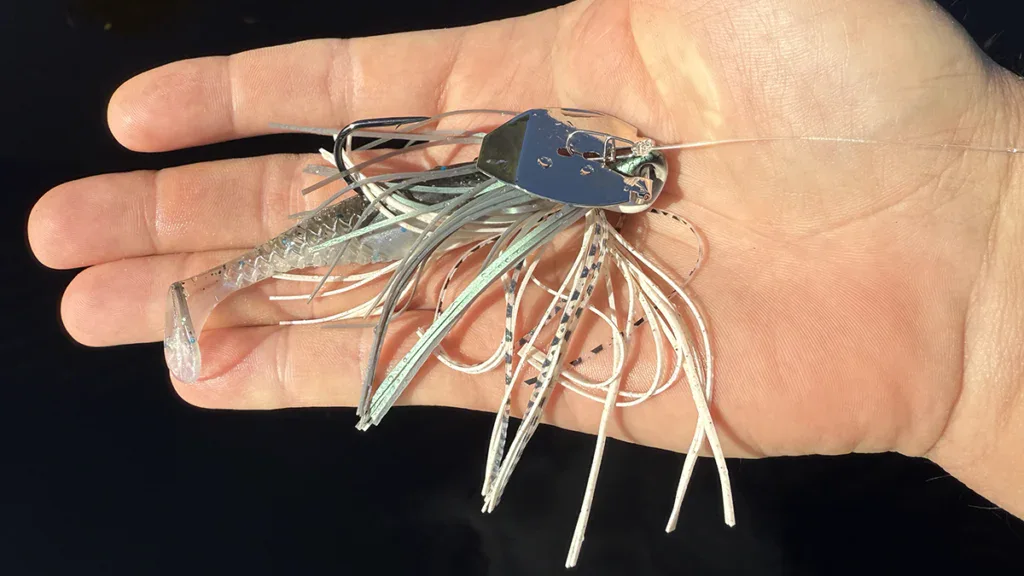
The Berkley PowerBait Saltwater Slobberknocker has a hard-knocking sound (like a popping cork). I think trout recognize that sound as shrimp fleeing, or potentially baitfish feeding. Add in the flash and vibration of the bladed bait and that’s what seals the deal. The bait did well in the grass, getting caught up only when I let the bait drop too deep or when it picked up floating grass.
Berkley’s Saltwater SlobberKnocker Features
- Through-head blade design
- Hard knocking sound
- Hand-tied silicone skirt
- Sharp, needlepoint Fusion19 hook
- Talon-style keeper
- ⅜- and ½-oz sizes
- 8 different colors
In one instance, I got to see a bite while sight fishing. There were two or three “logs” sitting in a pothole that I knew had to be fish. And although they were hard to identify, it didn’t hurt to make a cast their way. Throwing beyond the sandy spot, I first let the bait fall to above grass level. Then, I let the SlobberKnocker go to work with its vibration and flash. Running it through the line of vision of the three fish (without spooking them), one exploded from the sand and lunged out to grab the lure. That scene will never get old to me.
I say give the SlobberKnocker a shot. It can be for fresh- or saltwater targets, even if it’s built tough for the salt. (Also, remember that Berkley has a traditional, freshwater SlobberKnocker as well.) I’ll get back to the lakes and rivers I’m used to and I’m confident I’ll tag bass on it. Play with different trailers too; that’s all part of the fun. But if I can turn a classic redfish bait into a seatrout slayer, there are likely few species that won’t mistake this bladed jig for a flashy minnow.