Alabama bass fishing tournaments have been getting canceled recently by those who host them. Notably, the Black Friday Guntersville Open in November and Auburn University Bass Fishing Team’s final tournament at Lake Jordan.
At the heart of the Alabama tournament cancellations is liability, stemming from fresh-in-mind tragic events. Three men — John K. Clark, Jeffrey C. Little, and Joey Broom—were killed in a boat collision during a Major League Fishing Tackle Warehouse Invitational Tournament in April. Pro bass fisherman Flint Davis was indicted on three counts of manslaughter following the boat crash. Lisa Little, widow of Jeffrey Little, filed a lawsuit against Major League Fishing.
Is this a wakeup call for bass events?
Negativity is Front and Center
I have been watching the changes in my favorite sport for a long time. Yes, in my mind, fishing is a sport and I have been involved in it as a participant or fan for more than 50 years. Never before have I seen so much uncertainty.
The growing negativity surrounding tournament fishing is painful to hear, and it affects every league and area of the country. It started a few years back with controlling and eliminating access and privatization of public waters. The detrimental effects of spraying and vegetation eradication were next. And now liability concerns for tournament organizers is front and center, as highlighted in Alabama.
Whether you want to admit it or not, tournament fishing is under fire and we are not helping ourselves — too much speed, too many boats in a single event, and cheating scandals all too common. Although many want to point to technology advancement, I personally believe we have too many tournaments. Fields are out of control in numbers, and then add in reckless boat operations that cause accidents.
Change is a Reality
In a few recent years I have seen a lot of change. Honestly, I am not in favor of most of it. Change for a reason and with a large sampling is normally good, but recently it just seems to be changing for the sake of change. I have an old boss and mentor who said, “Seen a lot of change and I have been against most of it.” It sure seems to fit here. I must temper my thoughts as I am just a fan of pro bass tournaments these days, but doggone it, I have been up and down this hill for over 30 years.
Recently, tournament fishing got a big poke in the nose with many large events across the country cancelling. The overarching theme seems to be liability issues. Tournament organizers and directors are scared to death to run an event for fear that they could lose everything if their insurance is tested.
In my humble opinion, tournament fishing hangs on the edge of extinction as we know it. There is not a single reason in particular, but many old-timers have been saying it ever since the advent of Forward Facing Sonar (FFS). I say “Hogwash!” This very real problem was coming even if FFS was never invented — too expensive, no longer fun to participate in, and even less fun to watch.
I have been around tournament fishing and participated in it longer than many, but the parts I loved the most are leaving faster than they can be fixed.
In the Old Days
We never had to worry about cheating when I started in the late 70s and early 80s. It was not from the fear of getting caught, but rather because most had integrity and pride of accomplishment. Cheating to win or place high was never a consideration because winning was about effort. Indeed there was plenty of storytelling and embellishment, but that was just defense. I always believed that if you just told the truth of where, what, and how no one would believe you anyway, so you didn’t have to worry about fabrication later.
What Started It All?
In recent years, entry fees rose for larger payouts. That monetary carrot for cheating was born. More money, more risk, and even social media prestige had some unscrupulous anglers looking for any edge. It truly was by hook or crook. That edge was often bending the rules or testing boundaries. It seems that almost weekly we learn of a disqualification or cheating rumor. There simply aren’t enough rules to cover every possible ssenario.
Boat prices spiraled out of control and vessel operators grew younger. Honestly, we never used to worry about liability. Now with the litigious nature of people suing other people, tournament organizers question the risk and understandably are nervous about running tournaments. Liability insurance for the event now might include travel, pre-fishing and other non-tournament days. Site permits add another cost, plus public safety for others using the same water on tournament days. All these different scenarios are cause for organizers’ concerns.
Culture of Recklessness?
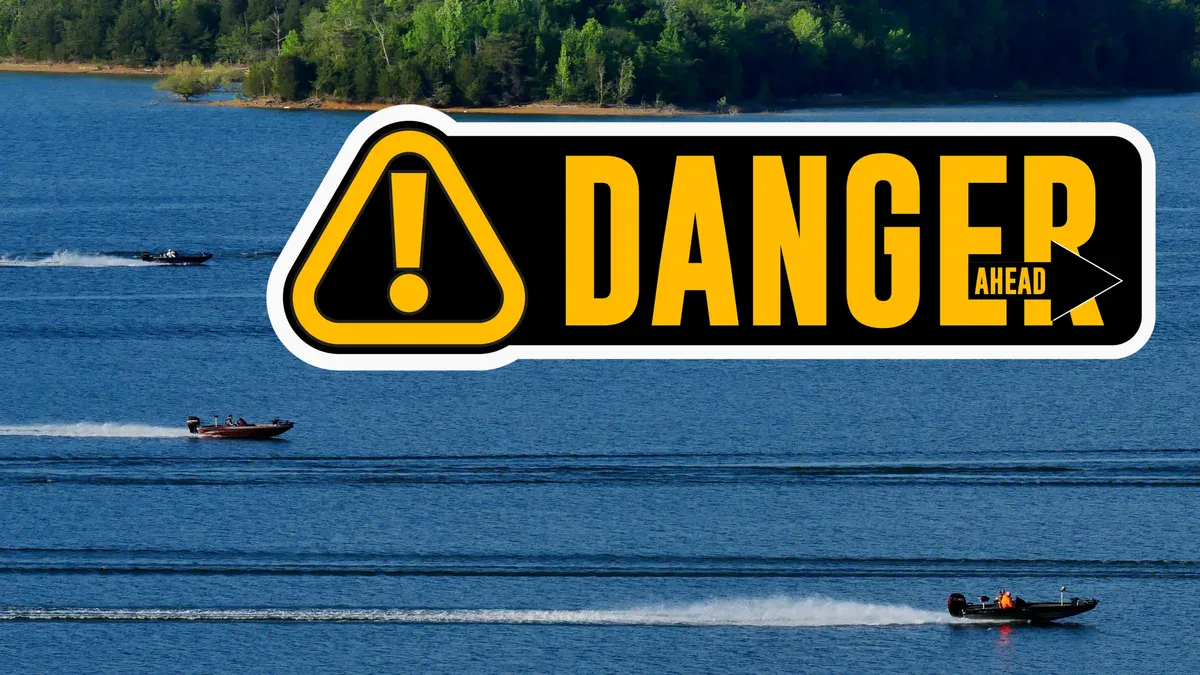
With increased boat speeds, combined with larger fields, come a larger concern of operator experience. No one wants bass pros to be perceived as reckless boat operators. But non-tournament anglers and boaters see shiny, high powered boats racing all over in a much different light than those inside the bass boats. That perception resonates negatively for our sport.
No doubt the landscape of tournaments and tournament organizations is rapidly changing. Rather than be reactive to something that may occur, it’s incumbent on all of us to police ourselves. Safety is much more than wearing a life jacket. It is respect for all of those that use the same resource, including participants and nonparticipants equally. As tournament anglers, we have no special license to waterways. The family dipping a minnow has the same rights we do; it’s important for us to remember that. I have always tried to give those fishing from a boat or from the shore that same respect.
Even though I see cancellations of major annual events as a strong forewarning to all of us, it just may be an opportunity to do better and take the time to look at ourselves. Is there a better way to do what we love? Honestly, the time is now, or the sport we love may go away without much of a whimper.