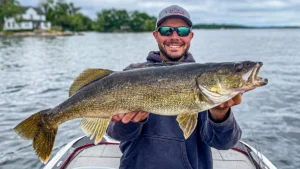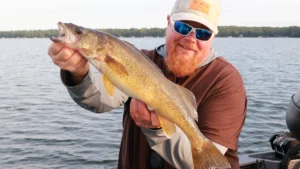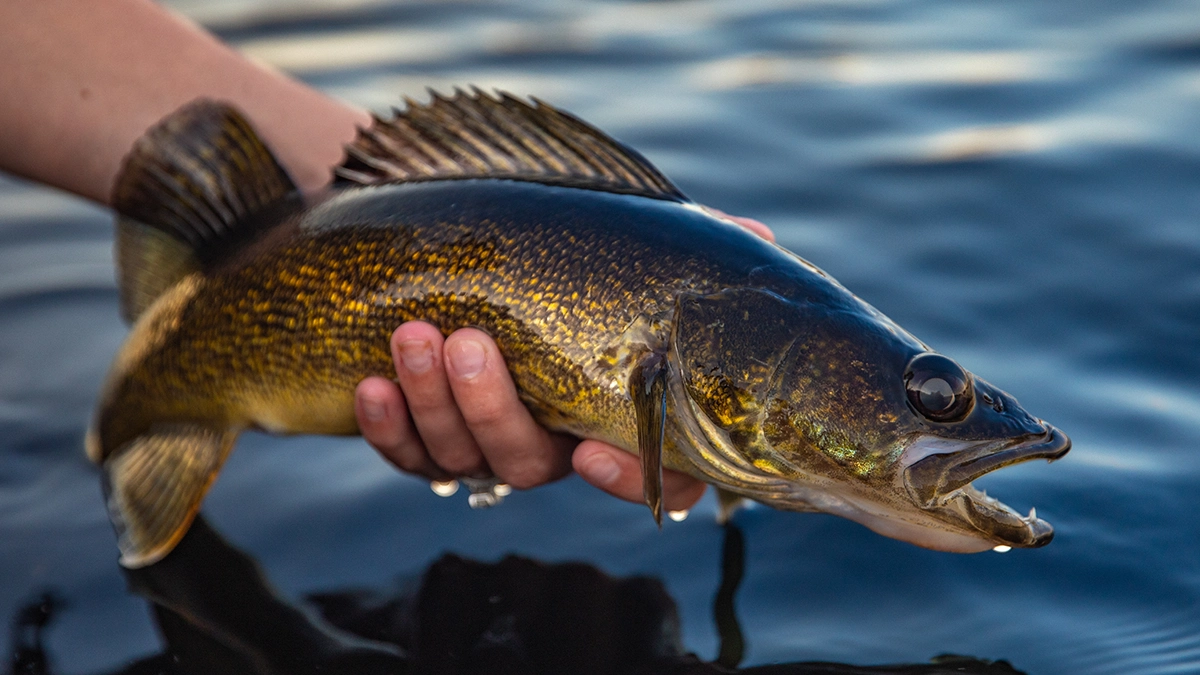
The next time you catch a big walleye in Iowa, Nebraska, or Kansas, thank a fisheries biologist.
Chances are, that fish wasn’t produced along some rocky bank or riprap in a reservoir. Instead, it originated as fishing’s version of a “test-tube baby.”
Above photo credits: Adobe Stock
For years, fisheries crews have given Mother Nature a huge boost in building walleye populations at aging reservoirs. They work the night shift on cold early spring nights to net walleye that have moved in to spawn, then they take over from there.
What Fisheries Do
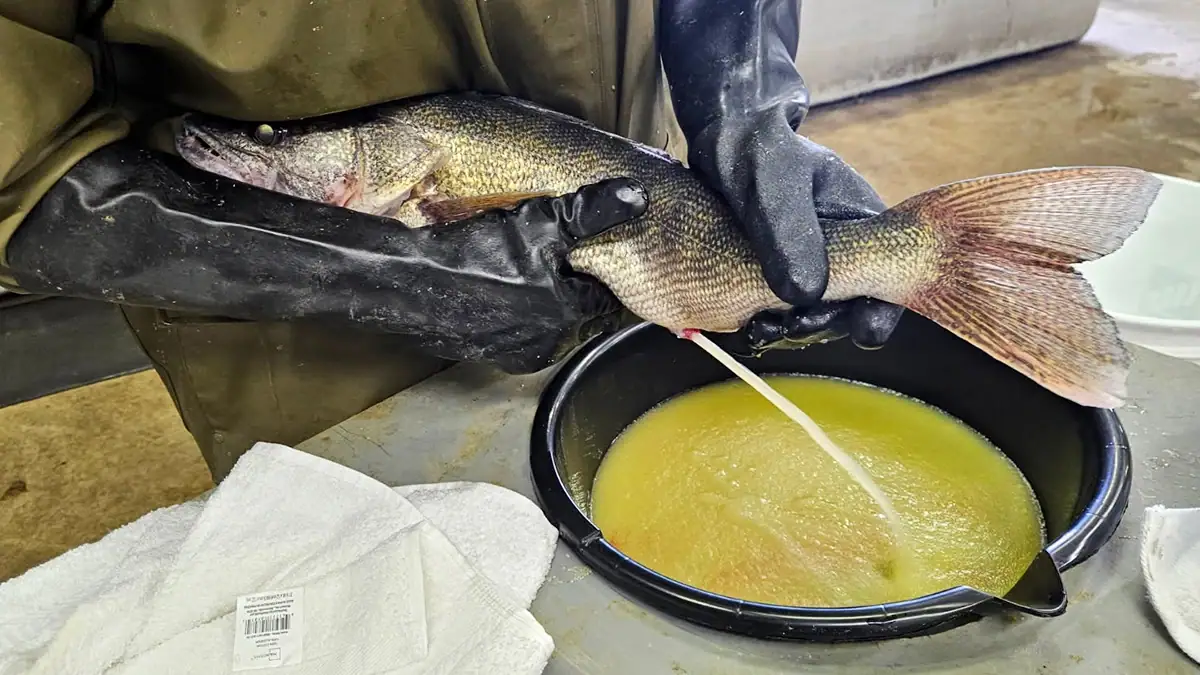
They milk the females for eggs and the males for milt, then mix them together and ship the mix to a fish hatchery. The eggs are hatched in a controlled setting, resulting in far better success than in the wild.
Then the fry are kicked out of the nest in a few days and stocked in reservoirs to fend for themselves. Percentage-wise, not many of those tiny fish survive. But when they are stocked in such large numbers, even a small number of survivors translates to a lot.
Oftentimes, that’s enough to maintain a viable year-class of walleye that will produce good fishing a few years later.
“Mother Nature works, but we can do better than that when we are spawning them in a pan,” said Daryl Bauer of the Nebraska Game and Parks Commission, referring to the process of mixing the eggs and milt together.
Why is Mother Nature Struggling?
Reservoirs in the Farm Belt — that north-central area of the U.S. devoted to large-scale commercial farming — are aging.
Banks are eroding, silt is covering the rocky areas walleyes prefer for spawning, and water clarity is decreasing.
In many cases, walleyes are still reproducing, just not at the rate they once were. That’s why the artificial egg-hatching programs are so important.
“In Iowa, we wouldn’t have the walleye fishing we do if it wasn’t for our hatchery and stocking program,” said Jay Rudacille, hatchery supervisor for the Iowa Department of Natural Resources.
The Iowa DNR’s goal for 2026 was to collect 156 million eggs and produce 106.4 million fry — and that mission was a success. Many of those fry already have been stocked in 36 lakes across the state. Others are being kept in hatcheries and raised until they grow up to eight inches long, when they will have a better chance of survival when they are stocked in the fall.
Iowa collects most of its brood fish from reservoirs with established walleye populations: East Okoboji, Spirit, Rathbun, Storm and Clear lakes. The brood fish are tagged, their eggs are extracted, and then they’re released.
Fisheries biologists such as Rudacille are impressed by the tagged fish that return to the same spot each spring to spawn.
“We’ve had walleyes that will show up in our nets for five years at the same place,” he noted.
The Right Timing
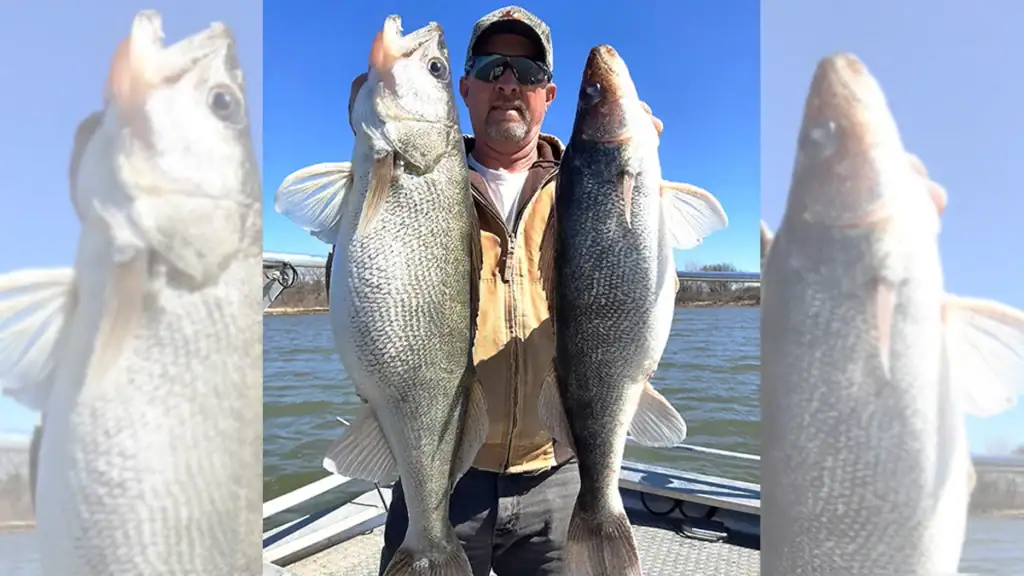
When fisheries crews collect eggs from spawning females, timing is everything.
If workers make their nighttime runs too early, they will net “green” females, or fish that aren’t ready to drop their eggs. If they’re too late, the walleyes they encounter have already dropped their eggs. For Iowa and Nebraska, the first week of April is their target date; crews in Kansas target the third week of March for their egg-collecting efforts.
“March 23, 24, and 25 is when we want to get our nets out,” said Craig Johnson, a district fisheries supervisor for the Kansas Department of Wildlife and Parks. “A lot of it is tied to the photo period, the length of daylight.”
Crews will set gill nets in likely spawning areas, such as the dam face or other rocky areas at dusk. Then, they run at intervals until midnight.
In Kansas, walleye eggs are collected from Cedar Bluff, Wilson, Milford, El Dorado and Hillsdale reservoirs. Eggs are taken at East Okoboji, Spirit, Rathbun, and Storm lakes in Iowa. For Nebraska, Sherman and Merritt lakes are the target bodies of water.
Wanna See a Giant Walleye?
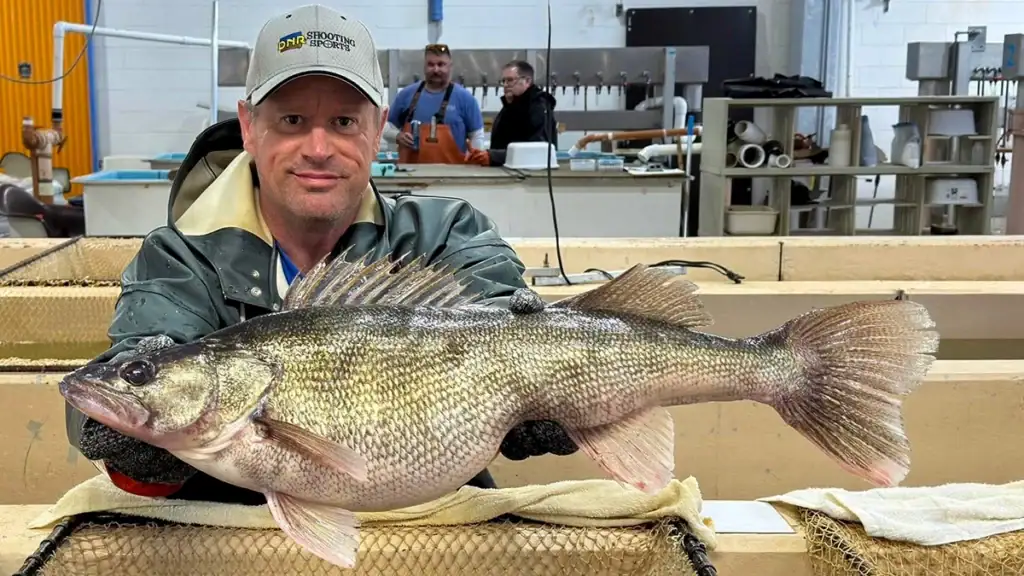
Fishermen would be amazed at some of the big ones that get away when they fish Farm Belt reservoirs.
They might assume that their preferred fishing hole only holds medium-sized ‘eyes, but fisheries biologists see the exceptions each spring when they net spawning fish.
Bauer remembers the time he sampled “an honest 13-pounder.” And over the years, he said, he has sampled thousands of six- to eight-pound fish.
Rudacille also has sampled 30-inch fish with huge bellies. “A big walleye like that can have over a pound of eggs,” he said.
The same is true in Kansas, where Johnson and others have sampled and released some monsters.
“Those individuals aren’t common, but they’re out there,” Johnson said. “Just about every year, we’ll net some walleyes that are really impressive.”
Taking Stock of the Future
So what percentage of a reservoir’s walleye population comes from hatchery-produced fish?
“That’s the million-dollar question,” Johnson said.
In Kansas, fisheries workers once marked fry and fingerlings with a chemical ingredient before they were stocked. “When we would sample young of the year walleyes in the fall, we could see what percentage of those fish came from the hatchery,” Johnson said.
The result? A high percentage of the walleyes came from the hatchery.
“In general, the fry we stock have a very low survival rate,” Rudacille said. “But every three to five years, conditions are just right and we’ll see a much higher survival rate. Several years from then, that will translate to a period of very good fishing. So our stocking program definitely makes a difference.”