All the unnamed Swedish fisherman set out to find was some worms.
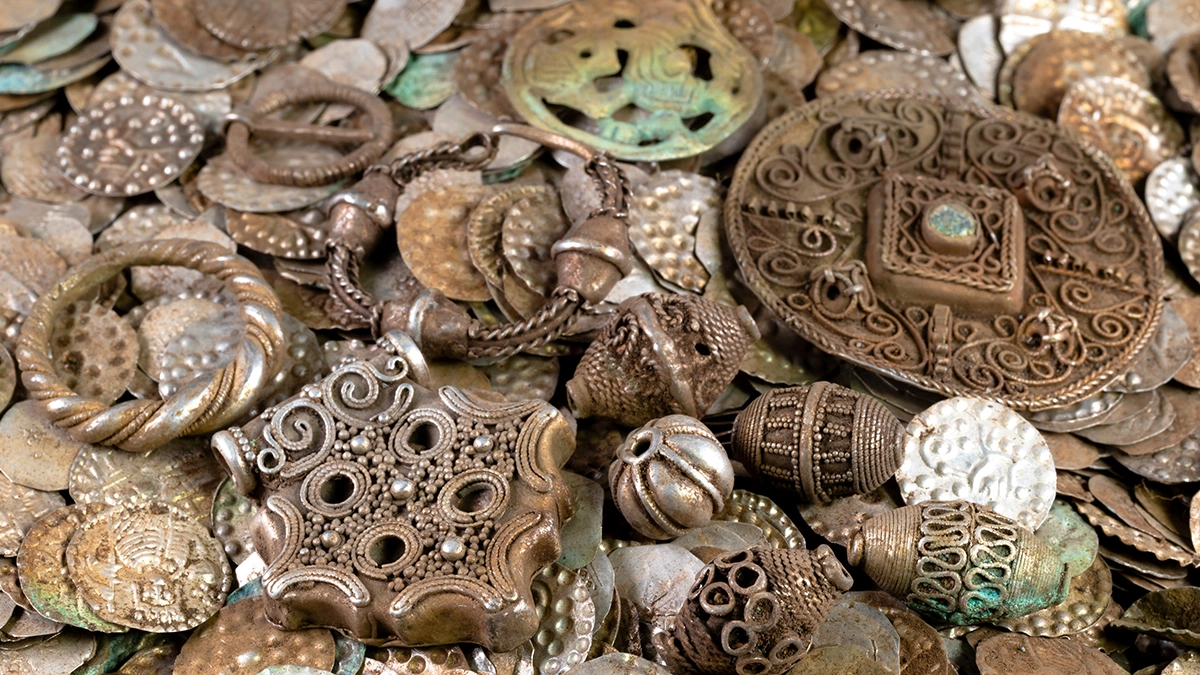
Instead, when he hit pay dirt, it wasn’t the cache of live bait he expected to find around his summer home: It was roughly six kilograms (or a little more than 13 pounds) of pearls, beads, rings, pendants and silver coins dating to the early Middle Ages.
A Sept. 18 press release from the Stockholm County Administrative Board described the 12th-century haul as “unusually large and well-preserved,” and noted that the impressive find—located outside the capital city of Stockholm, though an exact location hasn’t been made public to preserve the integrity of the both known and potential dig sites—was already being investigated, studied and documented by archaeologists.
An Incredible Find
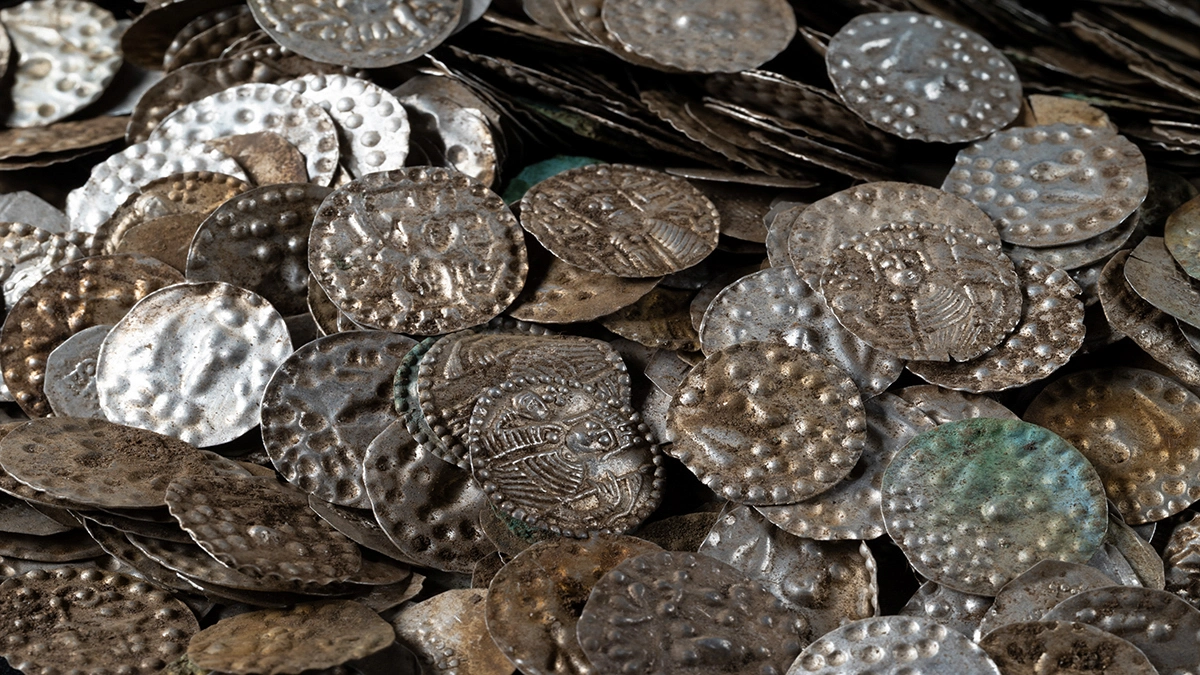
“This is probably one of the largest silver treasures from the early Middle Ages that has been found in Sweden,” said board antiquarian Sofia Andersson. “We don’t yet know exactly how many coins there are, but I think it could be upwards of 20,000. Most of the objects are well preserved, but the copper cauldron in which they were found is unfortunately not as well preserved.”
Andersson wasn’t kidding about the full scope of the fisherman’s find: As Popular Science reported Nov. 10, the final count still has not been finalized.
What We Do Know
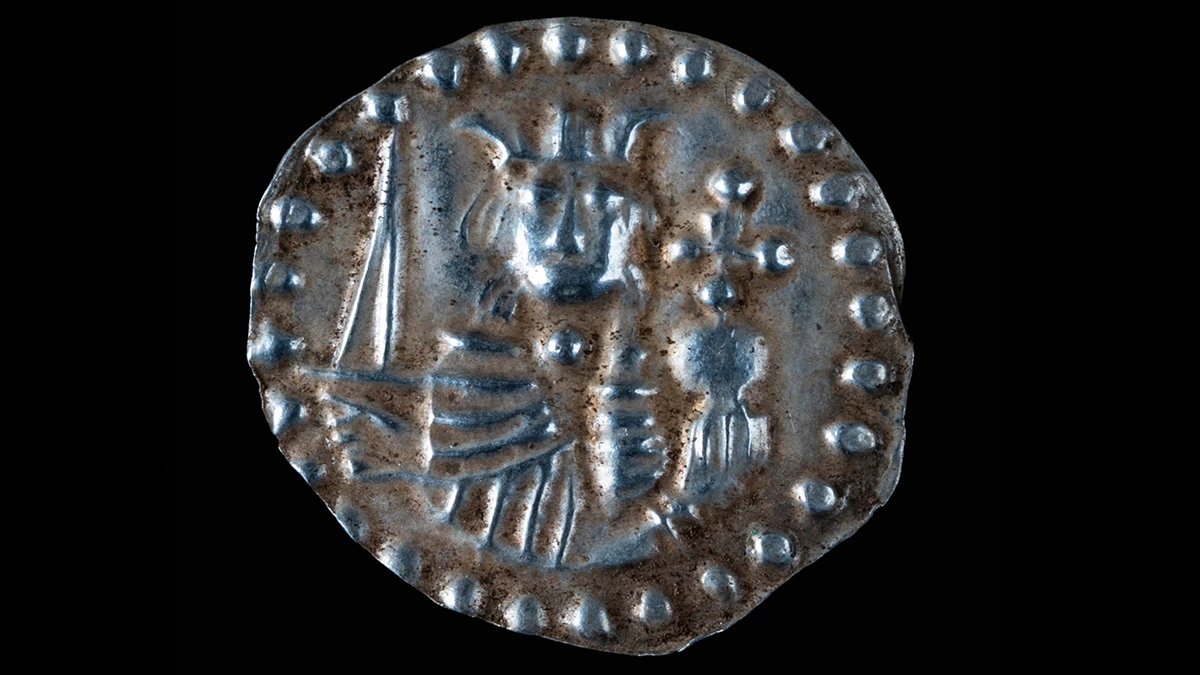
Plenty of verified details have been released, though. The time-worn cauldron buried underground for more than 850 years protected the silver coins well enough that the thin artifacts’ uneven edges, raised designs and dotted borders remain detailed. Some of those coins show medieval bishops holding hooked staffs; researchers suspect another coin’s depicted building could be a church.
Other coins are embossed with the name and likeness of Swedish king Knut Eriksson, including “KANUTUS,” the Latin word for “Knut.” Eriksson’s rule from about 1173 to 1195 coincided with a particularly chaotic era of Swedish history when the very real threats of competing kingdoms and cut-throat plays for power — Eriksson himself rose to the throne after killing his rival — compelled people to hide their valuable possessions for safekeeping in turbulent times.
In an interview with Swedish newspaper Dagens Nyheter (Today’s News), Stockholm’s Medieval Museum director Lin Annerbäck called it an “absolutely invaluable” find, explaining that this is the only medieval treasure of its kind discovered around the region of Stockholm. She also pointed out that, considering the mixed contents of the buried cauldron, it’s likely that the anonymous fisherman uncovered a medieval Swedish family’s buried wealth.
Preserving History Together
Just as the final tally of this unusual find isn’t yet known, neither is the identity of the accidental treasure-finder—though that anonymous fisher did earn Andersson’s praise for being a responsible steward of Swedish history.
“The finder acted completely correctly in contacting us at the County Administrative Board,” she said. “According to the Cultural Environment Act, anyone who finds an ancient silver find or a deposit find is obliged to offer the state to redeem it for payment.”
Indeed, Sweden’s Cultural Environment Act dictates that anyone who discovers ancient relics either entirely or even partly made of gold, silver, bronze or another copper alloy must report their findings to the proper official channels; in return, the state can offer a payment to redeem the treasure.
In the meantime, the Stockholm County Administrative Board and on-site archaeologists are working together on the undisclosed location to see if they can dig up more than worms.