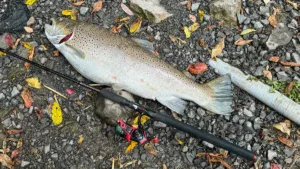
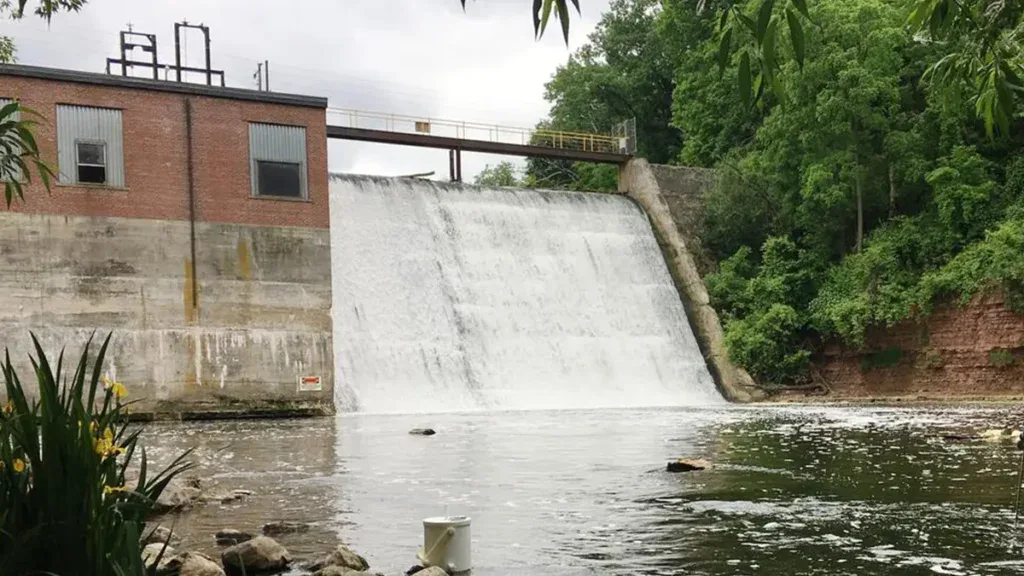
Eighteen Mile Creek in Niagara County, New York, draws anglers from across the country. The creek is home to epic runs of steelhead (or lake-run trout, depending on your view on that sort of thing) and salmon. Each year, anglers line the banks in hopes of double-digit trout and big salmon that stack up in the pools below the Burt Dam.
But this fall, the conversation on the creekbank has turned from fishing to property lines, easements, and eminent domain. A dispute over who owns the land leading to the dam has pitted a small-town government against private landowners, and put the future of public access to one of Western New York’s best salmon and trout streams in question.
“All I Did Was Put Up a Sign”
Jason Schultz never set out to start a political fight. The 51-year-old Navy veteran owns a Bait Shop in nearby Newfane, a quirky, 24-hour, honor-system operation that sells live bait, tackle, and offers local fishing reports to distant anglers. “It started out of my shed with my son,” Schultz tells Wired2fish. “We couldn’t find good, fresh bait around here, so we made our own.”
Earlier this year, Schultz put up a small sign advertising his shop along the walking path to the Burt Dam after, he says, confirming that the town didn’t own the land. The property, a narrow strip near an old railroad trestle, belongs to a private landholder, the Fedkew family, who reportedly granted Schultz permission to post the sign.
“Half an hour later, the town supervisor, John Syracuse, came down and ripped it off himself,” Schultz said. “That’s when everything started unraveling.”
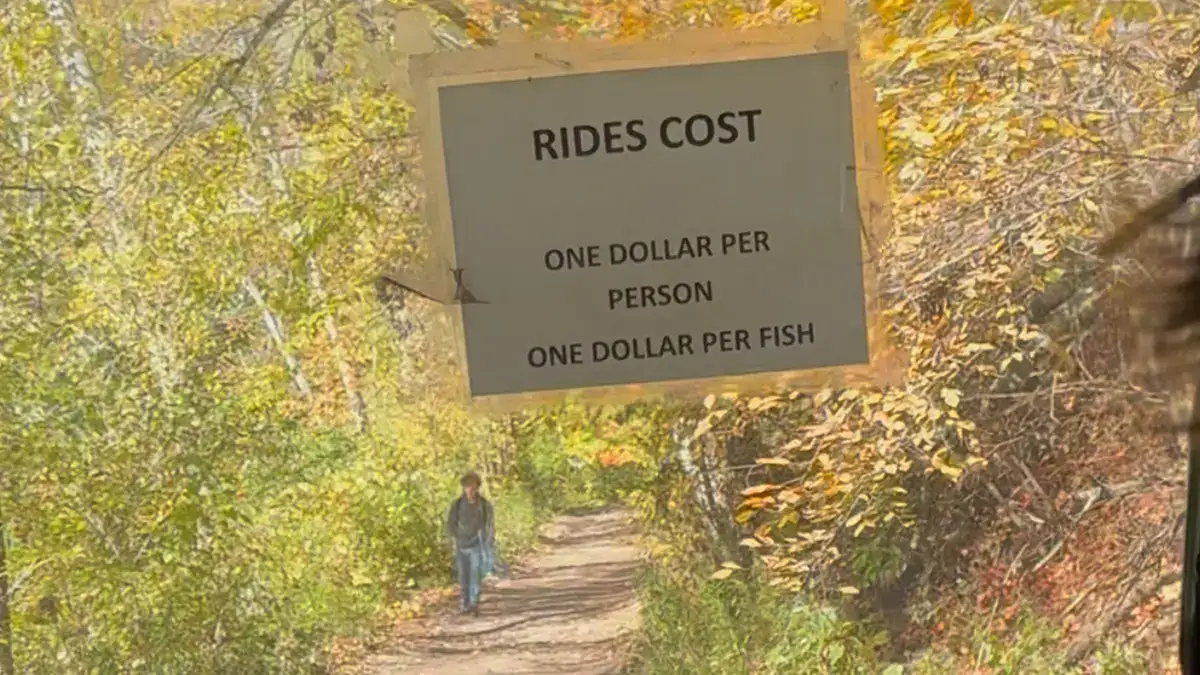
Schultz says that for years, the Town of Newfane has been charging anglers $3 to fish at Burt Dam, plus a dollar for each ride up or down the access trail in a town-run ATV shuttle. When he began asking questions about whether those fees were legal, he claims the town suddenly changed the signs to say “$3 per person for parking.”
“If it was legal the first time, why change it?” Schultz asks. “You can’t charge people to use an easement or to fish public water. That’s state law.”
Squatter’s Rights on Eighteen Mile?
Burt Dam sits near the mouth of Eighteen Mile Creek, just upstream from Olcott Harbor on Lake Ontario. The area, officially known as Fisherman’s Park, has always been something of a patchwork: public water overlaid with private lands, town-managed access points, and trails that have been trod by anglers for decades.
In 2025, that changed. A Florida-based landowner, Sue Fedkew, whose family owns a section of property the access trail runs through, had her brother, Mike, who lives in the area, post “No Trespassing” signs along their section of the trail leading to the dam. Mike Fedkew asked the town to stop collecting fees and running its shuttle service across the land.
“My intention was never to cause problems,” Mike Fedkew later wrote on social media. He proposed a compromise: Residents could continue to use the area for free, while visitors might pay a modest fee to support maintenance. But the town of Newfane seemingly was looking for a fight.
Town supervisor John Syracuse did not respond to multiple requests for comment from local news outlets, including Channel 2 Buffalo. But he said in a statement that Newfane was “hopeful the matter can be resolved amicably” but had already retained legal counsel, Buffalo-based firm Rupp Pfalzgraf LLC.
Attorney Cory Weber of Rupp Pfalzgraf LLC told 2 WGRZ Buffalo the town is exploring legal options including the pursuit of an “adverse possession.” This legal doctrine, sometimes known as “squatter’s rights,” allows for the title of one person’s property to be transferred to another through continuous, unauthorized use over a specified period.
It’s a legally murky area. While the creek itself is state-owned public water, the land alongside it isn’t necessarily public just because anglers have always used it. Other options floated include a “prescriptive easement,” an arrangement in which a property owner allows specific use rights on a piece of property while retaining ownership. This is an arrangement many anglers are familiar with, known as “public fishing rights” in many areas.
In a statement issued by John Syracuse, the town supervisor also mentioned eminent domain. The concept of eminent domain allows governments to seize private property for public use, with compensation, when deemed necessary for infrastructure or community benefit. This is most often used for the construction of highways, reservoirs, or other public works projects designed to improve quality of life for citizens in a region. But to apply it to a fishing access trail felt like overreach to some.
“This isn’t a highway or a hospital,” Schultz says. “It’s a fishing path. We’re talking about a dirt trail along a creek. They’re threatening to take someone’s land instead of just admitting they were wrong.”
If the town succeeds, it could set a precedent for municipalities across New York seeking to reclaim access points lost to private disputes. But if it fails, it could be forced to shut down one of its most visible and valuable recreational draws.
For now, tensions are high. Schultz says some town employees have told visitors to boycott his shop. He insists he’s been unfairly targeted for speaking up.
“Why would I want the dam shut down?” he asks. “My shop’s open 24/7, I cut fish for free, and I’ve helped people plan their fishing trips here for years.”
Town officials argue they’re protecting public access for everyone, not picking a fight. In a public notice, Syracuse wrote that the town “recognizes the importance of the Burt Dam area to our residents and visitors” and is “committed to ensuring safe, continued access to this world-class fishery.”
The Future of Burt Dam, and Beyond
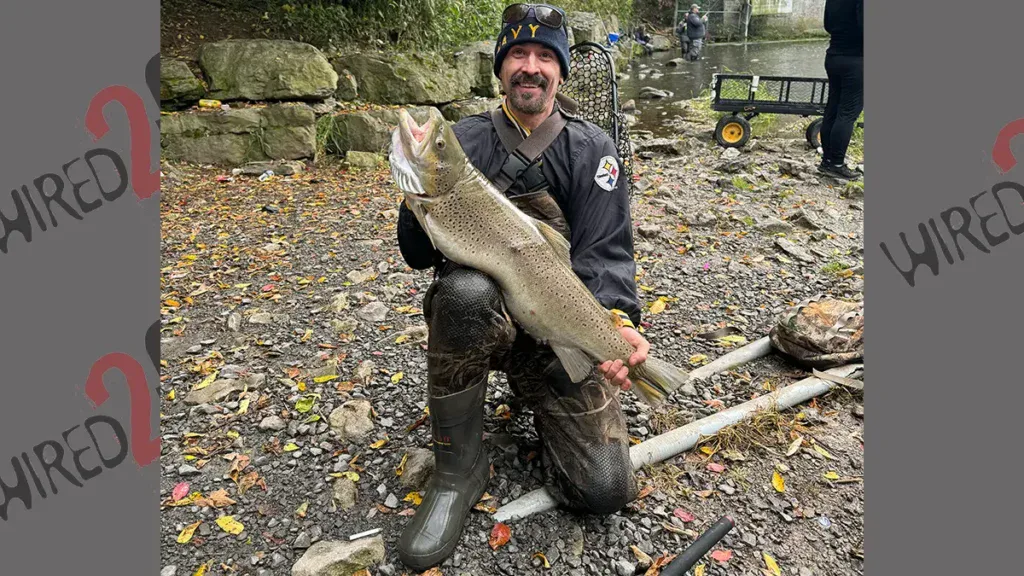
The stakes extend beyond Burt Dam. Across the United States, similar access battles are brewing as private landowners assert rights over long-used public fishing spots. From Montana’s Ruby River to Pennsylvania’s steelhead creeks, anglers and municipalities are increasingly clashing over who controls the banks.
In Newfane, the outcome could shape how other communities handle the intersection of private ownership and public waters. Eminent domain has rarely, if ever, been used for fishing access. But if the town proceeds, it could set a new precedent.
Meanwhile, Schultz keeps his bait shop running and hopes cooler heads will prevail. “All this started because of a little sign,” he says. “Now we’ve got the town threatening to take land by force. Over a place where people just want to fish.”
For now, the future of public access to the Burt Dam remains uncertain. The town has pledged to seek a “fair solution that preserves the community’s historic access,” while respecting private property rights.
Fishing Eighteen Mile Creek
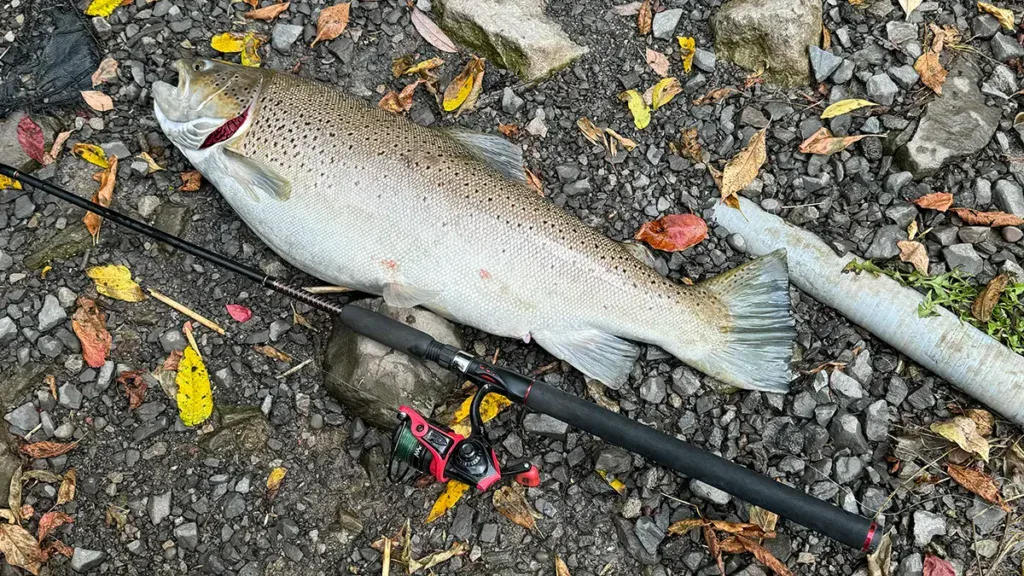
This Lake Ontario tributary is loaded with opportunity year-round. Chinook salmon begin their run in the early fall, depending on water levels. Lake-run rainbows and browns follow them, and typically run from mid-October through early May. Because it’s a tailwater, with warmer water being released from the bottom of the dam, the river stays open and offers hot action all winter long.
Things taper off in the spring, but the action isn’t over. Anglers can still find resident browns in the upper reaches, and the smallmouth bite kicks off as the water warms. The bass provide bent rods all summer for those working deeper pools and structures such as undercut banks and the like.
Just make sure you know the rules before you fish; some stretches inside the County Park are catch-and-release and artificial-only for trout and salmon. Eighteen Mile might not be a massive river, but it fishes like one, with tight quarters, big fish, and action that keeps rolling almost all year long.