Braided fishing line offers anglers a host of benefits over monofilament lines. It has little to no stretch, almost zero memory, and a really high strength to diameter ratio. They offer superior UV resistance when compared with traditional monos, and tend to have a much longer lifespan as a result.
But the field of braided lines available is wide and varied. Despite their similar appearance, construction methods differ, and as a result, braided lines have different qualities. There are makes and models aimed at different tactics and techniques, from power fishing to finesse. With so many different varieties out there, it can be hard to decide which is right for you.
To help make sense of it all, we’ve prepared this in-depth guide to the best braided fishing lines. I’ve included some important background info on how different lines are made, their characteristics, and their best uses. And as a long-time member of the fishing industry, I’ve had the ability to test just about every type of braided line to hit the market. So I’m confident that this guide will help you select the best braided line for your unique situation.
Our Top Picks
- Best for Finesse Fishing: Sufix Revolve — Buy from Bass Pro Shops
- Best Sinking: Sunline Almight Sinking PE Braid — Buy from Bass Pro Shops
- Best for Lures: Seaguar JDM PEX8 Lure Edition Braid — Buy from Bass Pro Shops
- Best Stealth Braid: Daiwa Samurai 8 Braid Dark Green — Buy from Bass Pro Shops
- Best All-Around: Power Pro Spectra — Buy from Bass Pro Shops
- Best Casting: Berkley X9 — Buy from Bass Pro Shops
- Most Durable: Sufix 832 Superline — Buy from Bass Pro Shops
- Best Hi-Viz Braided Line: Seaguar SmackDown Braided Line — Buy from Bass Pro Shops
- Best for Topwaters: Sunline Xplasma Asegai Braided Line — Buy from Tackle Warehouse
- Best Color-Fast Braid: Vicious No-Fade Braid — Buy from Bass Pro Shops
Best for Finesse Fishing
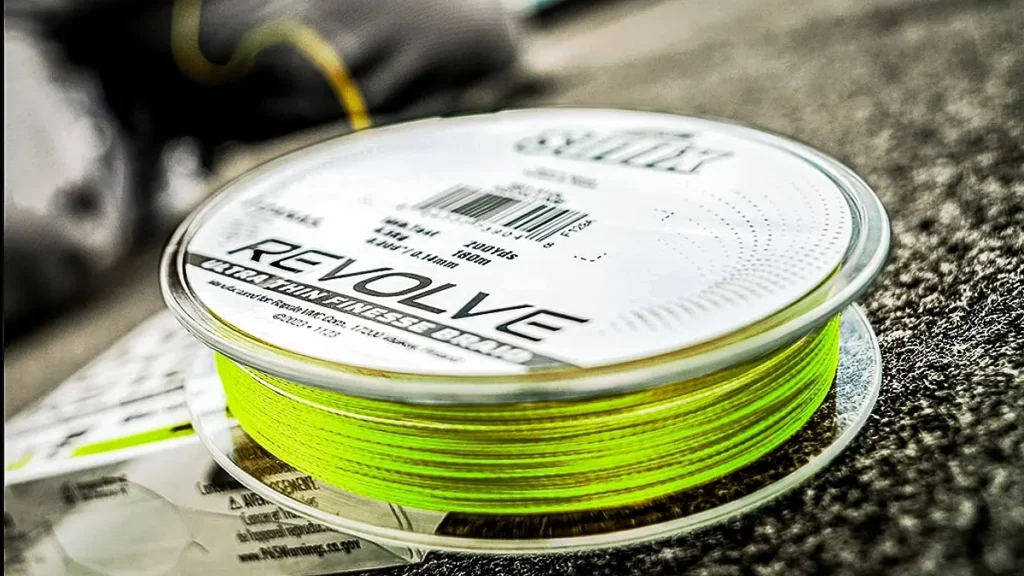
Sufix Revolve Braided Line
Winner of the Best of Show Fishing Line at ICAST 2024, Sufix’s Revolve braided line was specifically designed for finesse fishing applications. I was impressed by the line’s feel when I first encountered it on the show floor, and knew it would excel for Ned rigs and the like, fished on lightweight spinning gear. It should also be a boon to FFS fanatic flinging minnows. With an extremely fine diameter, this should also be perfect or BFS applications
Sufix says the Izanas fibers used in the line’s construction have more body than comparable fibers, which should help eliminate wind knots. Another notable feature is the midpoint marker that divides the spool in half, so you can put 100 yards on one reel and have another 100 for another. This is a great choice for those looking for an ultra-fine diameter that offers smooth casting qualities.
Best Sinking Braided Fishing Line
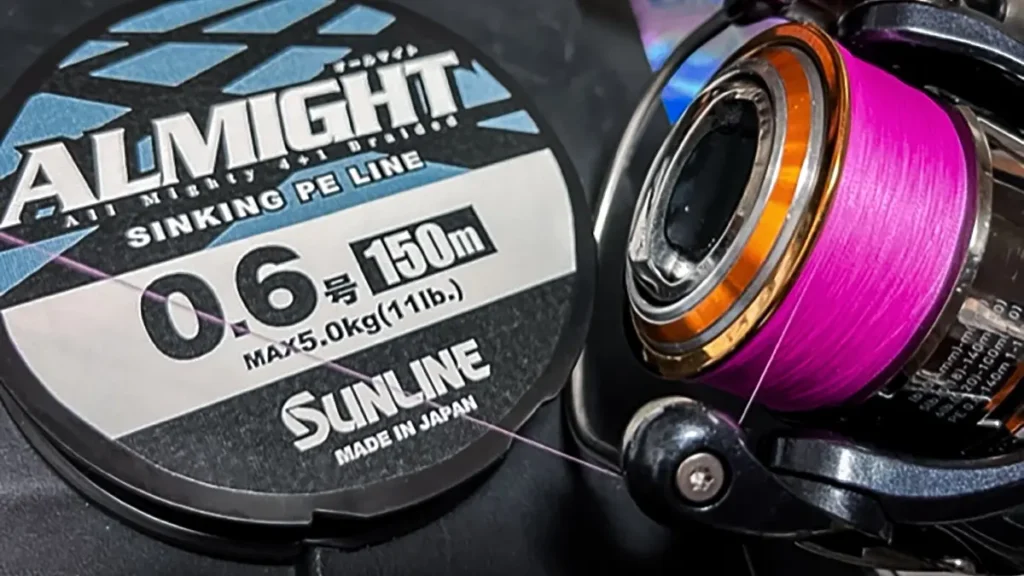
Sunline Almight Sinking PE Braid
All braided lines used to float, but recent advances have allowed manufacturers to create sinking versions. Sunline Almight Sinking PE Braid is great for hover stroll, drop shot, and shaky head techniques. The benefits go beyond those applications, as the sinking nature of the line eliminates line bows and puts you in greater contact with your bait. This is one we’re particularly excited about.
Sunline gave the line a specific gravity of 1.48 by blending four ULT-PE materials and a high-specific gravity fiber core to achieve the ideal sink rate. Despite this, strength remains comparable to 100% PE braided material for a long life. And the straight-line connection to your bait gives it even greater sensitivity over traditional braided lines.
Best Braided Line for Lures
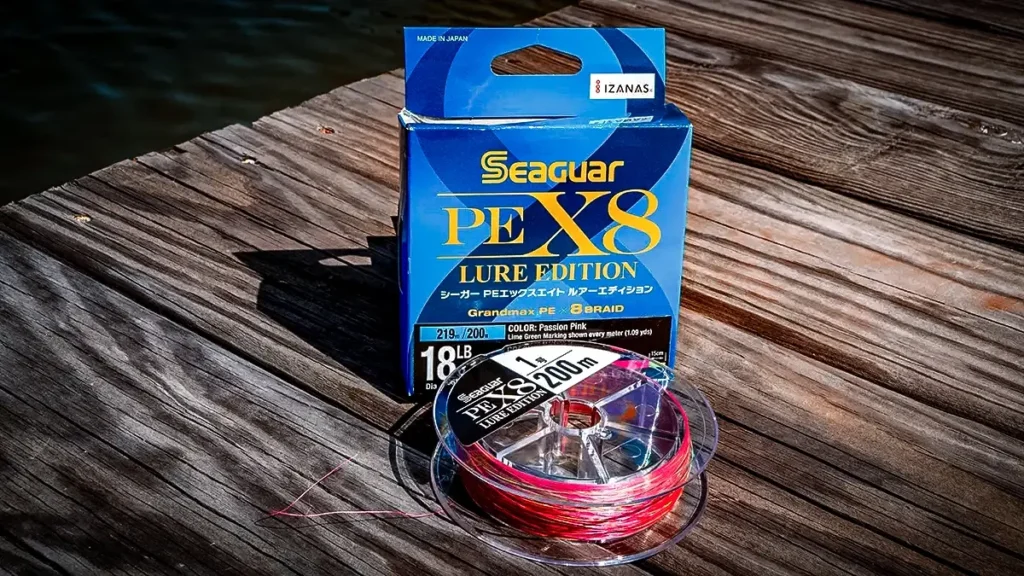
Seaguar JDM PEX8 Lure Edition Braid
The super-thin diameter of Seaguar’s JDM PEX8 Lure Edition Braid is a good all-around choice for finesse applications. Though it was designed for micro jigs and other downsized offerings, we think one will work well for just about any finnesse technique you can think of. If you don’t need a sinking braid, this one can probably do it for you.
The 8-strand construction is beyond smooth, and keeps its shape even after a tough season. Seaguar engineers have always been good about making their lines keep their colors, and this one appears to be no different. Plus, it has the lowest stretch of all of Seaguar Japan’s offerings, so you know it’s going to be sensitive.
Best Stealth Braided Fishing Line
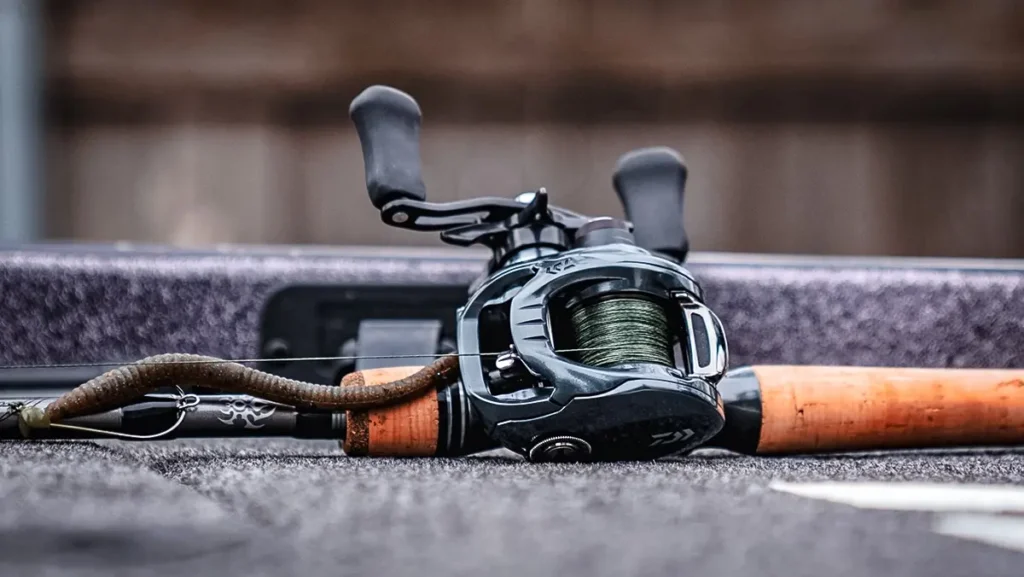
Daiwa Samurai 8 Braid Dark Green
Daiwa updated their fan-favorite lineup of Samurai 8 Braid with a low-vis dark green version. This braid offers all of the qualities that it has become known for. Rest assured, this is still a line that can take a beating and get the job done. And unlike the rest of the batch introduced at the most recent ICAST, this one doesn’t have as much of a finesse bent to it. So go ahead, punch that mat.
The new version is dyed a very dark green color, which should help it blend into most underwater environs. It also retained the excellent body of the previous versions, so you can expect easy casting and a good feel in the hand. This one is a great choice for a variety of techniques in a variety of habitats. If you’re looking for something that fits many bills, this is it.
Best All-Around Braided Line
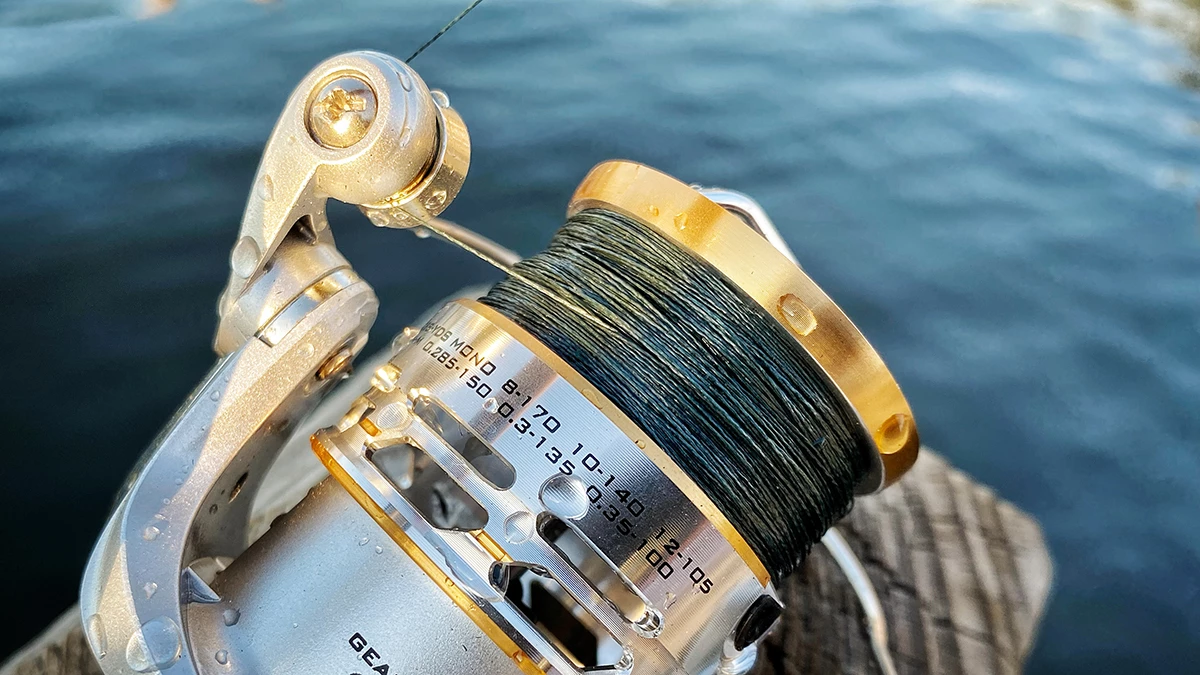
Power Pro Spectra Braided Line
If you’ve ever sold your trusty ol’ pickup truck for one of those fancy ones and regretted it a few months later… you can probably relate to the millions of Power Pro Spectra users across the world when they try other braided lines. This line and brand has a rabid following of anglers and it’s just one of those “old faithful” lines that won’t really let you down. I’m one of them; I’ve been a fan of the stuff since it came out, and you can find it on more of my spinning, casting, and conventional reels than anything else.
It’s smooth, it’s quiet and in my personal opinion, it excels on spinning gear. It behaves well on the spool and allows for great casting distance and sensitivity. It’s also a relative bargain when compared to many others in the field. I’ve gotten a really long life out of Power Pro, some of my reels have lines that are 5 years old or older. If you’re in a store before a fishing trip or fishing tournament and can’t quite make your mind up, this is somewhat of a fail-safe option that isn’t going to let you down.
Best Casting Braided Fishing Line
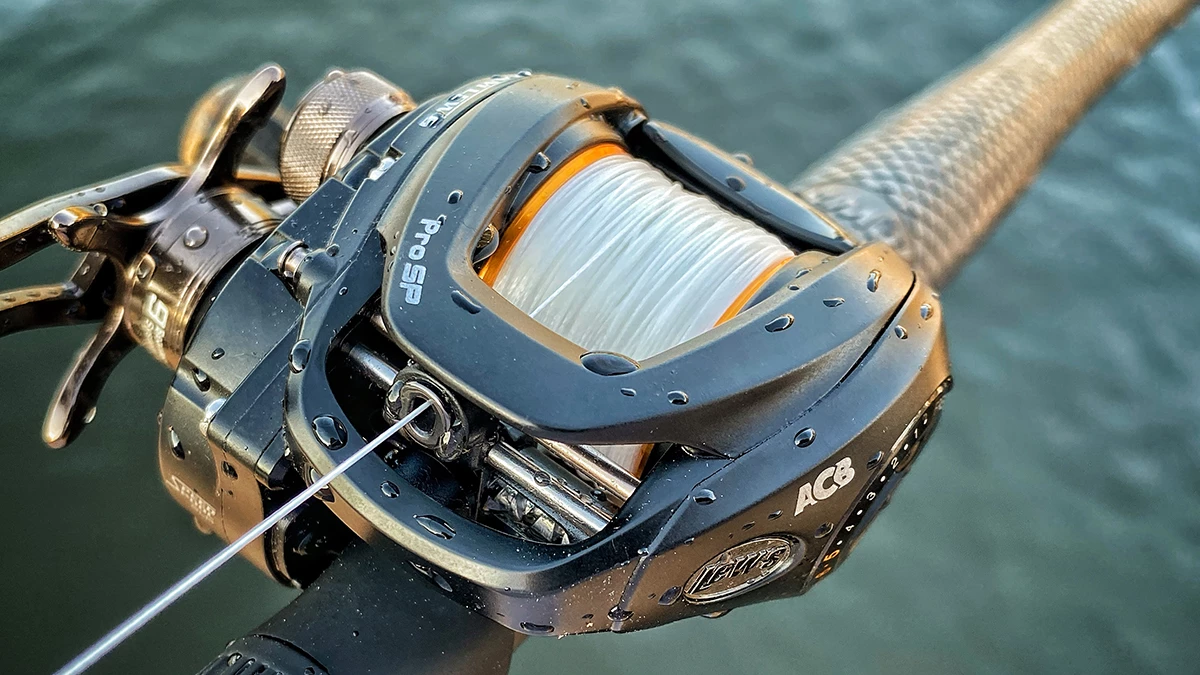
Berkley X9
Berkley’s X9 is a relative bargain that delivers long casts and easy line management. As you probably guessed from the name, X9 has a rather unique 9-strand composition. This results in a very round, smooth braid, which slides through rod guides smoothly. It also helps prevent it from digging into itself on the spool.
This smoothness also results in a very quiet braid. Some braids, particularly those with fewer strands, can be quite noisy when they slide through the guides or zip through vegetation. This makes it a great choice for working a frog, skirted jig or punching rig through heavy vegetation. I was very impressed by how quiet this braid is when working lures and baits across grass and pad stems. I think the added stealth helped me get a few more bites.
Read our full Berkley X9 Braided Line review.
Most Durable Braided Line
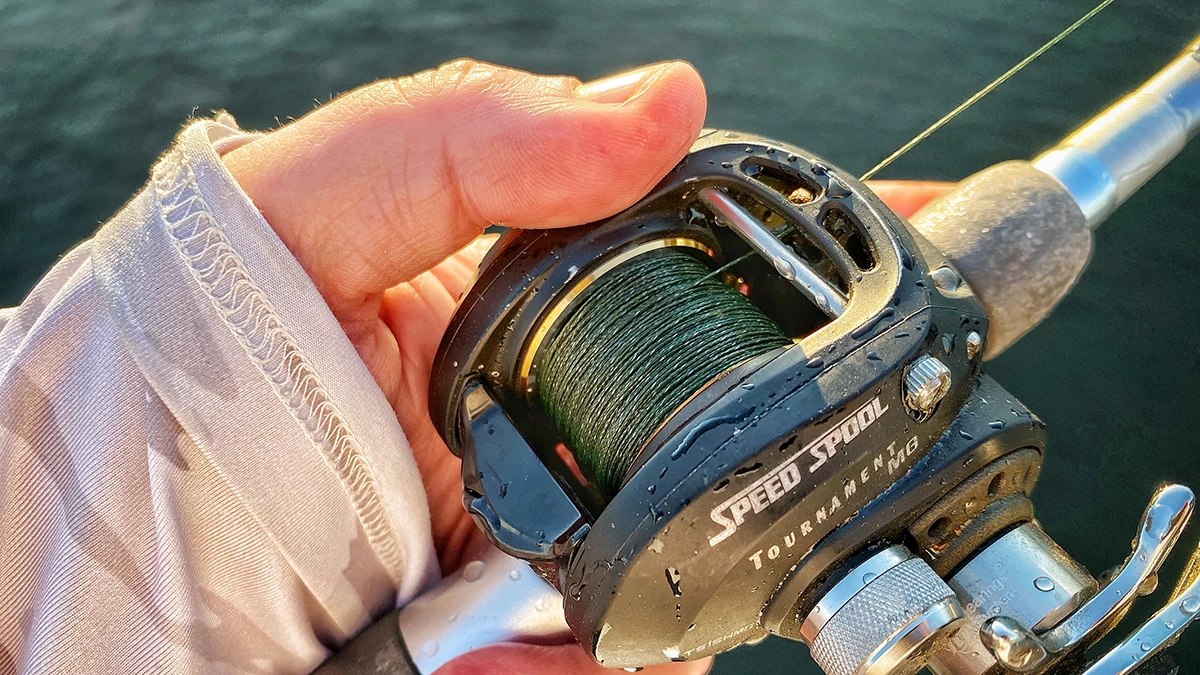
Sufix 832 Superline
When it comes to durability, it’s tough to top Sufix’s 832 Superline. I’ve been using this stuff for a long time, and have yet to have the line snap or a knot fail — it’s just that tough. The tradeoff is how coarse it is when compared to some of the others listed here, but that’s a compromise I’m willing to make.
It cuts through vegetation with ease which makes it a great choice for fishing baits such as lipless crankbaits, topwaters and the like through grass. If you feel your bait start to bog down during your retrieve, a quick, upwards snap of your rod tip is normally all it takes to free your bait from any vegetation-based obstruction.
Another strength is how round the line is, which improves line lay and prevents digging into itself. It’s also very fine; 50-pound Sufix 832 Superline is equivalent to just 12-pound test monofilament.
Read our full Sufix 832 review.
Best Color-Fast Braided Line
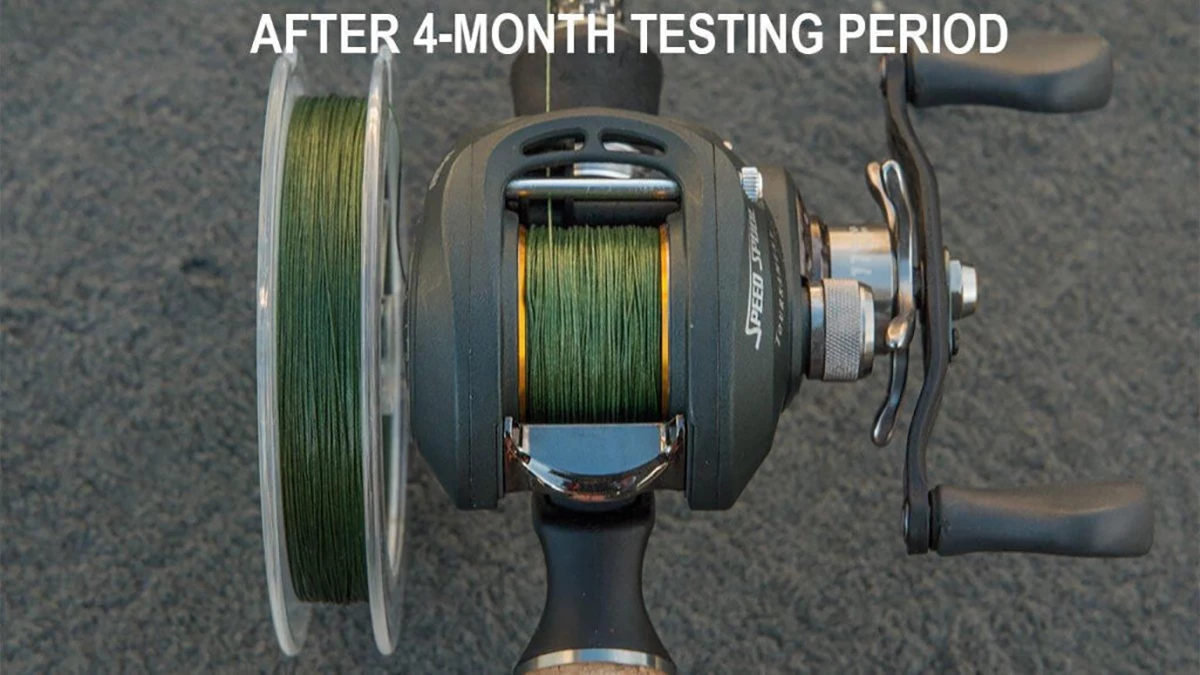
Vicious No-Fade Braid
Probably because of how dense it is, braided line does not take dye all that well. This means that it has a tendency to lose its color over time; in fact, most of the early braids bled color everywhere. While they have gotten better, braided lines still fade. You can combat this by coloring the first 3 or 4 feet above your lure with a black permanent marker, but that’s not necessary with the right line.
Vicious No-Fade Braid is some very impressive braided line that, as the name clearly implies, will not fade. I have had the same line on one of my reels for over two years and I haven’t noticed any color loss whatsoever. Vicious utilizes a pre-dyeing process throughout manufacturing that makes the color an actual part of the line. I thought this might have been marketing hype, but now I can speak to its effectiveness. I’ve had a spool of this in my boat for years and it won’t be going anywhere anytime soon.
Read our full Vicious No-Fade Braided Line review.
The Braided Line Workhouse Award
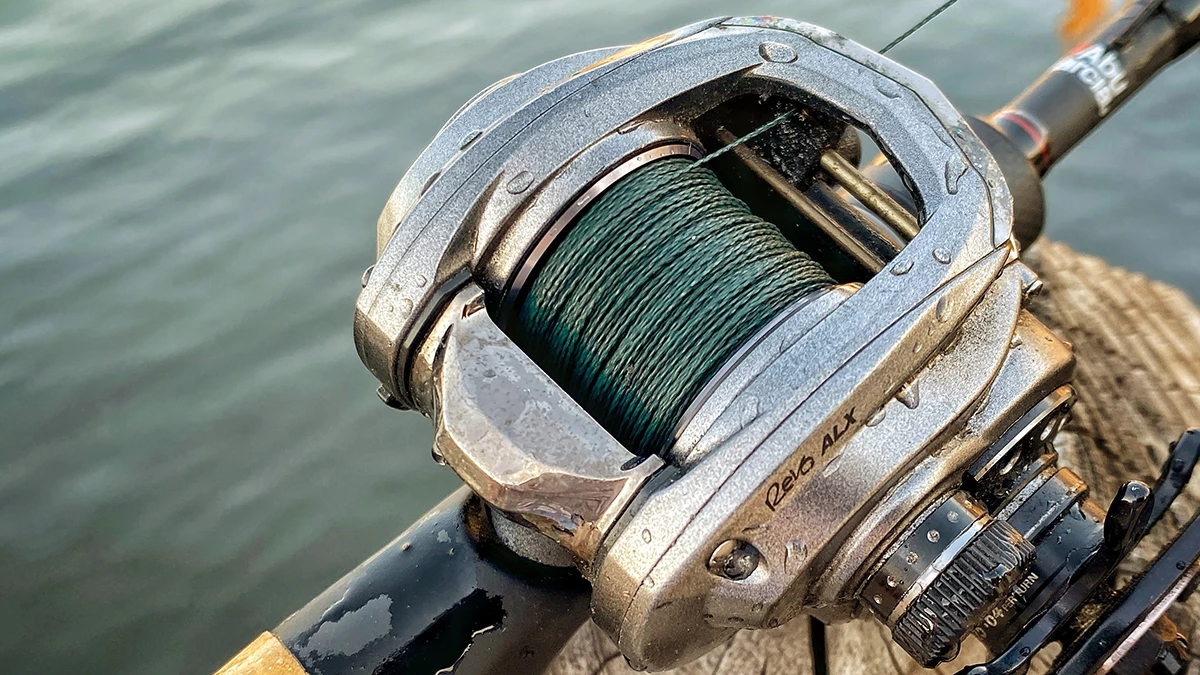
Spiderwire Durabraid Braided Line
I’ve been incredibly impressed by this particular braided line for a multitude of reasons. Not only is it quiet coming through both the line guides and vegetation, but it’s also tough as nails and can handle just about anything you throw at it. If you’re a river rat who likes to get down and dirty with shallow-water cover, pay close attention to this line. It will stand up to abuse and it’s not going to kill your bank account, either.
You can also expect above-average knot strength and shock absorbency that allows for some big-time hooksets without any worry of line failure. It’s pretty stiff when you first put it on your reel, but after two or three fishing trips, it will start to soften up and become a bit more manageable. I’ve also noticed that it holds its color quite well which, of course, helps it last longer and saves you money.
Read our full SpiderWire DuraBraid review.
Best Hi-Viz Braided Line
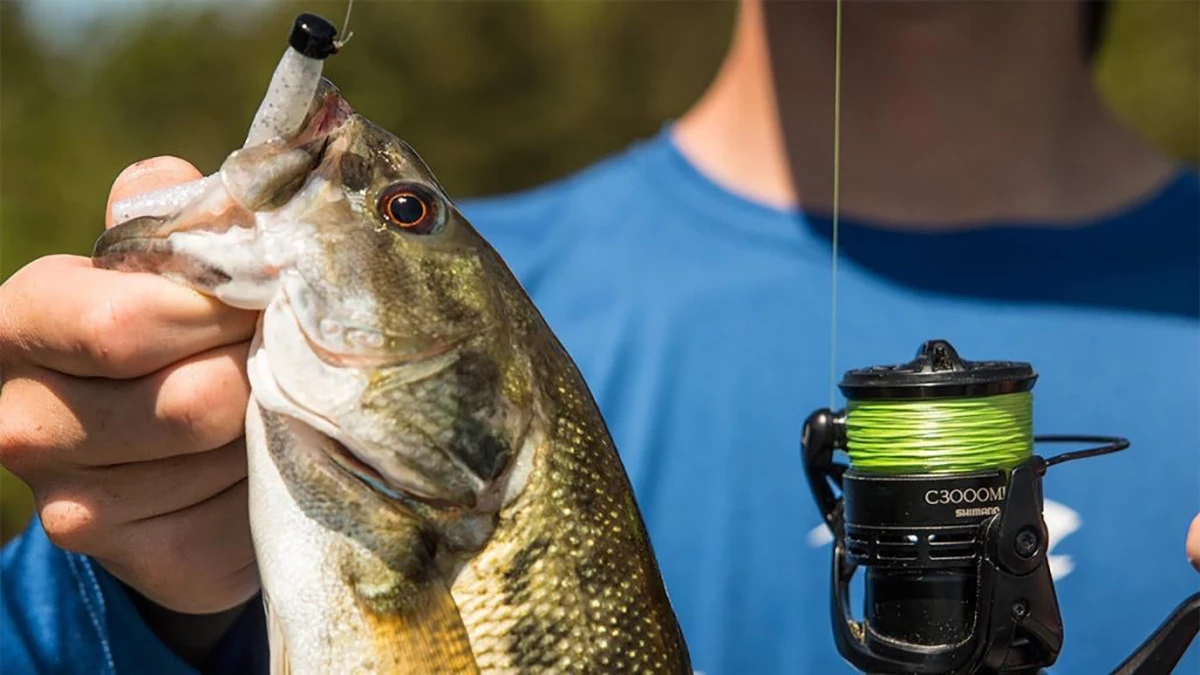
Seaguar SmackDown Braided Line
This is an outstanding braided line, especially when it comes to finesse fishing. So if you like to fish drop shots, shaky heads and other lightweight bass fishing techniques, I definitely think you should give this line an honest chance. I’ve been using this line on my fresh- and saltwater spinning reels in 15- and 20-pound test in the Flash Green color and have been very impressed with its castability and line management properties.
I first fished this line on the Niagara River, using blade baits, hair jigs, and a variety of finesse techniques during a media event. I was immediately impressed how the line handled, and soon spooled up a number of my own reels with it. Another impressive feature of SmackDown is how durable it is. Despite having several bronzebacks and walleyes rub up against the seawall, I didn’t experience any break-offs. This should definitely be high on your shopping list, especially if you fancy a spinning reel.
Best Braided Fishing Line for Topwaters
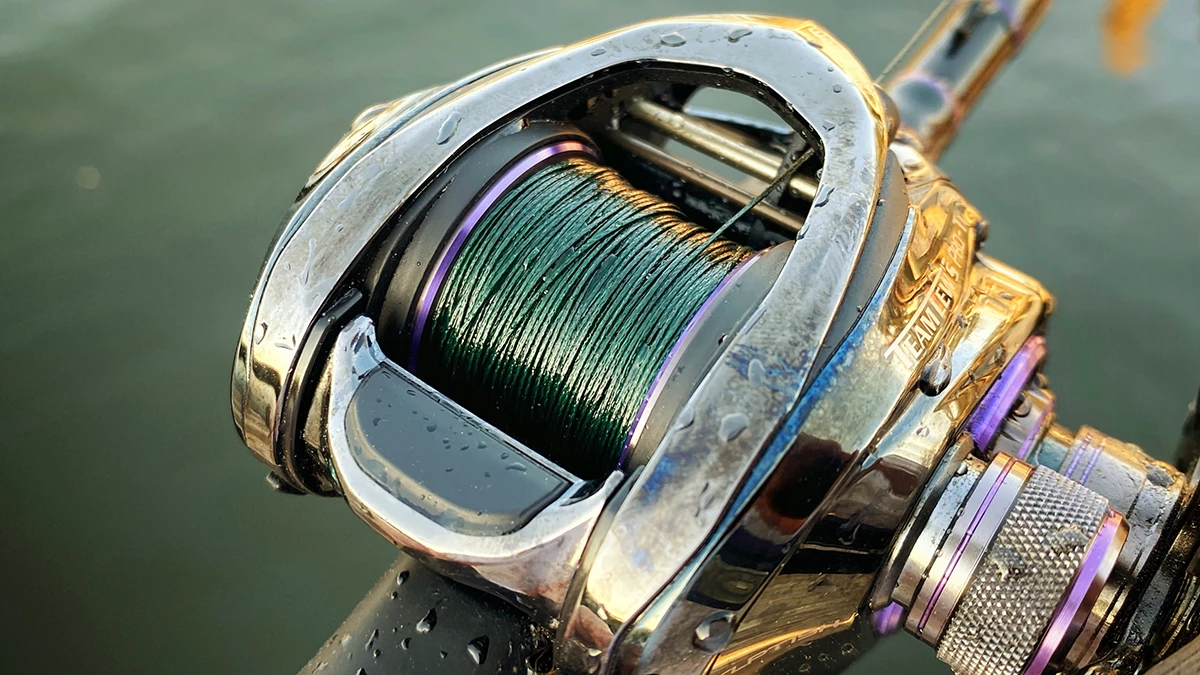
Sunline Xplasma Asegai Braided Line
I was a little skeptical of this line when I first spooled it onto my reel because it kinked a lot. It has a very waxy-feeling coating which is meant to increase slickness, abrasion resistance and water repellency but until I tried this stuff, I had never really felt a braid like this before. Once you get above the 50-pound test mark, you’ll be taken aback by its rigidity. But with all of that being said, it softens up after a few fishing trips and has turned into a really nice braided line that seems to work excellently for a myriad of bass fishing techniques.
Due to its stiffness, I think it’s a great choice for open-water topwater fishing, especially when it comes to walking topwater lures. These lures require you to incorporate slack into your retrieve when you quickly pause the bait. A braided line that’s too limp will almost surely hook itself on the front treble hook of your lure which will foul the bait and essentially ruin your entire cast and most likely spook any fish that may be following your lure.
This more rigid line, however, stays in front of the line when you pause your topwater which keeps it clear of the front treble hook. So if you want to bomb some casts across a point or towards some schoolers, this braided line is a solid choice that’s tailor made for the situation.
Other Great Braided Fishing Line Options for the Money
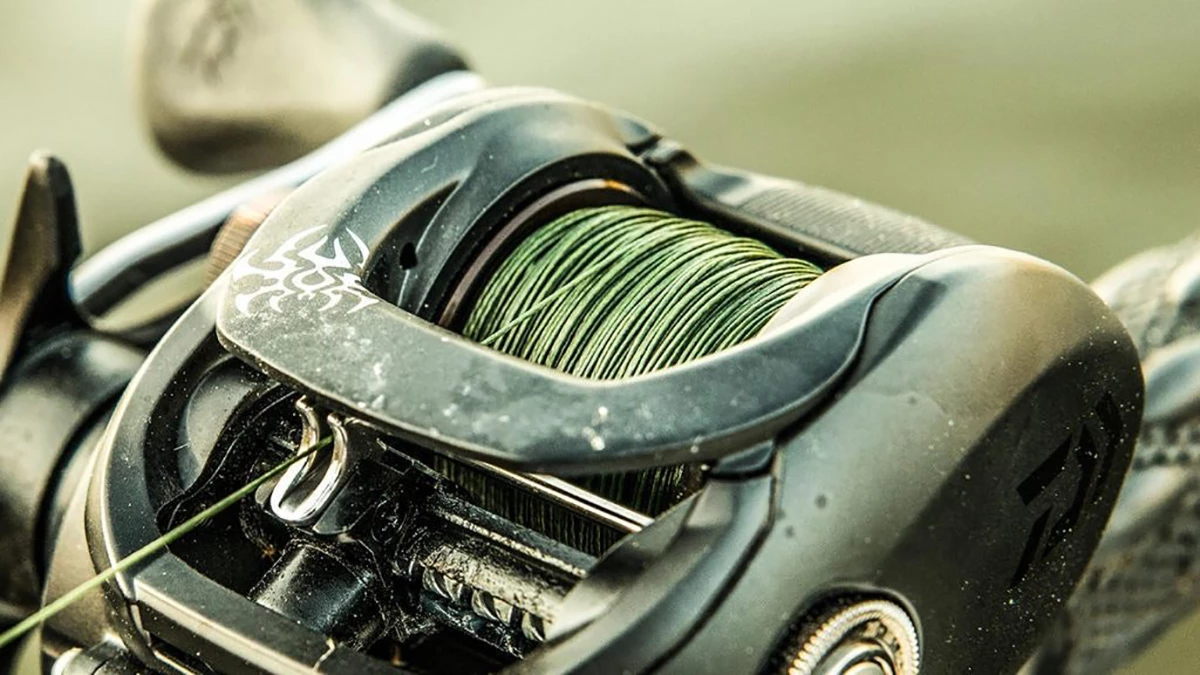
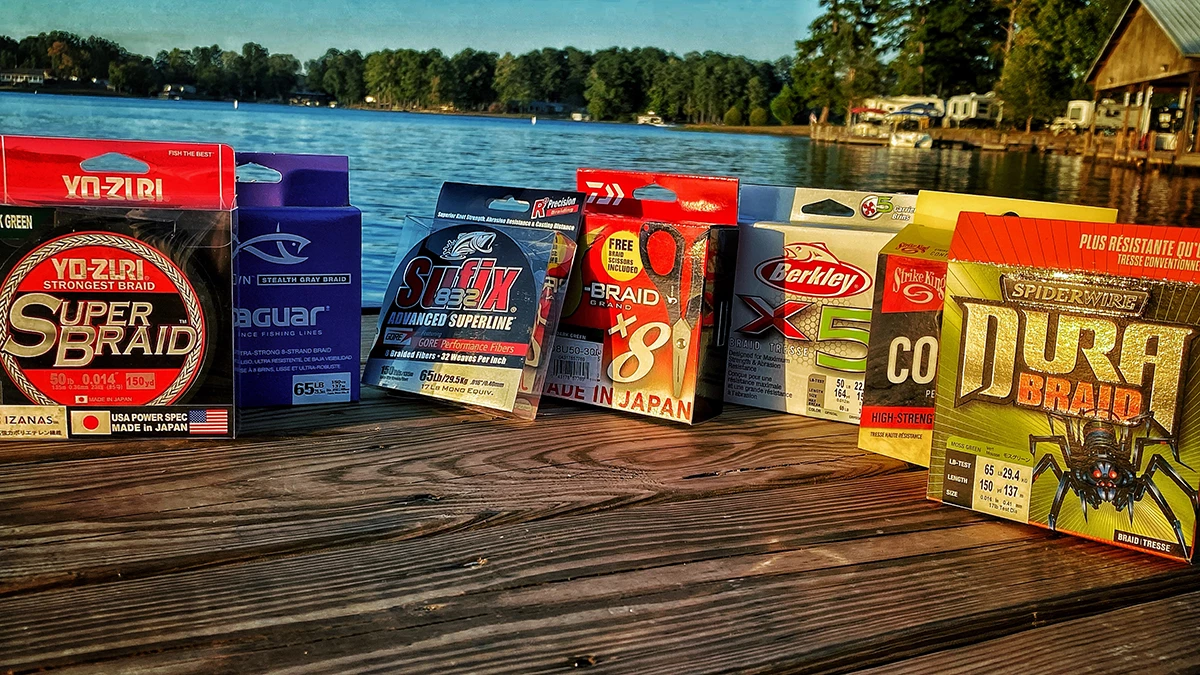
Yo-Zuri Superbraid Braided Fishing Line
Like most products they produce, Yo-Zuri’s Superbraid braided fishing line performs quite well. What might be surprising is the price, which isn’t nearly as steep as many other braids on the market. Yo-Zuri delivered a reliable, trustworthy braid, at a decent price. Though it is suited to a variety of scenarios, I found that it shines most in heavy-duty applications on casting reels such as close-quarters pitching and flipping.
The one ding against this working man’s braided line is that it tends to lose some color over time. This isn’t too big a deal, as you can always color the line with a marker. And if you’re fishing really thick stuff frequently, you should be cutting back the first few feet regularly. For the price, this one is tough to beat.
Read our full Yo-Zuri Superbraid review.
Daiwa J-Braid Grand 8x Braided Line
Daiwa J-Braid Grand 8x Braided Line is an awesome choice for fishing in open-water situations. If you see fish start to suddenly break the surface and you need to chuck a topwater in their direction, you’ll want to have this braid spooled onto one of your favorite reels. You’ll notice hardly any memory with this braid and you’ll also enjoy an incredibly thin diameter, which makes it cast even small topwater lures like a rocket.
It will hold its own in thick cover, but due to the smaller diameter (50-pound test diameter is just .014 inches), I prefer to use this for finesse techniques and the aforementioned open-water scenarios. For finesse techniques, I recommend a 15- or 20-pound test and for the open-water stuff, I’d suggest grabbing a spool of 30- or 40-pound test. Either way, you’ll be able to cast it a country mile.
Strike King Contra Braided Line
Sensitivity is the name of the game with Strike King’s Contra braided line. Made from high-quality Japanese fibers, this is one of the most sensitive braids I’ve tested in recent memory. I’ve tested it on both spinning and casting gear and it behaves quite nicely on each setup. It doesn’t loop around line guides and it rarely digs into itself which is a huge plus.
It also comes with a Sidewinder spooling tool which might sound really fancy, but in all reality, it’s just a great common-sense tool. They attached a suction cup to the back of the spool which allows you to easily and quickly re-spool just about anywhere. I’ve put it on the side of my truck bed, the side of my fiberglass boat console and on the side of my boat and been able to efficiently re-spool within just a minute or two. It’s one of those things I wish I had thought of years ago because man, it sure makes things easier.
Read our full Strike King Contra braided line review.
Things to Consider When Buying Braided Lines
- Durability
- Castability
- Color
- Color fastness
- Noise
- Price
- Brand
There are few things you need to keep in mind before you purchase braided line. Price is always a concern, as it seems the dollar just doesn’t go as far as it once did. But the long life of braid can help offset this, so we made a point to select braided lines that offer excellent value for the price. How well the line handles is another important point to consider, making casting easy. The earliest braids didn’t accept dyes well, as a result they often bled color everywhere. We selected lines that had proved themselves to be colorfast. And lastly, you want to consider brand whenever you buy anything. Choose a proven band that has performed for you over the years.
I kept all these factors in mind as I made my selections for the best braided lines of 2025. Use the following advice to narrow down your selections, and choose the right braided line for you.
Who Makes the Best Braided Fishing Lines
You should always purchase braided lines from reputable brands. I was unable to source my favorite braided lines during the shortage caused by the Covid pandemic, and was forced to purchase some bargain basement lines. They were extremely abrasive, and broke easily. Since then, I’ve made it a point to only buy braid from a handful of trusted manufacturers.
Advantages of Braided Lines
No Stretch: While monofilament lines can have up to 30% stretch, braided lines have almost zero. This means increased sensitivity and more powerful hooksets, even at a distance,
Thin Diameter: Braided lines are often half the diameter (or less) than monofilament or fluorocarbon lines. Take Power Pro for example; 20 pound test has the same diameter of 6 pound test mono.
No Memory: Unlike mono or flouro that take a set when wound around a reel’s spool, braid has no memory. The limp nature of braided line contributes to its excellent casting abilities.
Life Span: Unlike mono that has to be replaced yearly because of memory, braid lasts a long time. And it’s less affected by UV light, so the sun’s rays won’t damage it as quickly.
Disadvantages of Braided Lines
Abrasion Resistance: Compared to mono, and especially flouro, braided lines don’t provide good abrasion resistance. It’s not the best choice when fishing around sharp cover.
Knots: Braided lines are very slick, so they require special knots. That said, there are plenty of easy to learn knots that are effective.
Cost: There’s no way around it, braided lines cost significantly more than mono. But because it doesn’t develop memory, you can get a few seasons or more out of spool, offsetting its cost.
Tangles: Because it is so limp and has a fine diameter, braid can tangle pretty easily. Bird’s nests or wind knots can be particularly difficult to deal with.
Types of Braided Lines
Though we tend to think of braided lines as one type, there are actually many varieties. Most are made with 4- (sometimes 5-), 8- (and now 9-), or 16-strands, which gives them unique properties. There’s also “fused” lines, which are actually braided, but thermally fused together. Knowing about each of them, and their qualities, can help you choose the right one for each technique or scenario.
Four-strand braided lines tend to have a rough texture, due to the low number of fibers used in their construction. They also tend to be pretty abrasion resistant, making them a good choice for fishing cover. Through these braids cut through vegetation, the added friction of the rough surface can cut down on casting distance.
As you could probably guess from the name, 8-strand braided line is constructed from 8 strands of line woven together. The result is a smooth-bodied braid that provides less friction for longer casting distances. It is also less likely to deform, and dig itself into the spool, but is less abrasion resistant. Consider this a good choice for spinning reels.
Braided lines constructed with 16 strands are built with a hollow core. They are designed for offshore anglers that want a seamless connection between the braid and the leader. I don’t know of any freshwater or inshore anglers using 16-strand braid yet, but it’s probably just a matter of time before someone finds a use for them.
Fused lines aren’t actually braided; instead multiple Dyneema fibers are lined up and fused together using heat. This makes them very smooth, though they tend to be slightly larger than braided lines of the same test. For casting distance, these are tough to beat.
Braided Line Size Recommendations
Braided line is much smaller in diameter when compared to similar pound-test monofilaments and fluorocarbons, so don’t get too set in your old-school ways when you’re considering which pound-test braided line to purchase. As a general guideline, here are some recommendations based on your preferred fishing techniques:
2- to 8-Pound Test: These micro-sizes are best for ultralight and ice fishing — particularly at great depths. The extremely narrow diameter of the line allows your bait to get deeper with less weight, and the lack of stretch makes it easy to feel light bites.
8- to 20-Pound Test: These line sizes are best on spinning reels for finesse fishing techniques such as drop shots, shaky heads, Ned rigs, Neko rigs and similar. It is common to attach a 4- to 6-foot fluorocarbon leader to the braided main line (a uni-to-uni knot works great for this) in order to reduce the line’s visibility when fishing in clear-water situations. It also aids with abrasion resistance.
30- to 40-Pound Test: Consider these sizes for use on casting reels when fishing topwater lures such as walking lures and the popular Plopper-style topwaters. In this situation, the braid can be tied directly to the lure and the small diameter of the line allows for incredible casting distance while the no-stretch qualities allow for a solid hookup ratio on long-distance hooksets.
50- to 65-Pound Test: This might sound overkill to some, but again, don’t think of this in terms of your standard fluorocarbon or monofilament line diameter. If you like to throw frogs, buzzbaits or pitch and flip heavy cover with Texas rigs or skirted jigs, these are the ideal sizes to use. The 50-pound test will allow for a bit wider walking action on your frogs and other topwaters and 65-pound test lets you punch your bait into thick vegetation and execute aggressive hooksets without any worry of breaking your line.
65-Pound Test and Up: These lines are designed for big fish, around heavy cover. Though these sizes are bigger than most freshwater anglers would ever need, they have their place on the inshore grounds. And more than one bass angler I know uses 100-pound test to fling frogs into the nastiest slop you can think of.
Braided Line Comparison Chart
| BRAIDED LINE | CARRIER | LB TESTS | APPLICATION | PRICE | PURCHASE |
| Berkley X9 | 9 | 8 – 100 | Flipping / Frogging | 18.99-39.99 | Buy Here |
| Daiwa J-Braid | 8 | 6 – 65 | Topwater | 19.99-29.99 | Buy Here |
| Daiwa Samurai 8 Dark Green | 8 | 8 – 65 | Finesse / Flipping | 17.99-34.99 | Buy Here |
| Power Pro Spectra | 8 | 8 – 80 | Flipping / Swim Jig | 18.50-179.99 | Buy Here |
| Seaguar JDM PEX 8 Lure Edition | 8 | 16 – 33 | Finesse / Lures | 37.99 | Buy Here |
| Seaguar Smackdown | 8 | 10 – 65 | Finesse / Flipping | 29.99 | Buy Here |
| Spiderwire DuraBraid | 8 | 8 – 65 | Flipping / Frogging | 13.99-319.99 | Buy Here |
| Sufix 832 | 8 | 8 – 80 | Lipless / Topwater | 15.99-109.99 | Buy Here |
| Sufix Revolve | 8 | 4 – 14 | Finesse | 19.99 | Buy Here |
| Sunline Almight SInking PEi | 8 | 7 – 22 | Sinking / Finesse | 22.99 | Buy Here |
| Sunline Xplasma Asegai | 8 | 8 – 60 | Topwater | 23.99-75.99 | Buy Here |
| Strike King Contra | 8 | 8 – 65 | Finesse / Flipping | 26.99-29.99 | Buy Here |
| Vicious No-Fade | 8 | 10 – 60 | Flipping / Frogging | 29.99-53.99 | Buy Here |
| Yo-Zuri SuperBraid | 4 – 8 | 10 – 80 | Swimming / Flipping | 12.99-33.99 | Buy Here |
When it comes to braided fishing line or heck, anything fishing-related for that matter, a lot of someone’s personal preference comes down to brand loyalty and past experience. Because of that, I made a concerted effort to be impartial with this guide to make sure I gave you the most complete and unbiased information possible.
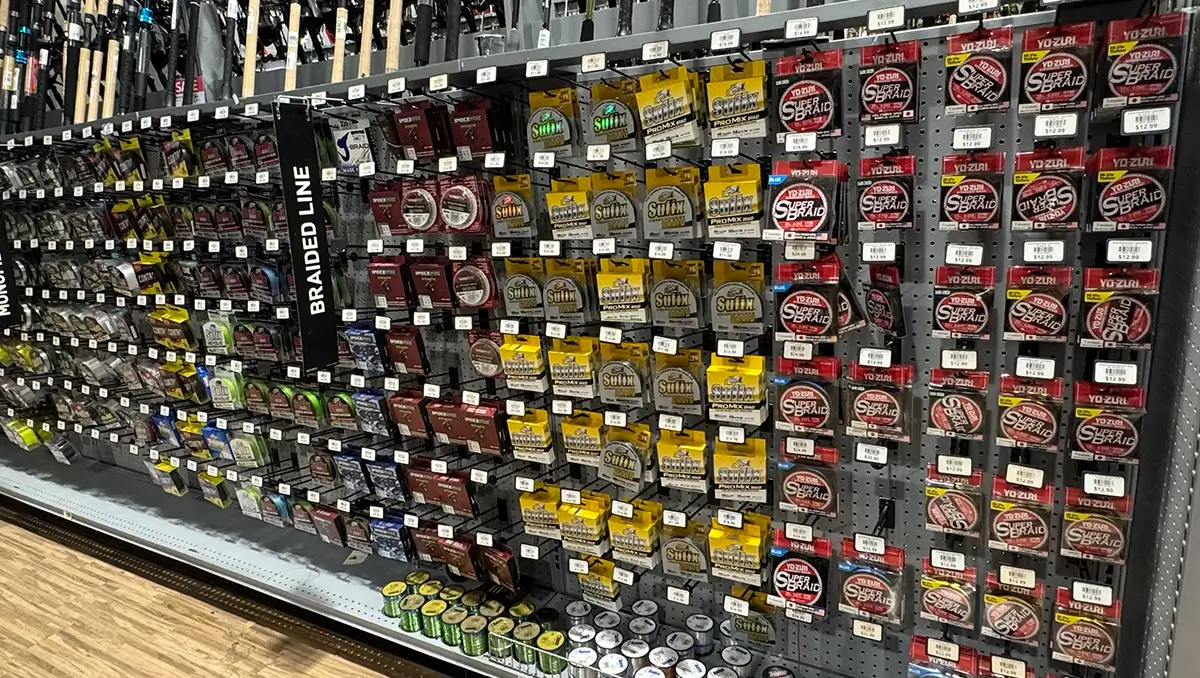
You can sit there and stare at that wall of fishing line for an hour and get all stressed out if you want to; I used to do the exact same thing years ago. I’d encourage you, however, to save this article on your phone and pull it up the next time you’re standing in front of a giant wall of braided fishing line. These are the best lines available in 2025 and you can’t go wrong with any of them.