The Texas rig gives anglers a method for fishing a bait through thick cover without getting snagged — and it’s the most versatile fishing rig around since you can fish it in inches of water or 70 feet of water just by adjusting your slip sinker. It’s pretty simple to rig with the right gear, and it’s just as effective from the bank as it is from a boat.
It’s one of the first rigs a bass angler should master, not only for how versatile it is but for how big of fish have been caught on it. You can cast it, pitch it, flip it, punch it, and put it in every hiding place a bass might use — fishing through wood, docks, grass, and more. So whether you’re poking around creeks, rivers, ponds, and small lakes, or running big reservoirs, you need to be proficient fishing Texas rigged soft plastics like creature baits, big worms, and craws.
How to Rig It
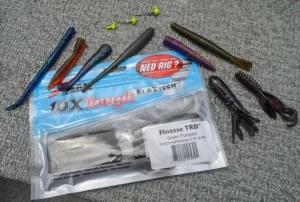
All you need is a bullet-shaped slip sinker, an offset or straight-shank hook, and a soft plastic bait of your choice. From there, it’s just a few simple steps, and you’re on your way to fishing through any cover a bass-fishing body of water can throw at you.
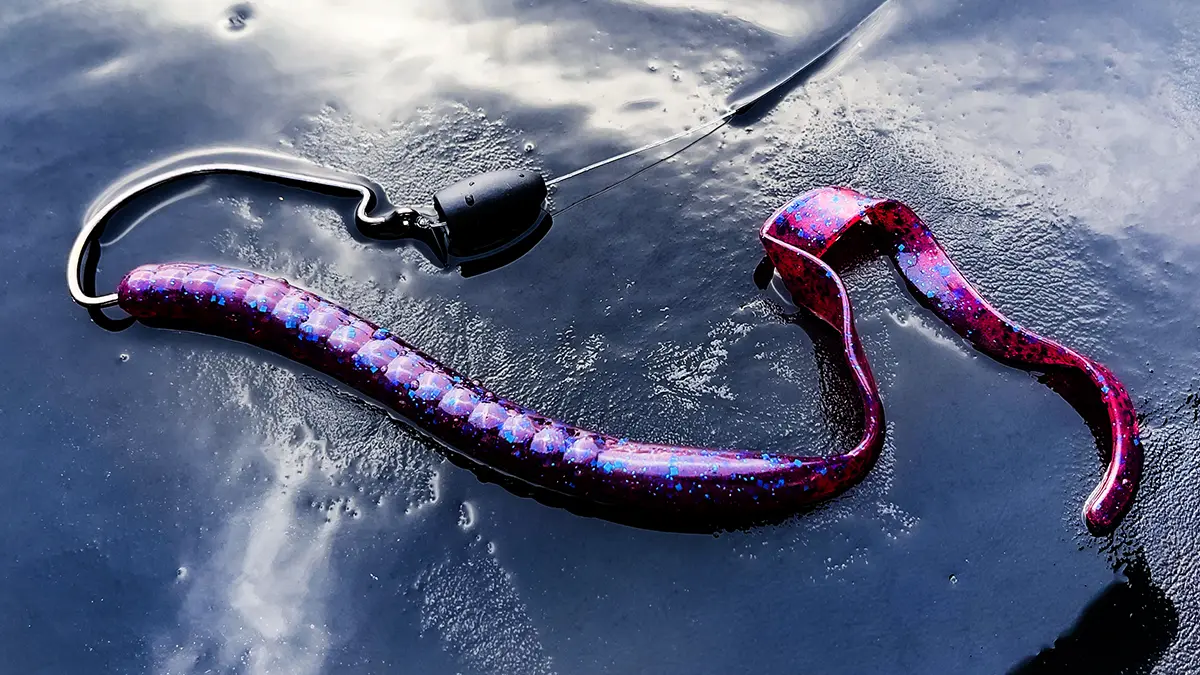
Step 1: Thread the hook point into the nose of the worm
This is simple and straightforward. Take the point of the hook down through the middle of the worm at the nose and then come out the side about 1/8 to 1/4 inch down.
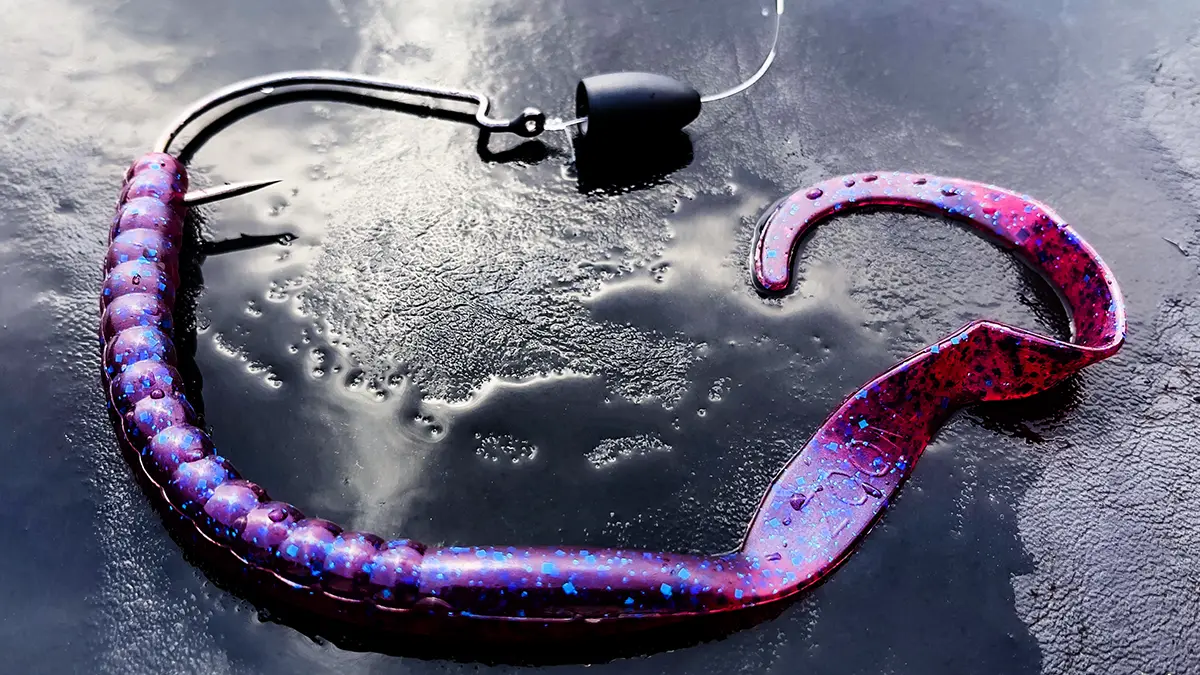
Step 2: Poke the hook point back out of the side of the worm
Poke the hook out the side and start pulling the whole hook back out of the worm through that new exit hole.
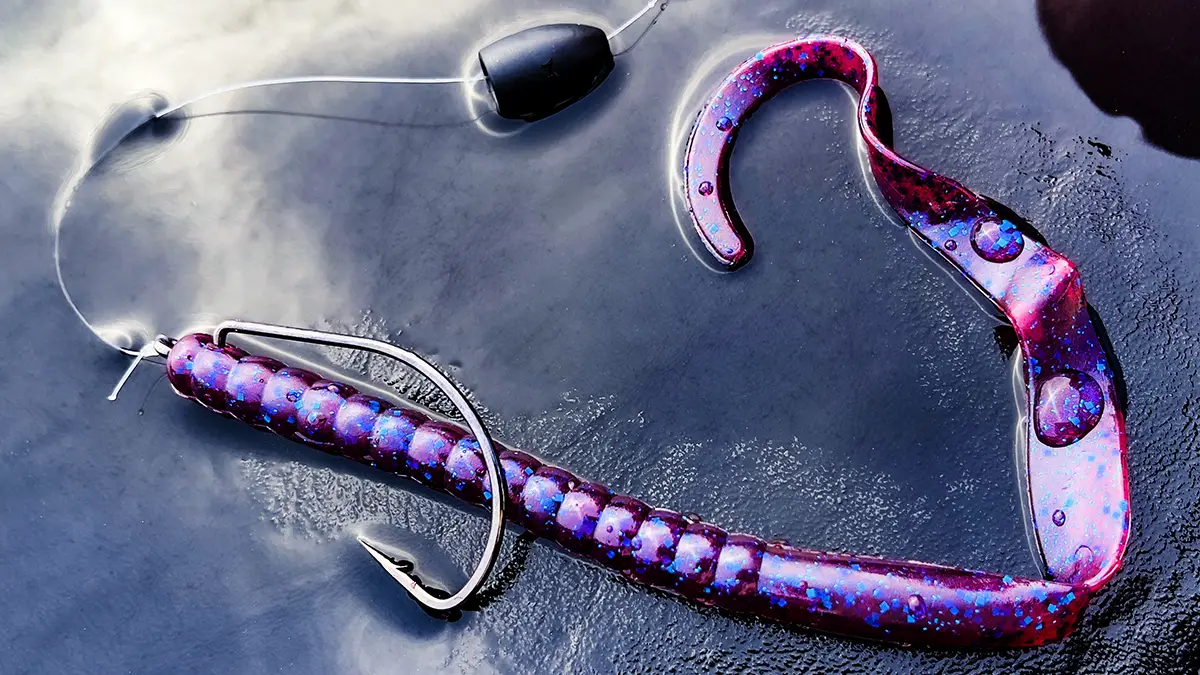
Step 3: Pull the hook through, then turn it so the eye sits at the nose
Once you pull the whole hook through, bring the worm over the elbow of the offset hook (or over the keeper on the straight shank hook). Then, twist the hook so the point faces back towards the worm and the eye is at the nose of the worm.
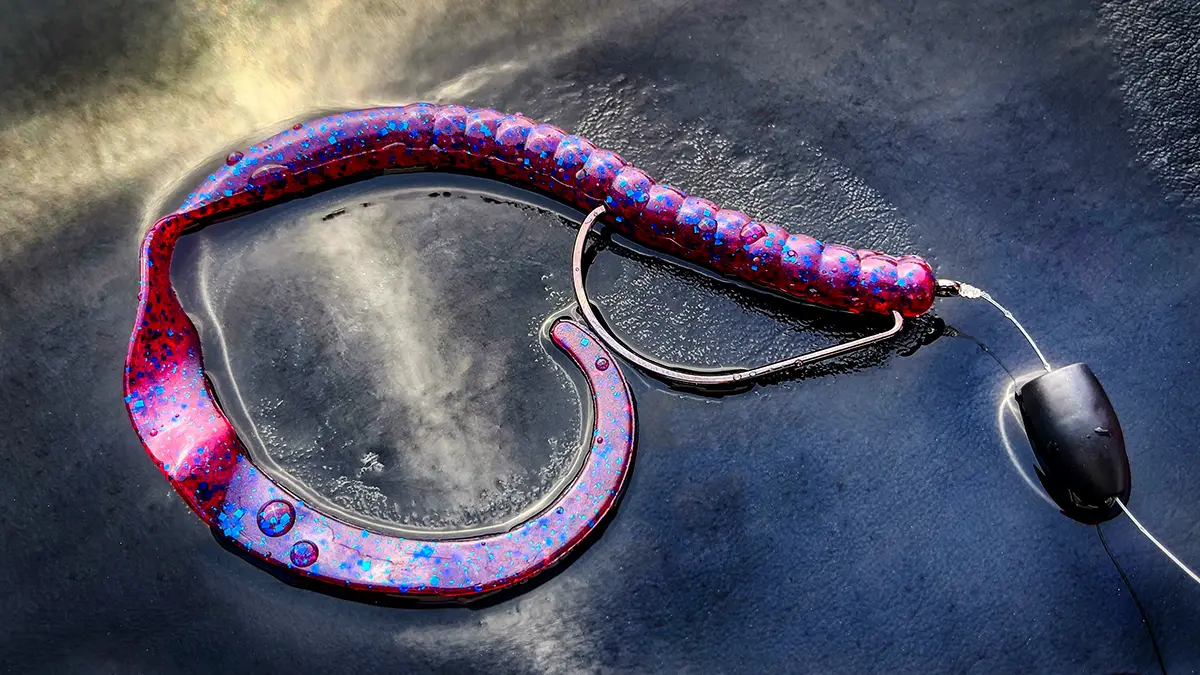
Step 4: Bury the point into the plastic to keep it weedless.
Lay your hook next to the worm and see where the bend meets the worm. Then, kink the worm and put your hook at that precise point. Push it into the worm until the worm is perfectly straight on the hook and the point is covered.

Choosing Your Hooks
We think the best hooks for Texas rigging are offset worm hooks or EWG hooks. An offset worm hook simply has a 90-degree elbow made for this style of rig. I like a standard worm hook for a thinner bait like a ribbon tail or straight tail worm, and an EWG hook for a larger soft plastic like a creature bait or beaver-style flipping bait. If there’s more plastic to clear when you set the hook, you need a wider gap (That’s what EWG stands for: Extra Wide Gap).
Some of our favorite hooks for the job:
- VMC Worm Hooks
- Lazer Trokar HD Worm Hooks
- Berkley Fusion 19 EWG Hooks
- VMC Heavy Duty Wide Gap Hooks
- Gamakatsu Offset G-Lock Hooks
Picking Your Weight
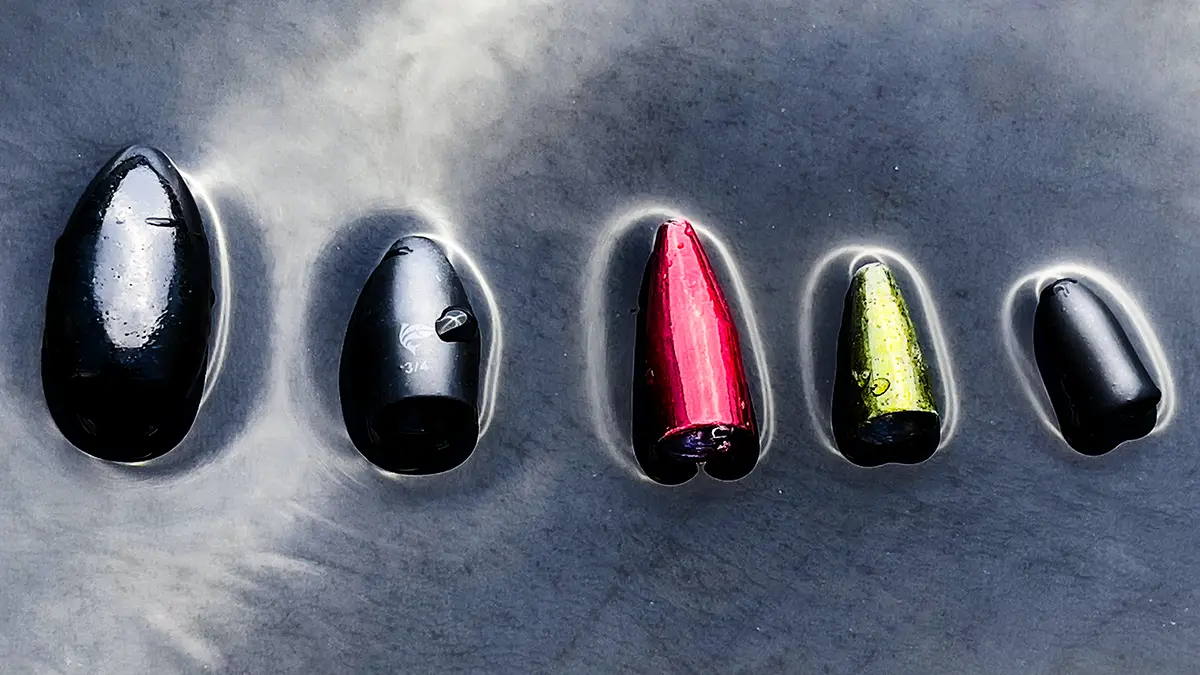
A good bullet shape slip sinker is one of the critical parts of Texas rigging. Go too heavy and you’ll stay pinned in cover, constantly having to pop through it. Go too light, and sometimes you can’t punch through the cover at all. Match the weight to what you are fishing and the mood of the fish. If the cover is more sparse and the water is clear, I’ll go with the lightest weight I can use and still fish my Texas rigged worm effectively.
The lighter the weight, the more natural the lure will act.
We like tungsten because it transmits contact a lot better than lead, and tungsten weights run a good bit smaller than a lead sinker of the same weight.
Some of our favorite weights include the following:
- WOO! Tungsten Never Chip Flipping Weights
- Gamakatsu G-Shield Tungsten Weights
- VMC Tungsten Flippin Weights
- Eagle Claw Lazer Sharp Tungsten Worm Weight
- Evolution Tungsten Worm Weights

Rod, Reel, and Line Setup
The setup for Texas rigging is pretty simple really. We like baitcasters, but the nice thing about this rig is it fishes just fine on spinning tackle too. You want a rod that has some backbone because you might have to drive a hook through plastic and into fish in heavy cover or with a lot of line out that might stretch on you.
A longer rod also helps you take up slack quickly on the hookset, since fish will often pick up the bait and run. Somewhere around a 7-foot medium-heavy rod with a little tip action gives you good casting control while still having the backbone to drive a solid hook. You really have to hit the fish hard on the hookset because you need to drive the point out of the plastic that’s keeping the rig weedless.
Some of our favorite rods for the job:
- Shimano SLX A Casting Rod
- Level NGX Casting Rod
- Dobyns Champion Extreme HP Split Grip Casting Rod
- G.Loomis NRX+ Casting Rod
- Daiwa Tatula Elite
- Okuma X-Series
- Abu Garcia Veritas
I like 15- to 20-pound fluorocarbon, but I’ll occasionally drop to 12-pound line in clear water when fishing deep. This gets the worm down to the bottom quicker and fishes a lot more naturally.
How to Fish It
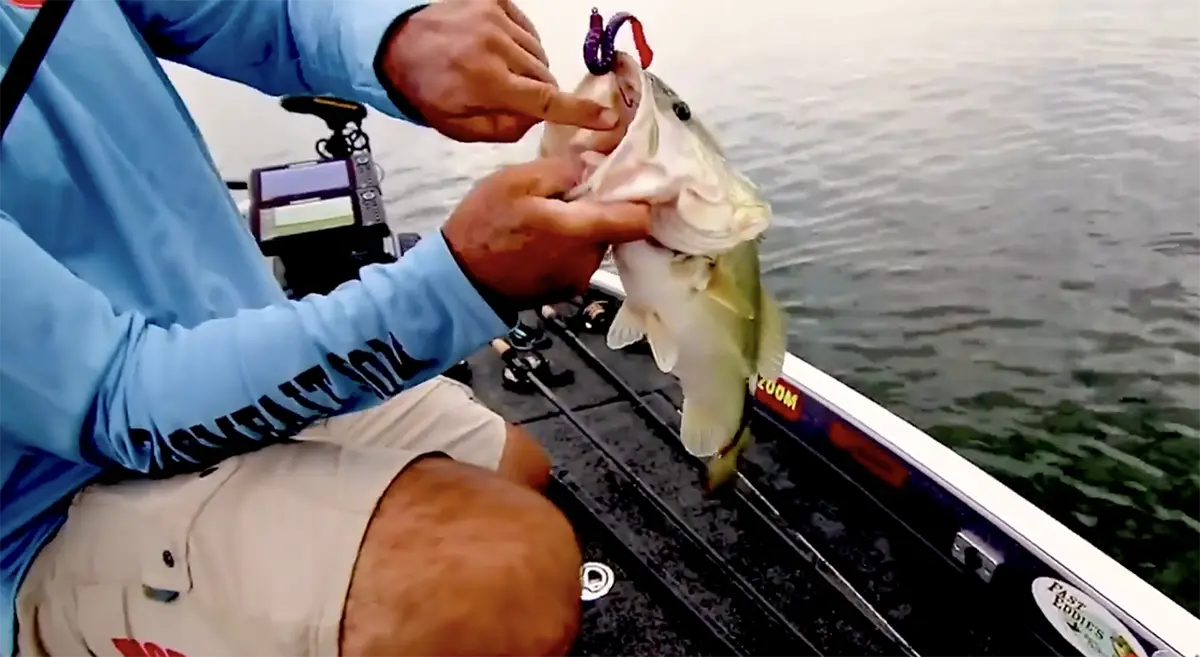
I do two things on the retrieve. I’ll either make a long cast, let the worm hit bottom, then lift my rod to swim it up off the bottom a foot or two before taking up slack with the reel as it falls back down.
Or, I’ll let the worm hit bottom and then pull it inches at a time with a super slow, side-sweeping motion. I generally keep my rod in front of me so I’m always in a position to reel down and set. I move it a few feet or a few inches, and then collect my line and re-center.
When I’m fishing close cover with pitches and flips, I keep my rod at about 10 o’clock as much as possible; you never know when a fish will bite. When it does, you need to be quick on the draw before it wraps you in cover. Move your rod too high or too far to the side, and you’ll have to come back down to take up slack before you can set. Those precious seconds result in bad hooksets and lost fish.

Rig Variations
A lot of anglers like a bobber stop in front of their slip sinker when fishing tight to cover. That keeps the weight, hook, and plastic together at all times so nothing wraps on branches. It also helps the bait go in and out of thicker cover more easily.
Some folks will add beads, rattles or other noise attractors.
One popular variation is called “Tex-posing.” Instead of burying the hook fully into the plastic, you lay the flat part of the hook point on the back of the bait and push just a small bit of the point in. This makes for a much easier hookset, since the point clears the plastic faster. But, the tradeoff is that you’ll snag more since the hook is more exposed. Tex-posing works well when cover is a little more sparser, like around boat docks or bank grass.
There are plenty of ways to tweak this rig. Check out 5 tricks to get more bites in heavy cover, and our comparison of the Carolina Rig vs Texas Rig for when to use each.