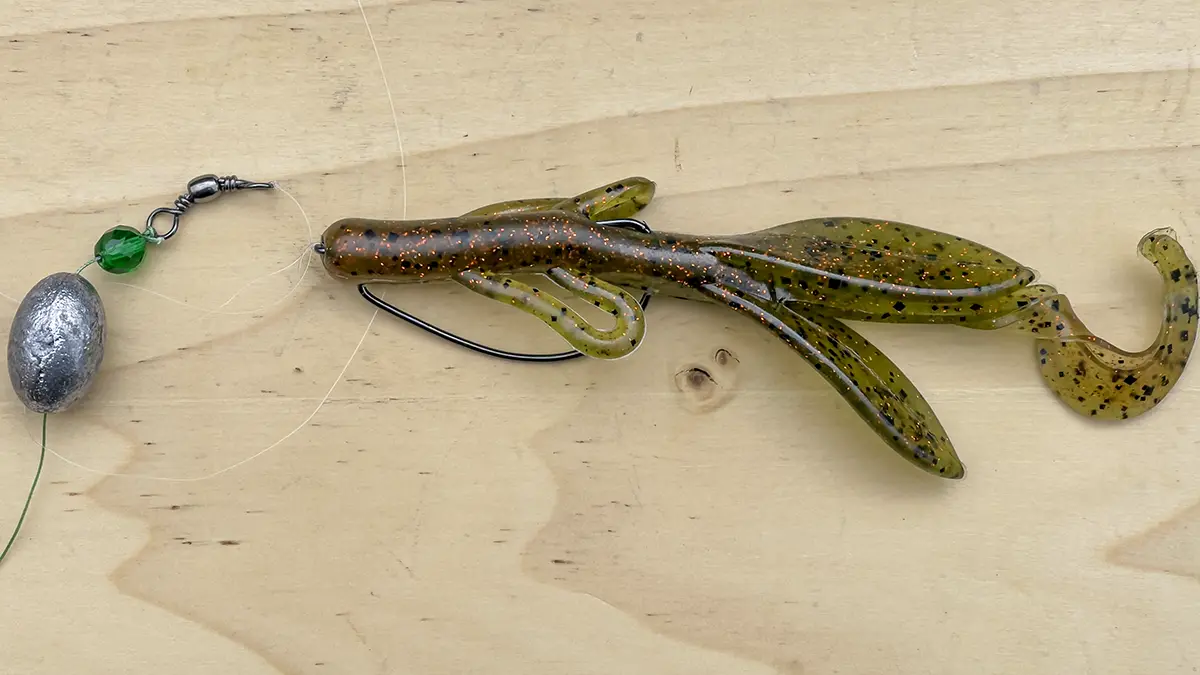
Certain rigs present lures more effectively for the situation. When you’re trying to get your bait into or under a tangled mess of cover, a Texas Rig works great. When you’re targeting fish in deep, clear water, a drop shot rig works wonders. And when you need to cover a lot of water in the spring and summer, a Carolina Rig can be your best bet.
What is a Carolina Rig?
Essentially, this rig presents a soft plastic lure to the fish in a more natural way than a Texas Rig does (see Carolina Rig vs Texas Rig), because the lure and hook are attached to a leader that trails behind a sliding weight connected via a swivel. You drag a fairly heavy weight across the bottom, and the soft plastic ducks and darts around behind it. The weight stirs up silt and clicks and clacks along the bottom, drawing attention. This helps the fish see a very natural bait swimming along behind it.
Before we had all these fancy electronics like side-scan and forward-facing sonar, we used a Carolina rig to tell us whether the bottom was hard or soft, whether there was rock or grass, and whether there was fish in the area at all. It’s been the ultimate bass fishing search tool since the early 1980s — doing double duty as both a fish catcher and a fish finder.
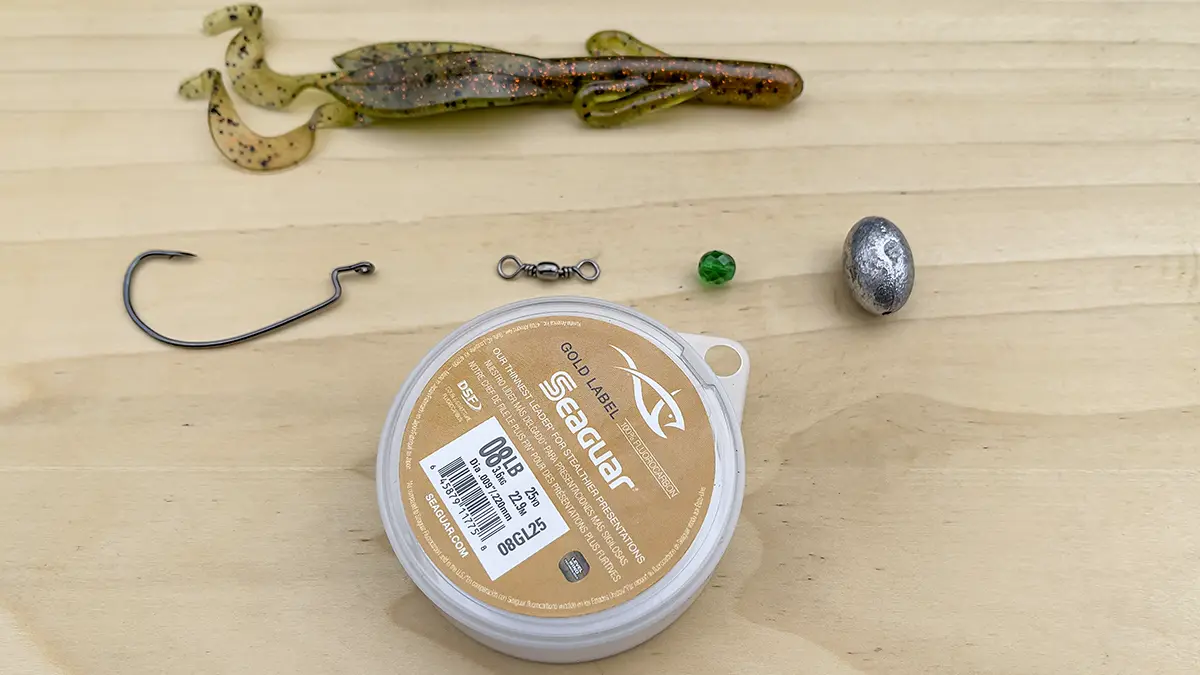
Gear You’ll Need
The Components
You need six basic pieces to tie up a Carolina rig, plus a favorite plastic to thread on it.
- Main Line: A strong, abrasion-resistant main line is a good start, since you’ll be dragging this rig along the bottom for the most part.
- Leader Line: A short, often lighter piece of fluorocarbon or monofilament that lets the lure disconnect from the weight and move more freely than other rigs allow.
- Weight: A bullet or egg sinker sized to the depth and conditions you’re fishing.
- Bead: A small plastic or magnetic bead placed between the weight and the swivel to protect the knot and add some clicking attraction.
- Swivel: A barrel swivel that attaches the leader line to the main line.
- Hook: An appropriately sized hook, in EWG or offset style, so the plastic can be rigged weedless
Rod and Reel Setup
A good setup starts with a rod that has a solid backbone and enough length to cast the weight while leaving plenty of line behind you. Something in the 7-foot, 6-inch range is the staple.
I like a medium-heavy power with a fast action. I usually load my reel with 15-pound monofilament and a 12-pound fluorocarbon leader — or 30-pound braid for the main line and a fluorocarbon leader.
Recommended Rods
- Daiwa Tatula Elite 7’6″ Heavy Fast Casting Rod
- Cashion Element Z2 Series 7’6″ Heavy Fast Casting Rod
- Lew’s LFS 7’6″ Heavy Fast Casting Rod
- Shimano SLX A 7’5″ Heavy Fast Casting Rod
- Abu Garcia Zenon Casting Rod
- Okuma Tournament Concept TCS B Casting Rod
Reels come down to angler preference, though most anglers today lean toward a fast gear ratio baitcaster so they can pick up the slack quickly.
Recommended Reels
- Abu Garcia Revo STX LP
- Shimano Metanium DC A
- Lew’s Custom Pro Gen 3
- Shimano SLX XT A 150
- Okuma Helios XT
How to Rig It
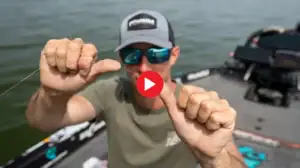
Follow this simple workflow — or, you can also follow along in the video below.
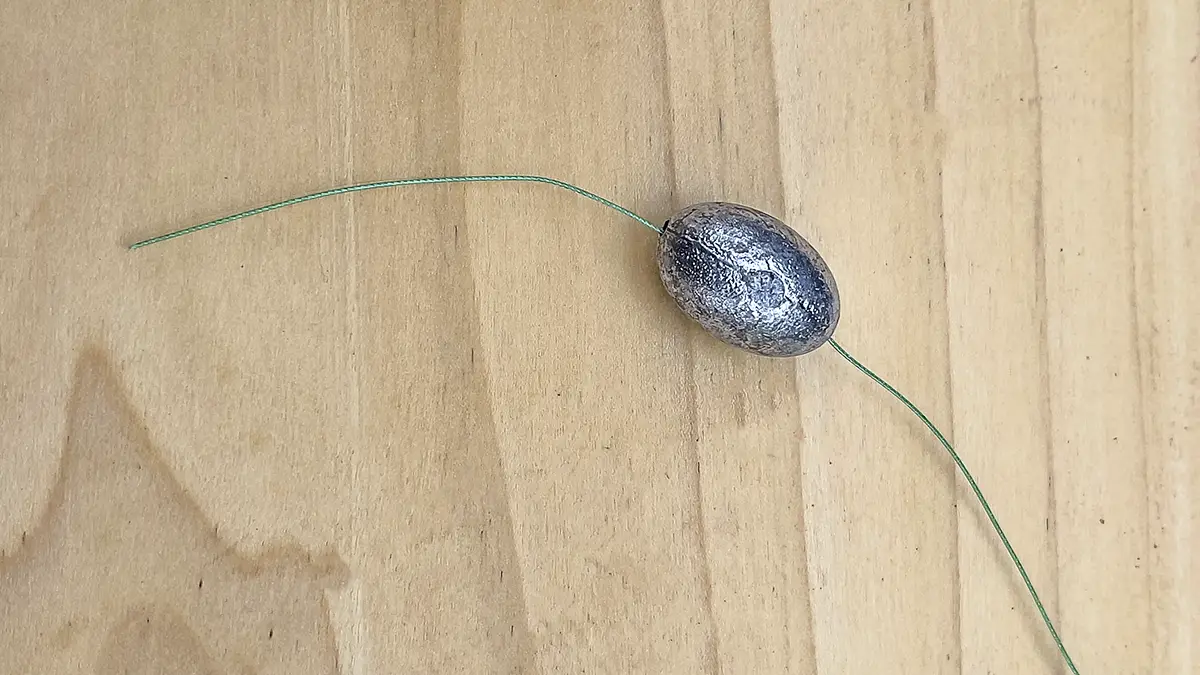
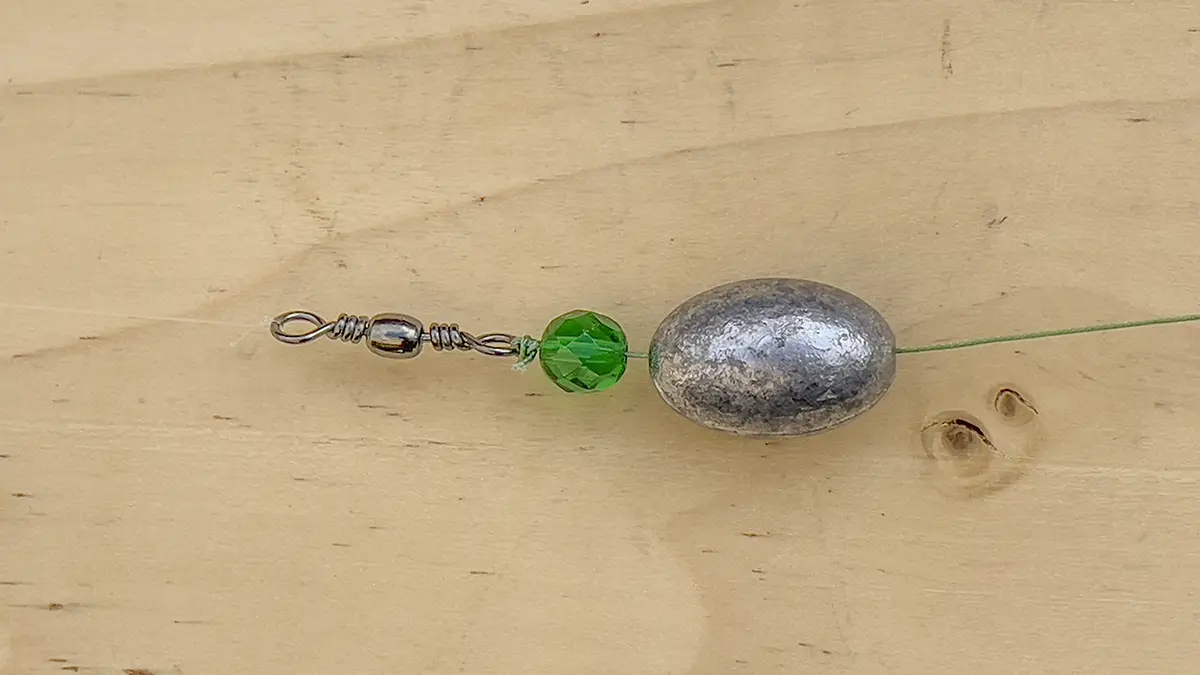
- Slide your weight onto your main line.
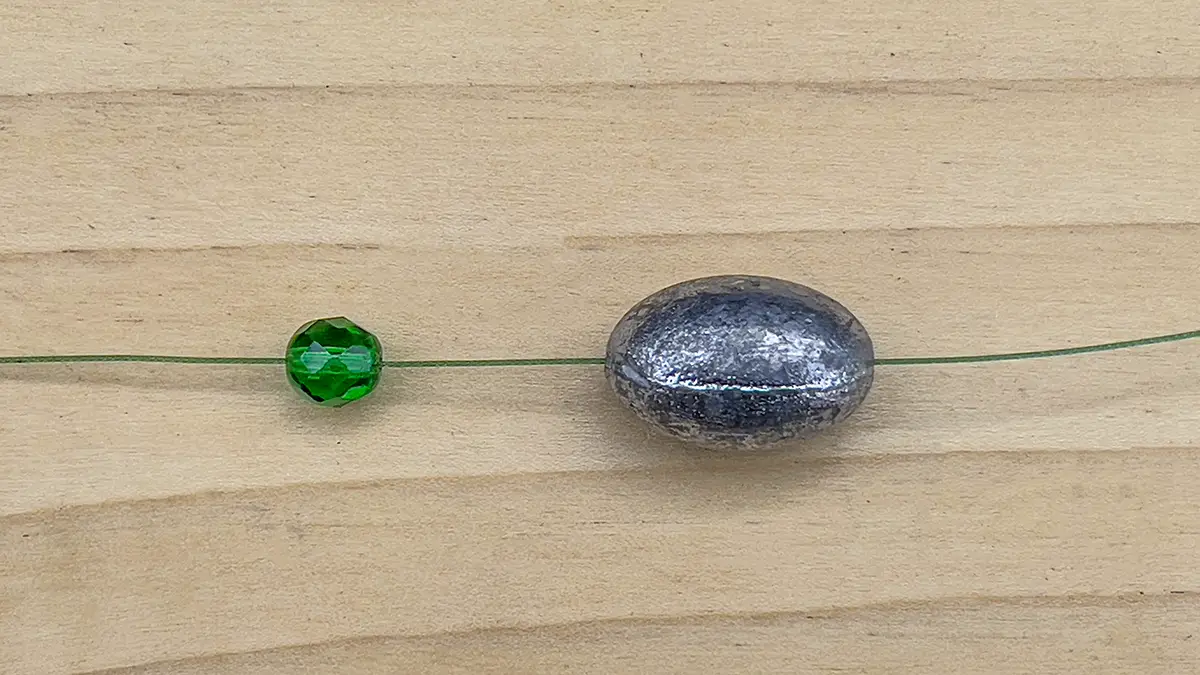
- Slide your bead onto your main line.
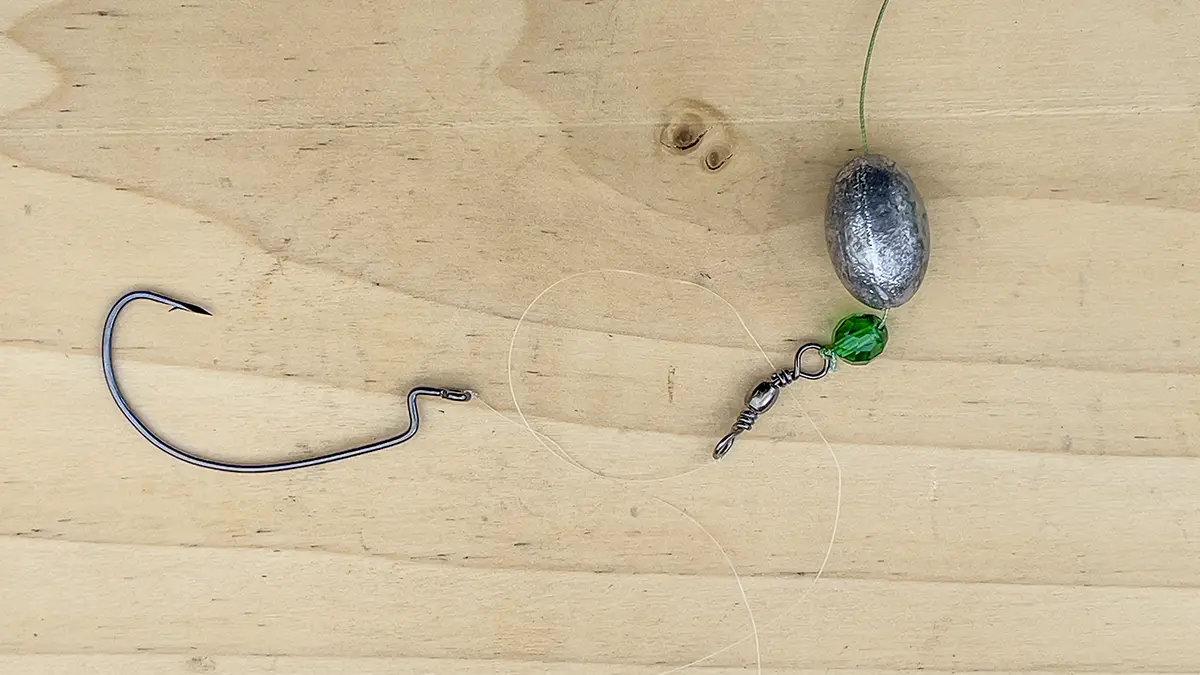
- Tie a barrel swivel to the end of the main line. Then, tie your leader to the other end of the swivel.
- Tie your hook onto the final end of the leader. Then, thread your favorite plastic onto the offset worm hook.
How to Fish It
Start with a fan cast. Pick the area you want to fish and work it with a series of fan casts.
Lob it out with a side-arm cast. Use a long rod to account for the added leader length, and make a long cast so the weight can pull the rig to the bottom. A side-arm lob cast tends to work best, since you’ll want the weight about 2 feet from the rod tip — which can put your bait 4 or 5 feet behind you when you cast. Lob the whole rig as far as you can; with practice, you’ll be able to cast this rig a long way with the right rod.
Drag it slowly and feel the bottom. Once it’s on the bottom, take up your slack and pull the rig along with a slow, side-sweeping motion of the rod, feeling each individual pebble on your weight. You’ll learn to feel the difference between bigger rocks, stumps, and grass. If it gets wedged, raise your rod tip and give it a tight pop to “jump” it over the snag — this works 9 out of 10 times.
Setting the Hook
It feels different than a Texas rig bite. A bite will feel a lot mushier because you aren’t biting the weight — you are in contact with the swivel, and the hook and bait are loosely following behind. With the Carolina rig, you’ll often feel weight when a fish bites. If you’re unsure, just hold the rig tightly and feel for movement coming from the fish.
Swing hard and sweep it home. When you feel that, swing hard with a long sweeping hookset. This helps take up slack and drive a hook that is feet from the weight.
Before modern electronics, a Carolina rig was the greatest way to feel and map out the bottom without a graph. You can detect depth changes, cover, fish, and more just by dragging the rig over wide, expansive flats, points, funnel areas, and more.
Best Baits to Use
Some of our favorite soft plastics to use with this setup:
- Zoom Brush Hog Review (BUY HERE)
- Zoom Lizard Review (BUY HERE)
- Strike King Strike King Rage Hawg
- Z-Man Turbo CrawZ
- Yamamoto Senko (BUY HERE)
- Geecrack Bellows Gill & Shad (BUY HERE)
- Rapala CrushCity Bronco Bug
- Lake Fork Ring Fry Worm
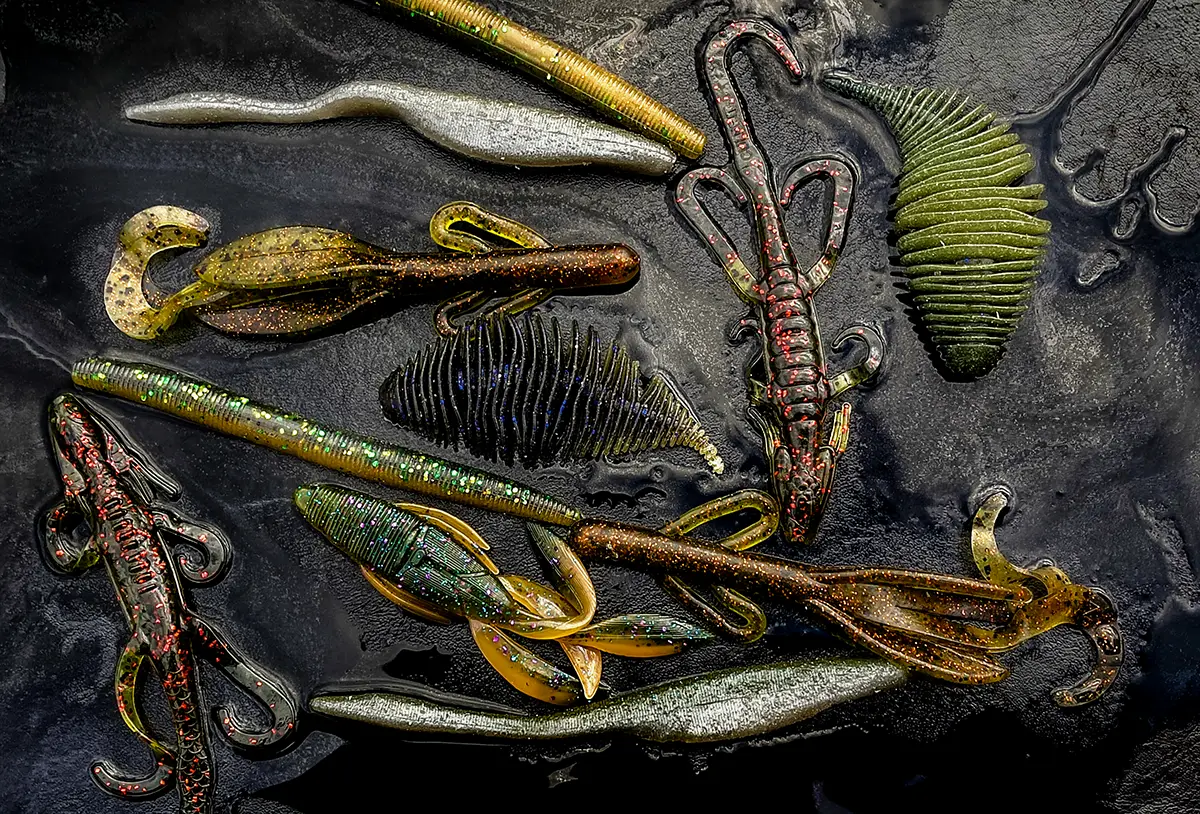
A creature bait is a natural choice. The profile and appendages give it plenty of movement as it glides along behind the weight. But around grass and clear water especially, straight baits work wonders too. Senkos and Flukes have accounted for plenty of fish, and I’ve found some big schools of bass in grass this way.
Leader Length and Rig Variations
Play with your leader length. You can experiment just like you can with baits. A short leader gives you more control over the bait’s movement, while a longer leader — especially in clear water — gives the bait more freedom and can draw more fish.
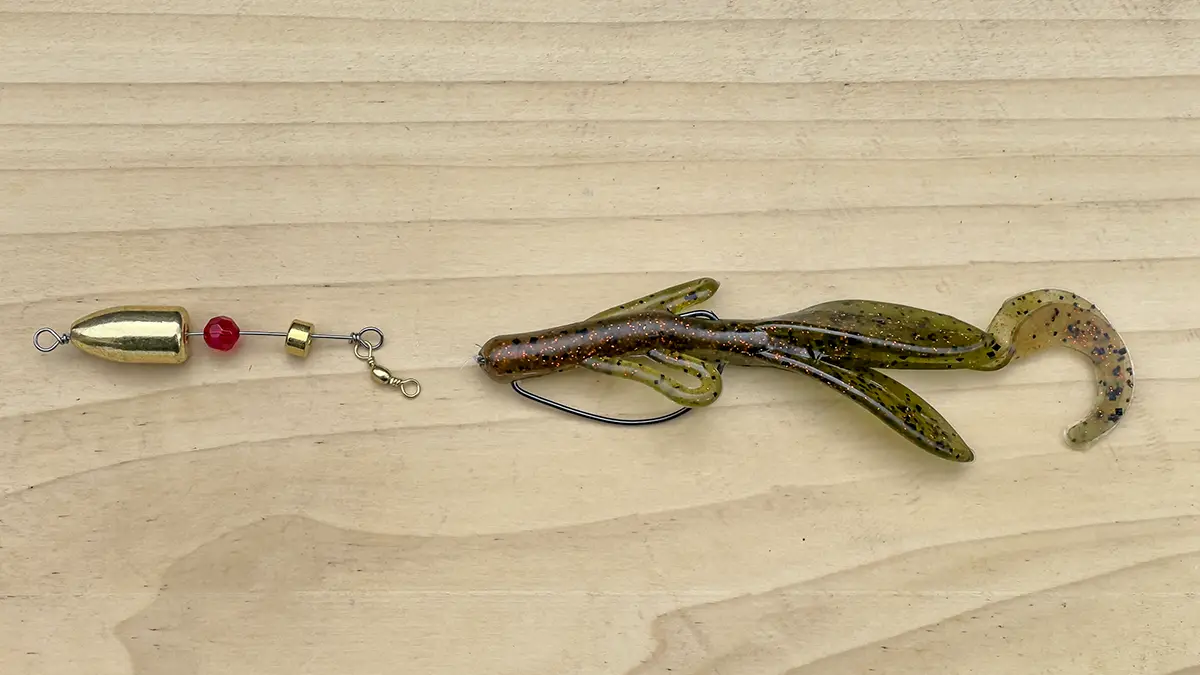
Or, skip the tying with an all-in-one rig. Some companies sell pre-built rigs with the weight, beads, and clickers already strung on a wire. Just tie one end to the main line and the other to the leader.
Don’t box it into one season or style. You can add sound with clicking weights or go light and finesse with a Carolina rig. You can also fish it in colder waters than most anglers assume; it’s not just a spring-and-summer tactic. If you want to cover a lot of uncharted waters, a Carolina rig is a great search tool and even better bass catcher.
Frequently Asked Questions
What is the best line for a Carolina rig?
The nice thing about the Carolina rig is you don’t have to fill the spool up with a lot of expensive line. You can use affordable line for the main line and use just a fluorocarbon line on the leader. A lot of anglers use a small braid on their Carolina rig main line like 30-pound test and then just tie a 10 to 15-pound fluorocarbon leader to the swivel.
What is the best weight for a Carolina rig?
The most popular weight for a Carolina rig is 1/2 ounce to 3/4 ounce egg sinker. There are more advanced tungsten barrel sinkers now that offer more sensitivity but they cost a lot more and break the glass beads protecting your not. You have to go to a magnetic bead if you use a tungsten weight. I like a lead 3/4 ounce egg sinker most of the time. The heavier weight keeps me in contact with the bottom. The egg shape is easy to pop over an obstruction on the bottom.
What size swivel is best on a Carolina rig?
A little bit larger size is preferred because it acts as a buffer between your weight and the leader. Tiny little swivels can get stuck in the weight or in the bead. I like a size No. 10 up to a No. 6.